Introduction
The most beautiful and cutest small towns in the Netherlands include Giethoorn, Delft, and Haarlem, each offering a distinct blend of historic architecture, serene canal networks, and authentic Dutch culture. These destinations are best explored by train or bicycle for an immersive experience, allowing you to bypass tourist traps and enjoy local traditions.

Beyond the city, you will find incredibly charming villages that look like they were plucked straight from a painting. This guide ranks the cutest small towns based on their architectural beauty, local atmosphere, and authentic Dutch character.
Giethoorn:

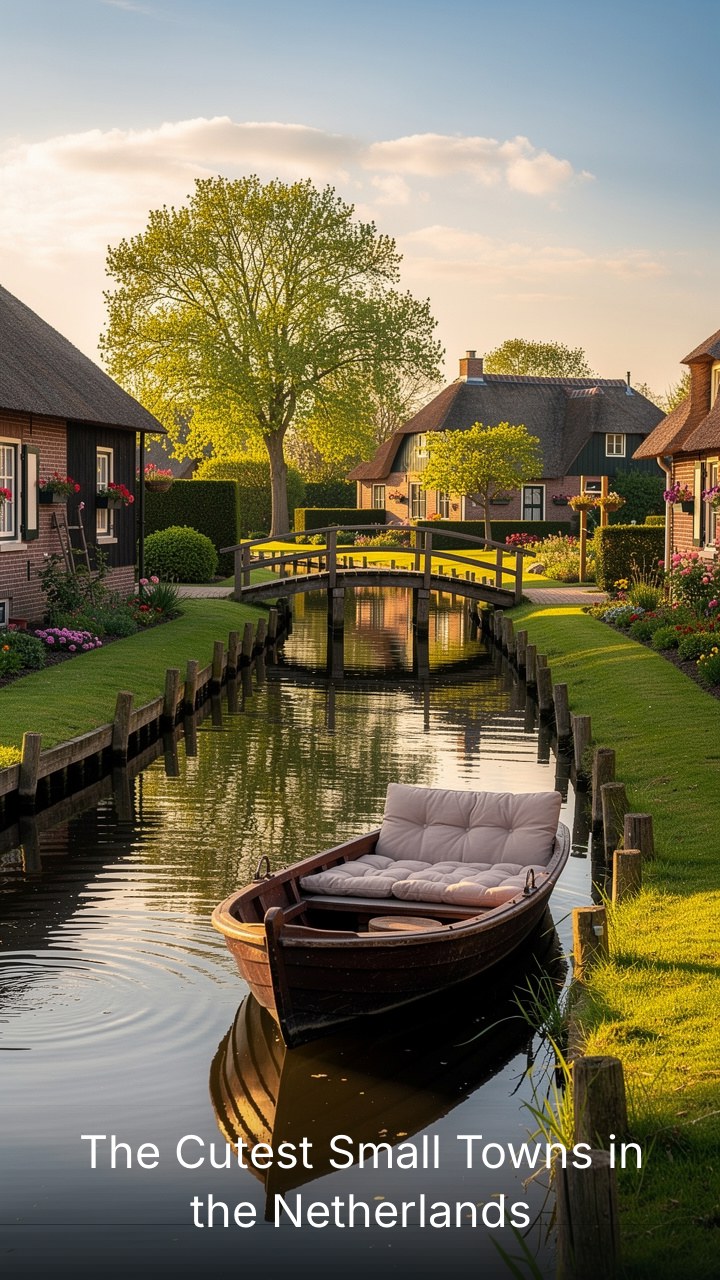
The Venice of the North, Giethoorn, earns the top spot for its unique layout defined by a total absence of roads in the village center. Instead, residents and visitors navigate a labyrinth of canals, typically renting a whisper-quiet electric boat for approximately 20 euros per hour. To truly appreciate the peaceful charm of the thatched-roof farmhouses, it is essential to visit before 9:00 AM, as the village experiences extreme congestion from international tour groups during the peak afternoon hours. When you arrive early, the morning mist rising off the canals creates a photography-perfect environment that remains unmatched elsewhere in the country.
Delft:

Delft is a historical masterpiece famously known as the home of Delft Blue pottery and the master painter Johannes Vermeer. The town square serves as the heartbeat of the community, surrounded by perfectly preserved canals that echo the aesthetic of the 17th-century Dutch Golden Age. For a deep dive into the local cultural heritage, visitors should prioritize a stop at the Vermeer Centrum, where the artist’s lighting techniques are analyzed in detail. Walking through the narrow, winding streets feels like an immersion in history, particularly when visiting the Oude Kerk, which leans noticeably due to the soft, reclaimed soil underneath its foundation. Whether you are browsing artisanal pottery shops or relaxing at a canal-side cafe, Delft maintains a sophisticated, scholarly atmosphere that differentiates it from more rustic, water-centric villages.
Haarlem:
Haarlem provides an ideal blend of urban elegance and small-town intimacy, making it an essential destination just fifteen minutes by train from Amsterdam. The Grote Markt stands as the centerpiece of the town, featuring the magnificent Grote Kerk and a wide selection of cafes perfect for an extended lunch. A standout feature of Haarlem is its network of ‘hofjes’—hidden, historical courtyards originally built for the elderly or poor, which now offer serene, green sanctuaries away from the shopping streets. Unlike other tourist-heavy areas, Haarlem balances high-end boutique shopping with a quiet, local residential feel. Spend your afternoon wandering the Golden Streets to discover independent bookstores and local design studios that give the town its modern, creative soul while preserving the architectural integrity of its medieval past.
Practical Tips for Navigating Dutch Villages
Transport in the Netherlands is remarkably efficient, and relying on public transit is significantly more cost-effective than driving. Avoid renting a car if you plan to visit these smaller towns, as parking in historic centers is frequently prohibited or costs upwards of 15 euros per day. Instead, utilize the ‘9292’ app to plan your exact routes across the integrated train and bus network. For the most authentic experience, rent a bicycle at the local train station for roughly 12 to 18 euros per day, which provides the freedom to reach hidden photo spots inaccessible by motor vehicle. Furthermore, ensure you carry a contactless bank card or phone for payments, as many rural shops and cafes have transitioned to a cashless, card-only model to improve security and speed.
Avoiding Common Mistakes
Travelers frequently ruin their schedules by attempting to visit three or more towns in a single day, which leads to excessive time spent on transit and very little actual cultural immersion. Stick to a strict limit of one town per day to allow for spontaneous exploration and deeper engagement with local landmarks. Additionally, avoid planning your trips on Mondays, as most regional museums and boutique shops in smaller, non-metropolitan towns operate on reduced hours or remain completely closed. When dining, steer clear of the main tourist squares where laminated menus are displayed; instead, walk at least three streets away from the primary center to find higher-quality, authentic Dutch cuisine for roughly 30% less than tourist-facing alternatives. Avoid the “traps” of eating at places that aggressively solicit customers from the sidewalk.
The Best Time to Visit
Timing your visit is crucial, as the peak summer months of July and August bring intense heat and massive crowds that can hinder your photography and relaxation. Late May or early September are the ideal windows for travel, offering mild temperatures, blooming flora, and thinner crowds. For those seeking a unique experience, winter can be magical, provided you are prepared for the sharp winds with a high-quality, windproof jacket. If you intend to capture the classic “Golden Hour” light reflecting off the canals, you must arrive at your chosen location by 7:00 AM. This early start also allows you to traverse the narrow streets before the daily delivery trucks arrive and the daytime foot traffic begins to obstruct your view.
Choosing Between Coastal and Inland Towns
Deciding between coastal and inland towns depends entirely on your travel goals. Coastal locations like Domburg offer expansive dunes and fresh sea air, making them ideal for multi-day retreats, though they require more travel time from central hubs like Utrecht or Amsterdam. In contrast, inland villages like Thorn or Giethoorn provide a deeper look at traditional architecture and quiet, protected waterways. If your entire trip lasts fewer than four days, focus exclusively on inland villages to maximize your time, as the logistics are significantly simpler and you will save hours of transit. Coastal areas are best reserved for extended stays where you can fully unwind, whereas inland villages function perfectly as efficient, high-impact day trips.
FAQ
How long should I stay in each town?
Most visitors find that four to six hours is the optimal duration to see the main highlights, enjoy a relaxed lunch, and browse local shops. If your goal is to photograph the sunset or capture early morning light, consider staying overnight to avoid rushing back to the train station.
Are these towns accessible for people with limited mobility?
While many historic Dutch towns feature cobblestone streets that can be uneven for wheelchairs, the town centers are generally flat and compact. We recommend contacting the local VVV tourist office in advance to request specific accessibility maps that highlight smoother paths and accessible public restrooms.
What is the average daily budget per person?
Expect to spend between 60 and 80 euros per person per day to cover train tickets, a quality lunch, coffee, and museum entry fees. You can easily reduce this to under 50 euros by opting for a grocery-store picnic, which is a popular local way to enjoy the scenic canal banks.
Is it better to rent a bike or use public transport?
Use trains and buses for inter-city travel to ensure reliability, but rent a bicycle once you arrive in a town for the best local mobility. Bikes allow you to reach outskirts and hidden photo spots that are often too far to reach on foot within a single day.
Do I need to carry cash for small towns?
No, you should not rely on cash because many small, independent shops and cafes in the Netherlands have stopped accepting physical currency. Always carry a contactless bank card or use a digital wallet on your phone to handle payments for everything from coffee to souvenirs.
Leave a Reply