
Mastering the French picnic aesthetic involves curating a minimalist setup centered on high-quality, seasonal ingredients like ‘tradition’ baguettes, artisanal cheeses, and chilled Provence rosé. To execute this iconic Parisian experience along the Seine, focus on an ‘art de vivre’ approach by selecting a scenic, low-traffic spot during the golden hour, typically starting at 5:00 PM.
Understanding the Essence of the French Picnic Aesthetic
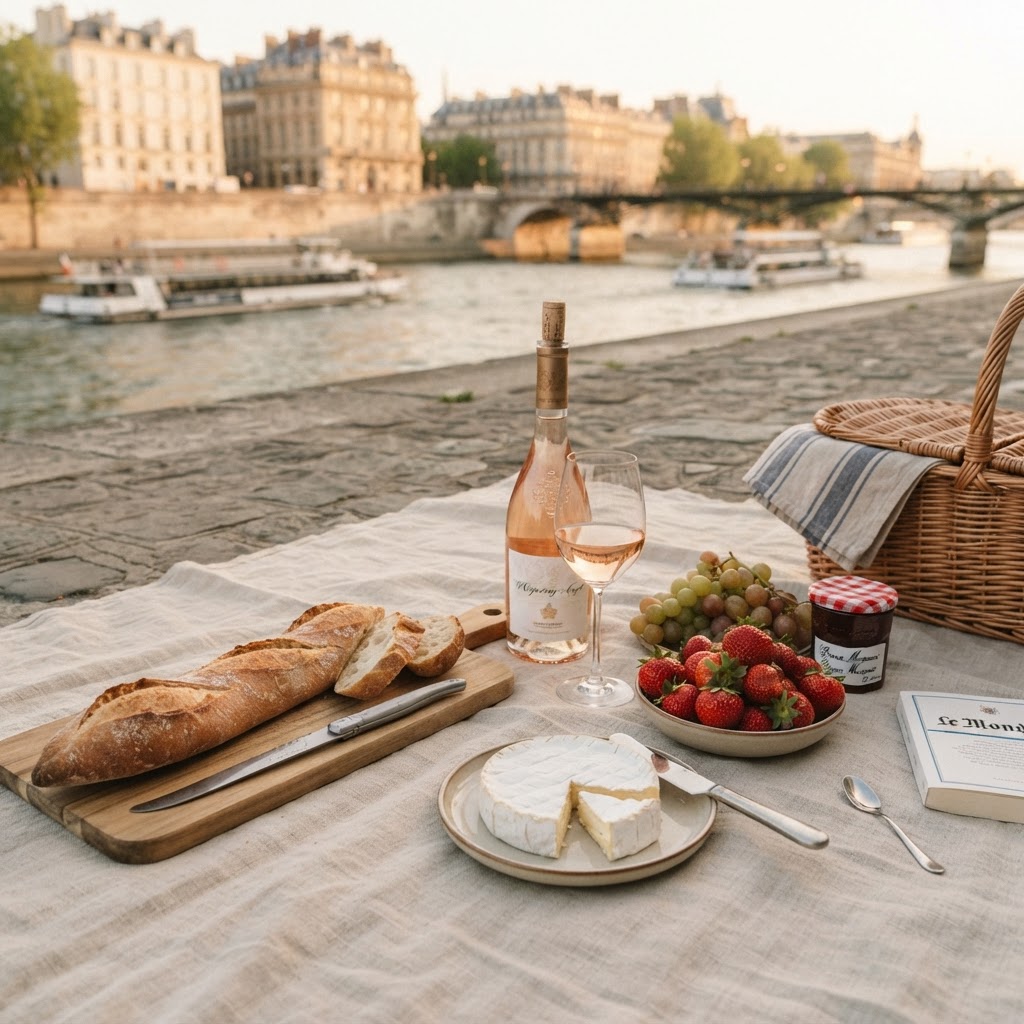
At its core, the French picnic aesthetic is built on the philosophy of ‘art de vivre’—the art of living well—which prioritizes quality over quantity. This aesthetic is defined by a curated, clutter-free environment that emphasizes natural textures and a neutral color palette. Instead of expansive spreads, choose three to four high-quality items that highlight the beauty of the season. The visual appeal comes from organic elements: the rough, golden crust of a baguette, the condensation on a chilled wine bottle, and the soft, tactile quality of a linen blanket.
Curating Your Picnic Basket
Choose a traditional wicker basket. Not only does it add to the visual charm, but it also provides a sturdy base for transporting your goods. Avoid plastic containers; instead, opt for glass jars or parchment paper to wrap your cheese and charcuterie. This simple switch instantly upgrades your picnic from ‘convenience’ to ‘lifestyle aesthetic.’
Selecting the Perfect Seine River Picnic Spot
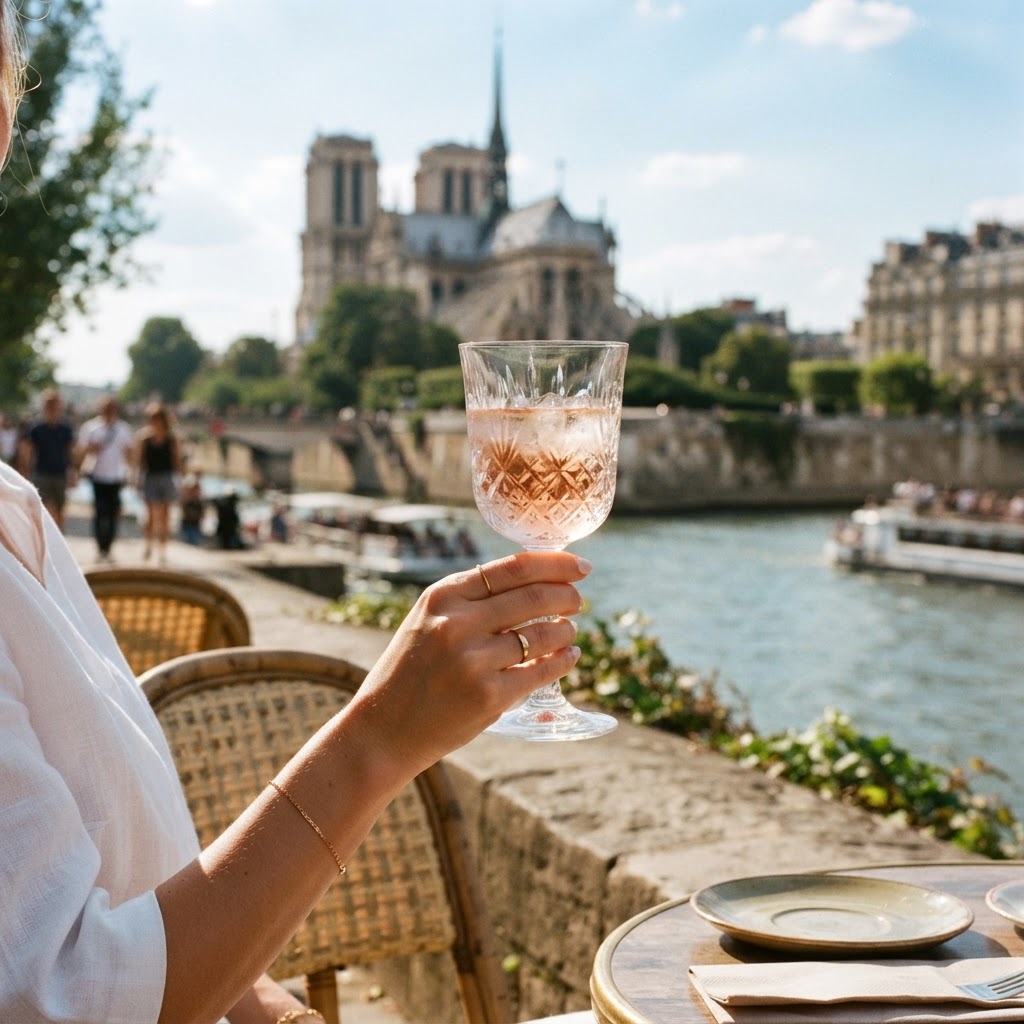
Selecting the right location is vital to achieving the quintessential Seine river aesthetic, as the backdrop dictates the atmosphere of your outing. The Quai de la Tournelle is widely considered the premier location for its unobstructed view of Notre-Dame, providing a dramatic limestone architecture frame that is perfect for photography. Alternatively, the area near the Pont des Arts offers a vibrant, bustling environment ideal for people-watching and capturing the dynamic energy of Parisian life. Arriving at the right time is equally critical; aim for 5:00 PM to 7:00 PM to capture the golden hour, which provides the soft, diffused light necessary for high-quality, non-harsh photography. During these hours, the river reflects the warm hues of the city, elevating the aesthetic quality of your setup. Always ensure you are following local laws regarding public consumption of alcohol and waste disposal, as Paris requires visitors to keep riverbanks pristine. Utilizing public trash bins is mandatory, and keeping noise levels low is essential to maintaining the ‘art de vivre’ atmosphere expected by locals.
Timing Your Arrival
To capture the best light—and to secure a prime piece of real estate—timing is key. Aim for late afternoon, around 5:00 PM. This is when the harsh midday sun softens into the golden hour, casting a warm glow on the river and making your photos look ethereal. It is also the time when locals head out to enjoy the ‘apéro’ hour.
Navigating Local Regulations
Paris is welcoming to picnickers, but always respect the local environment. Keep your area clean, use public trash bins for your waste, and be mindful of noise levels. Being a respectful guest in the city is the ultimate sign of a seasoned traveler.
The Art of the Menu: Bread, Wine, and Beyond
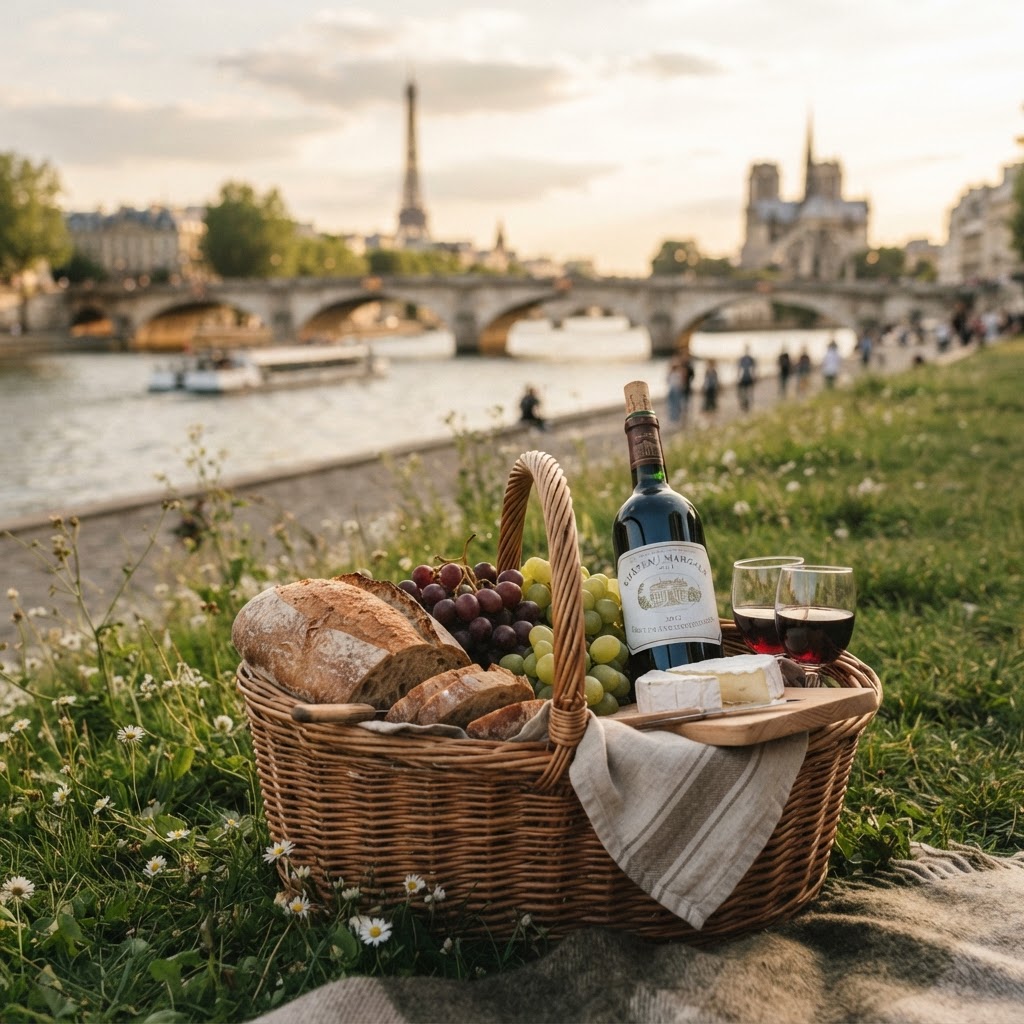
No French picnic aesthetic is complete without the holy trinity: fresh bread, quality cheese, and chilled wine, which function as both sustenance and décor. The ‘tradition’ baguette is the foundation of every authentic Parisian picnic; you should source this from a local ‘boulangerie’ rather than a supermarket. A proper ‘tradition’ is made with a slow fermentation process, resulting in a deep, caramelized crust and an airy, open-crumb center that serves as the perfect vessel for artisanal cheeses. Pair these with a dry Provence rosé, which is scientifically suited for the setting due to its high acidity and light body, balancing the richness of creamy goat cheeses or nutty Comté. Serve your wine at approximately 8-10°C (46-50°F) using an insulated carrier to maintain the chill despite the outdoor temperature. Remember, presentation is a functional aspect of the menu. Using a wooden board keeps your food away from dirt while providing a rustic, elevated visual platform for your curated spread.
The Role of the Baguette
Do not settle for store-bought bread. Visit a local ‘boulangerie’ and pick up a ‘tradition’—a baguette made with traditional methods. The crust should be golden and crunchy, while the inside remains soft and airy. Carry it loosely, perhaps tucked under your arm, to maintain that authentic Parisian flair.
Selecting the Right Rosé
Rosé is the quintessential drink for a riverbank picnic. Its pale pink hue looks beautiful in sunlight, and its refreshing notes of strawberry and melon pair perfectly with light cheeses like Comté or a creamy goat cheese. Opt for a dry Provence rosé, served chilled in a small cooler bag.
Styling Your Picnic Setup
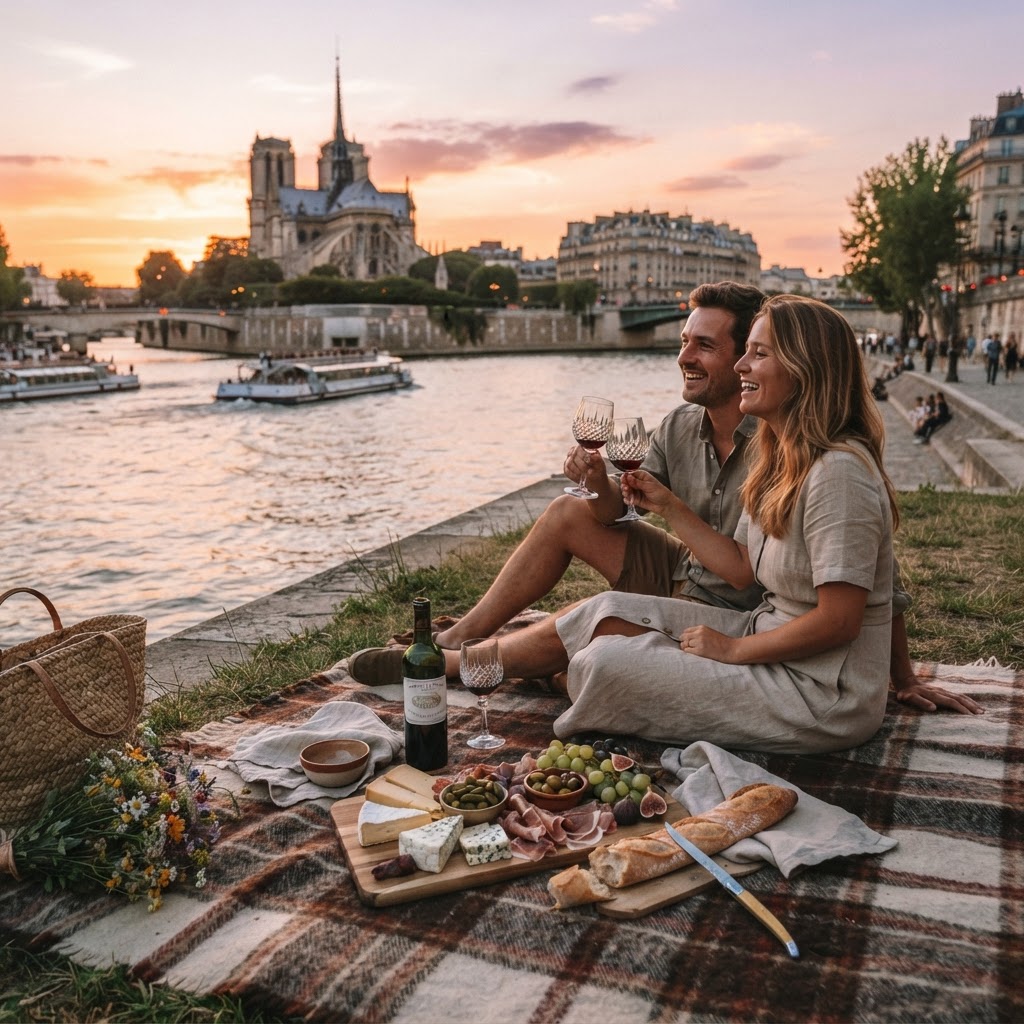
Your setup is where the French picnic aesthetic truly comes to life through the intentional use of textures and neutral tones. Start with a large linen tablecloth, as linen is the preferred fabric due to its heavy drape and natural, sophisticated crinkle that looks effortlessly elegant on stone embankments. The color scheme should stay within the “greige” or “oatmeal” spectrum to let the colors of the food—the pink of the rosé, the deep greens of grapes, and the golden crust of the bread—provide the visual interest. Incorporate small, personal touches like a bouquet of local wildflowers, which act as a centerpiece and bridge the gap between your setup and the natural river surroundings. As daylight fades, incorporating a battery-operated LED light inside a glass jar mimics the warm glow of candlelight without the fire hazard, extending the longevity of your evening. By prioritizing quality materials like wood and linen over plastic, you significantly raise the aesthetic bar of the entire experience.
Essential Accessories
Bring a few linen napkins and a small wooden cutting board. A sharp, high-quality knife is essential for slicing bread and cheese. If you want to lean into the ‘aesthetic’ side, bring a small bouquet of wildflowers. Even a simple bunch of lavender or baby’s breath can elevate the look of your spread.
Lighting and Comfort
If you plan to stay until dusk, consider bringing a small, battery-operated LED candle to place in a glass jar. As the twilight hits, this creates a warm, intimate atmosphere that is perfect for late-evening conversation.
The Essential Picnic Checklist
To ensure you are fully prepared, keep this checklist handy. Being organized prevents stress and allows you to focus on the experience.
Capturing the Moment: Photography Tips
Part of the appeal of the French picnic aesthetic is the ability to share the beauty with others. To capture the perfect shot, focus on ‘flat-lay’ photography from above or ‘lifestyle’ shots that include hands holding a glass of wine against the backdrop of the river. The key to professional-looking photos is lighting; you must avoid the high-noon sun, which creates harsh, unflattering shadows. Instead, utilize the golden hour to ensure a soft, warm glow that enhances the natural textures of the food. When using a smartphone, activate portrait mode to generate a shallow depth of field, which blurs the background architecture and forces the eye to focus on the tactile details of the picnic spread. Focus on micro-compositions: shoot the condensation on a wine glass, the flaking crust of the bread, or the weave of your linen blanket. These details convey the sensory experience more effectively than wide shots. Remember to always capture the interplay between the food and the environment, such as a wine glass held up against the sparkling surface of the Seine to create a sense of place.
Lighting is Your Best Friend
Avoid shooting during high noon. The shadows will be harsh, and the colors will look washed out. Instead, rely on the diffused light of the golden hour. If you are shooting with a smartphone, try to use a portrait mode to blur the background slightly, which makes your food and wine pop.
Focus on the Details
Don’t just photograph the whole spread. Get close-up shots of the condensation on the wine glass, the texture of the bread crust, or the way the sunlight hits the fruit. These small, tactile details tell a better story than a single wide-angle shot ever could.
FAQ
Q: What is the best time of day for a Seine River picnic?
The ideal time is during the ‘golden hour,’ which usually occurs between 5:00 PM and 7:00 PM. This window offers the softest natural lighting, lower temperatures, and the perfect atmosphere for enjoying an evening apéro along the riverbanks.
Q: Can I drink alcohol on the banks of the Seine?
Public consumption of alcohol is generally tolerated in designated picnic areas along the Seine, provided you remain respectful and orderly. Always dispose of your trash in public bins, as littering can result in fines and disrupts the local environment.
Q: What should I pack for an authentic French picnic?
An authentic setup requires a ‘tradition’ baguette, high-quality local cheese (like Comté or Brie), a bottle of chilled Provence rosé, and a wooden board for preparation. Use linen napkins and a basket to maintain the classic aesthetic.
Q: Do I need to make a reservation for a picnic spot?
No, you do not need a reservation as the riverbanks are public spaces. Because these areas are popular, arrive early—ideally before 5:00 PM—to secure a prime location with a view of iconic landmarks like Notre-Dame.
Q: What bread should I buy for a Parisian-style picnic?
Ask your local baker for a ‘baguette de tradition.’ This specific type of bread is regulated by French law to be made with only flour, water, salt, and yeast, ensuring a superior, authentic texture and flavor.
Leave a Reply