
Geirangerfjord is best viewed from above at the Flydalsjuvet viewpoint for iconic photos, the Dalsnibba Skywalk for the highest mountain perspective, or the Ørnesvingen Eagle Road lookout for panoramic fjord-length views. These vantage points offer heights ranging from 330 to 1,500 meters, providing unparalleled perspectives impossible to capture from sea level.
The Magic of the Fjord Perspective
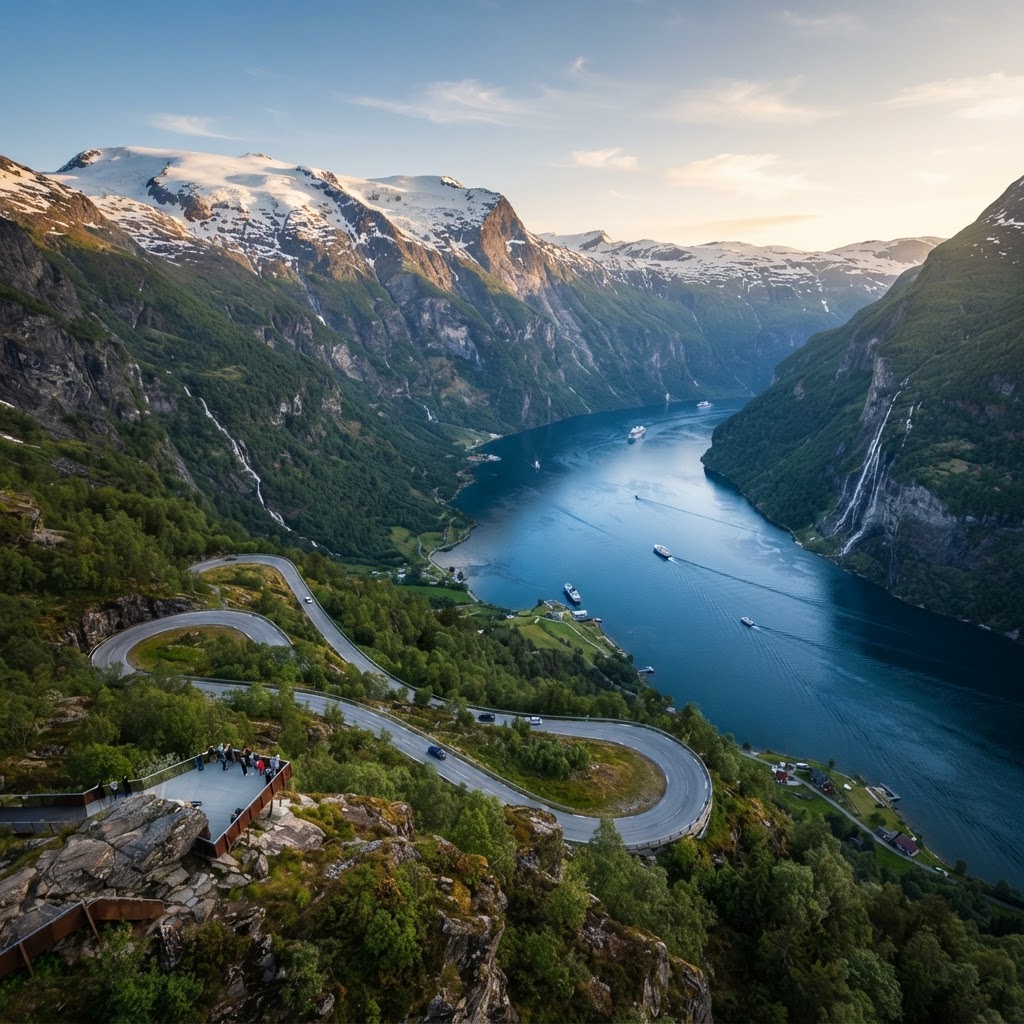
There is a profound difference between seeing the fjord from the deck of a boat and taking in the panoramic vistas from the mountain ridges. When you stand on the high plateaus surrounding the Geiranger valley, the fjord becomes a snake-like ribbon of sapphire weaving through ancient stone giants. This perspective highlights the geographical isolation of the region and the incredible geological forces that shaped this UNESCO World Heritage Site.
Seeing the landscape from altitude allows you to grasp the sheer height of the cliffs, which rise nearly 1,500 meters from the sea. It provides a unique opportunity to watch the cruise ships, which seem like tiny toys in a vast bathtub. For photographers and adventure seekers, capturing Geirangerfjord from above is the ultimate reward, offering compositions that are simply impossible to achieve from water level. The geological formation, resulting from glacial erosion during the last Ice Age, becomes clearer from above, where the U-shaped valley floor is visibly carved into the bedrock.
The Iconic Flydalsjuvet Viewpoint
Flydalsjuvet is widely considered the most famous spot to photograph the region, located just 4 kilometers from Geiranger village. This viewpoint offers the classic ‘postcard’ shot that has appeared in travel brochures for decades, divided into an upper platform for panoramic vistas and a lower platform for the dramatic cliff-edge composition.
Why Flydalsjuvet is Essential
The accessibility of this spot makes it a must-visit for every traveler. Even if you have limited time or mobility, the parking lot is adjacent to the main viewing area. The lower section features a famous rock formation that juts out over the drop, offering a dramatic framing device for the mountains in the background. It is particularly striking during the ‘golden hour’ when the sun hits the peaks, casting long, dramatic shadows over the water. For the best lighting, arrive before 10:00 AM in mid-summer, as the sun moves behind the mountain peaks later in the afternoon, creating high-contrast silhouettes.
Reaching New Heights at Dalsnibba
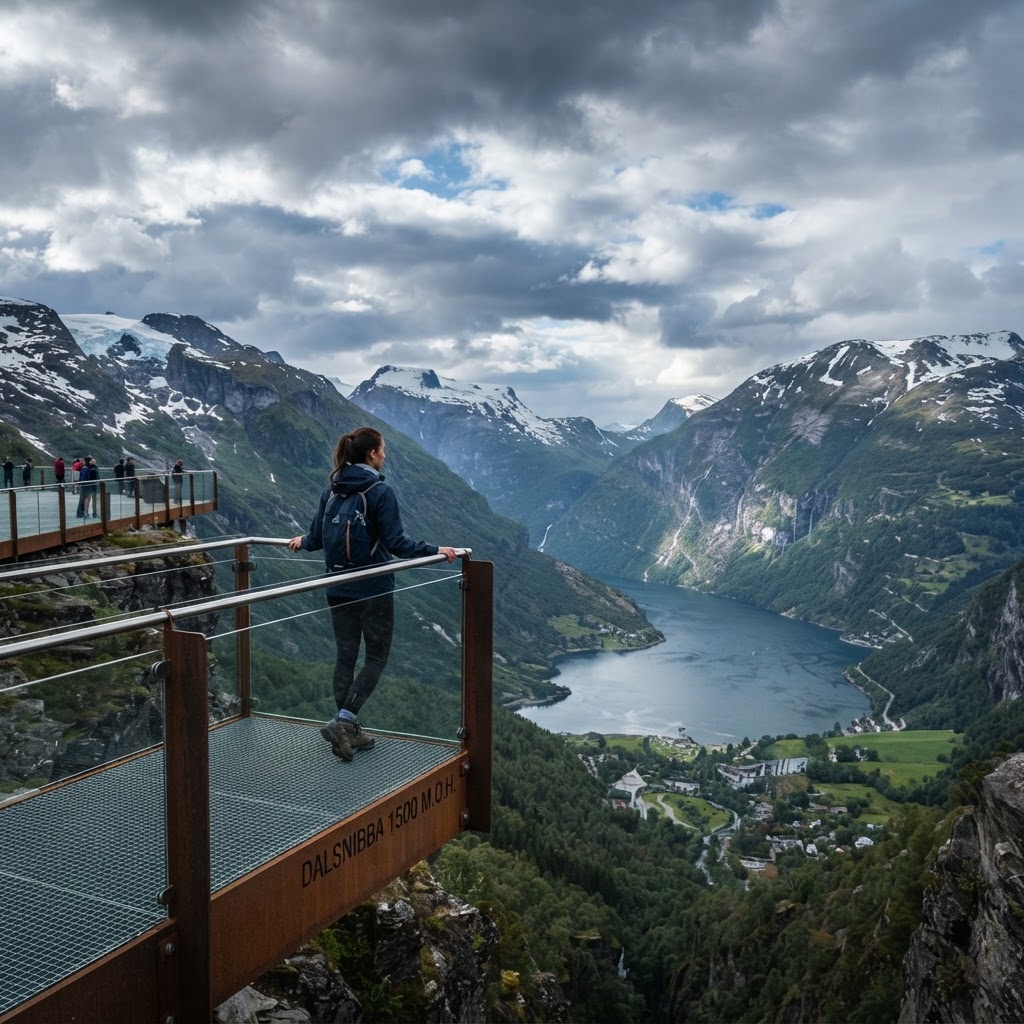
If you want the absolute highest point accessible by road, the Dalsnibba Geiranger Skywalk is unparalleled. Standing at 1,500 meters above sea level, this platform allows you to see the fjord from a bird’s-eye perspective that feels almost otherworldly. Even in the middle of summer, you might find snow on the ground, adding to the crisp, arctic atmosphere of the location.
Practical Tips for Dalsnibba
Access to the Skywalk requires a toll fee of approximately 280 NOK per passenger vehicle, as it is a private mountain road (the Geirangervegen). Ensure your vehicle is in good condition, as the climb is steep with several hairpin turns that can test brakes. The temperature at the summit is significantly lower than in the village—often 10-15 degrees Celsius colder—so bring a windbreaker or a warm jacket regardless of the weather in the valley. Check the local webcams before you head out, as heavy fog can occasionally obscure the view completely, making the toll fee a wasted expense.
Hiking for the Ultimate Reward
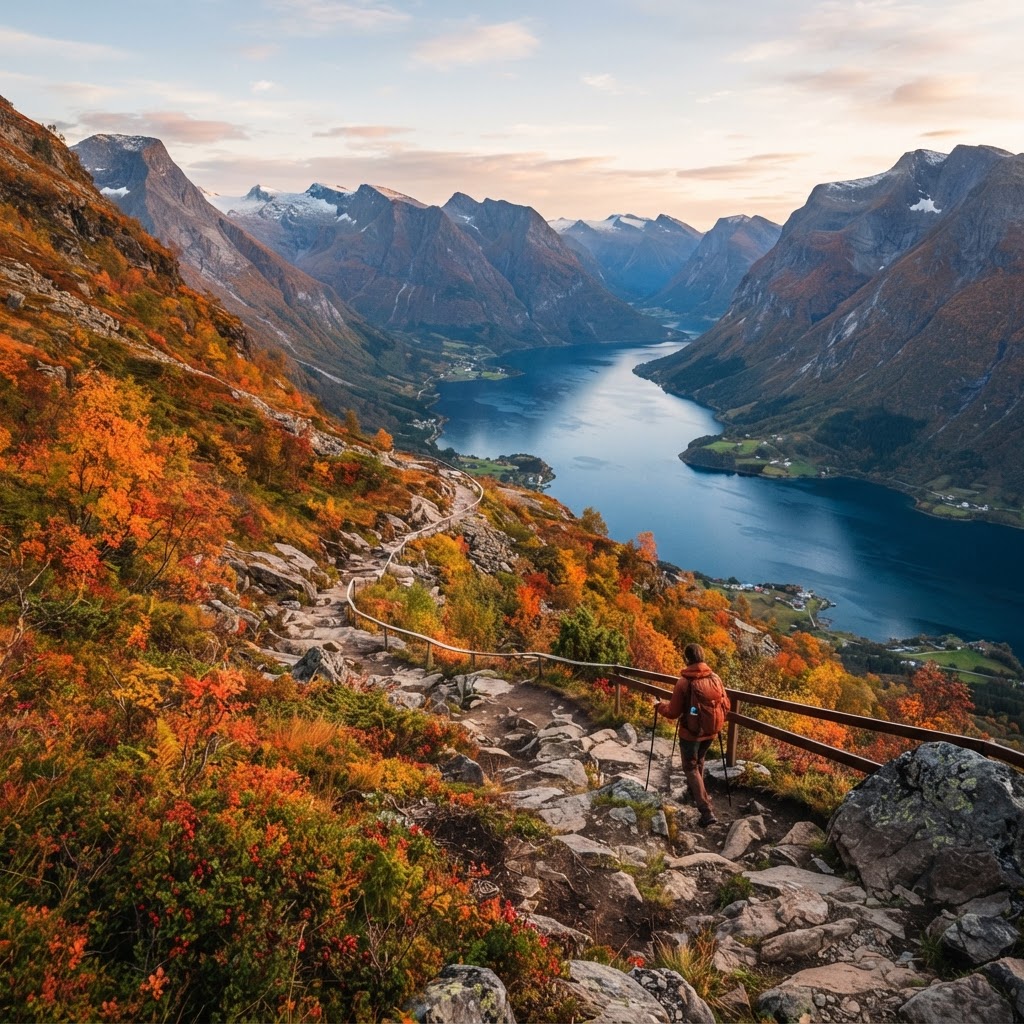
For those who prefer to earn their views, the mountains surrounding the fjord are crisscrossed with world-class hiking trails that offer deep silence away from the cruise ship crowds. Walking up to sites like Vesterås or Storseterfossen provides a vantage point that feels personal and secluded, allowing you to appreciate the scale of the waterfalls from an intimate distance.
Recommended Trails
- Vesteråsfjellet: A relatively easy 45-minute hike that rewards you with an open view of the fjord and the surrounding valley.
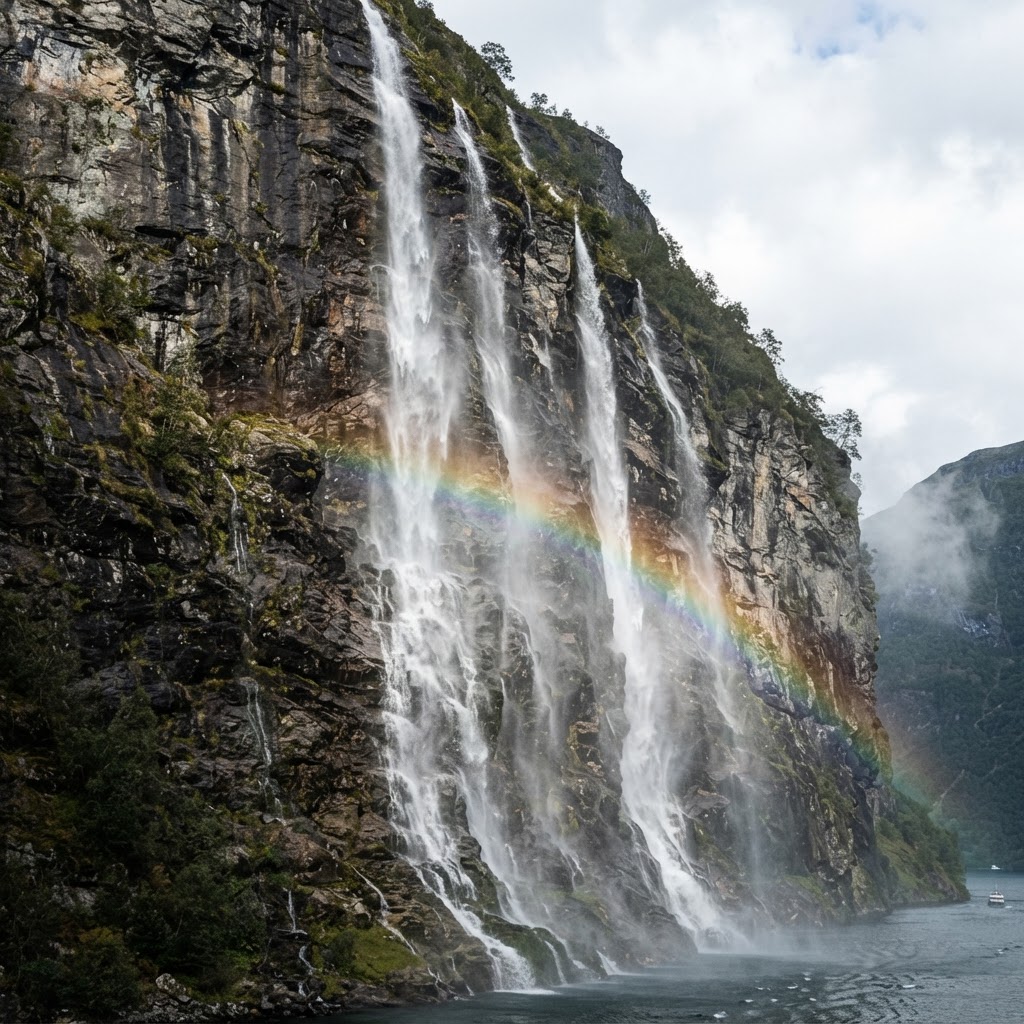
- Storseterfossen: This trail is unique because it leads you behind a massive waterfall, providing a thunderous and wet experience that is family-friendly.
- Preikestolen (Geiranger version): Not to be confused with the famous Lysefjord rock, this local overlook offers a sheer drop and a direct view down into the fjord.
Planning Your Photo Strategy
Capturing the perfect shot of the fjord requires more than just a good camera, as the lighting conditions change rapidly due to the high-walled U-shaped valley. Morning light is generally best, as the sun illuminates the northern cliffs, highlighting the textures of the rock faces and the lush greenery of the mountain farms clinging to the hillsides.
Essential Photography Gear
- Wide-angle lenses: To capture the vastness of the 15-kilometer-long fjord system.
- Circular polarizers: These are critical to cut the glare off the deep blue glacial water.
- Sturdy tripod: Essential for long exposures of the Seven Sisters waterfall cascades.
- Extra batteries: Cold mountain air can reduce battery performance by up to 30% in high-altitude conditions.
The Best Time of Year to Visit
While the fjord is beautiful year-round, the view from above changes drastically with the seasons, impacting accessibility and visual clarity. Summer (June through August) provides the longest days, but late spring offers the most dramatic waterfall runoff from melting mountain snow.
Seasonal Considerations
- Spring: Melting snow increases the power of the waterfalls, making them visually more impressive.
- Autumn: The changing foliage adds warm oranges and reds to the landscape, providing a vibrant contrast to the blue water.
- Winter: Many of the higher viewpoints are inaccessible by car, but the scenery is pristine, quiet, and snow-covered.
Essential Visitor Information
Traveling in Norway requires a bit of planning, especially when navigating mountain terrain. Always check the official traffic updates (Vegvesen) to see if mountain roads like Fv63 are open. If you are not comfortable driving on narrow, winding roads, consider booking a sightseeing bus that takes you to these viewpoints as part of a guided tour.
FAQ
Q: Is the road to Dalsnibba open all year?
No, the toll road to Dalsnibba is typically closed from October to May due to heavy snow and safety concerns. Always check local road status reports before planning a winter visit.
Q: How much does it cost to visit the viewpoints?
Flydalsjuvet and Ørnesvingen are free to visit, while the Dalsnibba Skywalk charges a toll fee of approximately 280 NOK per vehicle. Hiking trails in the area are generally free and accessible to the public.
Q: Can I visit these viewpoints without a car?
Yes, you can book local sightseeing buses or organized shuttle tours from Geiranger village to the major viewpoints. This is often recommended for visitors uncomfortable with navigating narrow, steep hairpin turns.
Q: Which viewpoint is best for sunrise photography?
Flydalsjuvet is generally considered the best spot for sunrise, as the sun rises over the mountains and begins to illuminate the valley floor. However, cloud cover is common, so check local weather forecasts for the Geiranger area beforehand.
Mastering the Eagle Road Lookout
The Ørnesvingen, or Eagle Road, is the final hairpin turn sequence when driving north toward Eidsdal. It features eleven steep bends that test your nerves and your car brakes. Unlike the static views from Flydalsjuvet, this spot provides a dynamic sense of motion and scale.
Why This Spot Wins
You stand directly above the waterfall known as the Seven Sisters. The sheer vertical drop from the guardrail to the water below is dizzying. Most tourists stop for ten minutes, but you should linger longer to watch the ferries navigate the fjord entrance. This is the only place where you truly understand the scale of the massive cruise ships against the fjord walls.
Pro Tips for Eagle Road
The parking area fills rapidly during peak cruise ship hours, usually between 11:00 AM and 3:00 PM. Arrive early or visit after dinner to secure a space. Do not attempt to cross the road on foot, as sightlines for drivers are extremely poor. Use the designated pedestrian path that leads up the hillside for a slightly higher, unobstructed view that avoids the main crowd.
Essential Planning and Logistics
Planning your day requires balancing road access with weather reality. The mountains change their mood in minutes, so flexibility is your greatest asset.
Transportation Strategies
If you arrive by cruise ship, skip the expensive, crowded buses. Look for the local hop-on, hop-off bus service that operates from the village center. It hits all three major viewpoints for a fraction of the cruise-line excursion price. If you rent a car, prioritize an electric vehicle or a hybrid with strong regenerative braking. The steep inclines on the road to Dalsnibba put significant strain on standard combustion engines.
Budget Breakdown
Norway is expensive, but your viewpoints can be managed. Access to the viewpoints themselves is usually free, but parking fees are ubiquitous. Budget at least 150 NOK for parking per visit. The toll road to Dalsnibba is the most expensive single road fee in the region. Always keep a credit card ready, as many of these machines have stopped accepting cash entirely.
Common Mistakes to Avoid
- Driving a large campervan during peak hours: The hairpins are tight and oncoming tour buses do not stop for you.
- Expecting clear skies all day: Fjord weather is notoriously temperamental. If the peak is covered in clouds, wait an hour; the breeze often clears the view quickly.
- Forgetting layers: The temperature at Dalsnibba is often 15 degrees Celsius lower than at the water level. Pack a windproof jacket regardless of how warm it feels in Geiranger village.
Geirangerfjord FAQ
Which viewpoint is best for a quick stop?
Flydalsjuvet is your best choice if you have less than an hour. It sits on the main road and requires minimal walking to reach the primary photo spots.
Is the Dalsnibba road open year-round?
No, the mountain road to the Skywalk is closed during winter due to heavy snow. It typically opens in late May and closes by October. Always check the official Statens Vegvesen website before driving up the mountain.
Can I hike between these viewpoints?
Technically yes, but only for experienced hikers. The terrain is steep, rocky, and requires proper footwear. Most visitors should stick to driving or taking the tourist bus to safely move between these distinct altitudes.
Your Pre-Departure Checklist
- Download offline maps: Cell service is spotty in the narrow mountain valleys.
- Check the cruise ship schedule: Search online for Geiranger cruise arrivals to avoid the largest crowds.
- Pack a polarizing filter: If you are using a camera, it helps cut the reflection off the sapphire water.
- Carry snacks and water: There are no shops once you leave the village.
Leave a Reply