Golden Light on Barcelona Architecture: A Photographer’s Guide
The golden hour in Barcelona typically occurs between 45 and 90 minutes before sunset, bathing Gaudí’s limestone architecture in a warm, amber glow. Photographers should target the Sagrada Familia, Casa Batlló, and the Gothic Quarter during this window to capture dramatic, high-contrast images where Mediterranean light accentuates building textures.
The Alchemy of Mediterranean Light
Barcelona sits at a unique latitude of 41.38° N, where the light quality is exceptionally warm, reflective, and constantly interacting with the azure backdrop of the Balearic Sea. When we talk about golden light on Barcelona architecture, we are referring to that fleeting window about an hour before sunset when the light becomes highly directional and amber-tinted. This specific lighting condition transforms even standard residential blocks into cinematic scenes by revealing depths of texture typically obscured by high-noon glare.
Why Architecture Matters in Golden Hour
Not all building materials react the same way to sunset light. The sandstone used in many of Barcelona’s historical buildings acts like a sponge, absorbing low-angle golden rays. This creates a radiating glow that seems to emanate from within the walls rather than just being reflected. The impact is most profound on Modernisme facades, where long, dramatic shadows emphasize the intricate craftsmanship of Gaudí and his contemporaries. Photographers should prioritize sites with high surface relief to maximize this effect.
Capturing the Sagrada Familia at Dusk
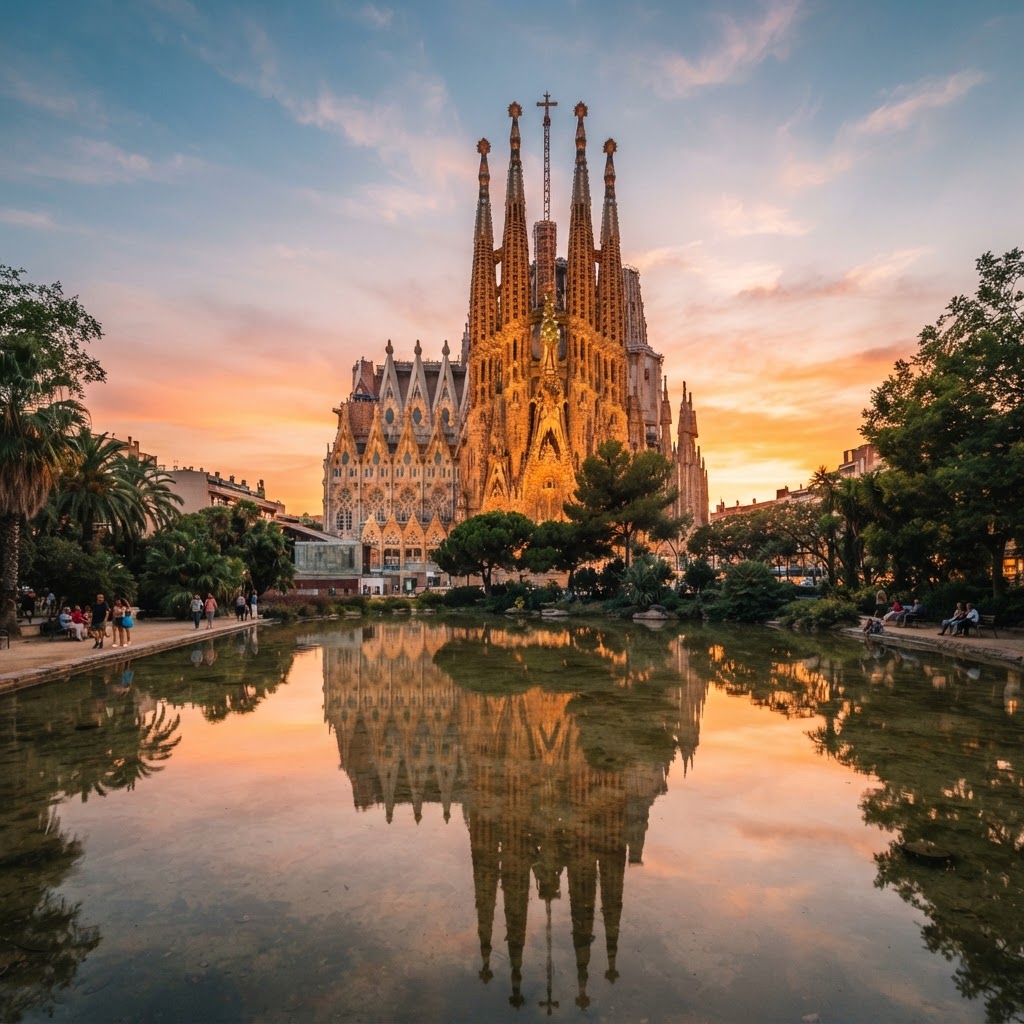
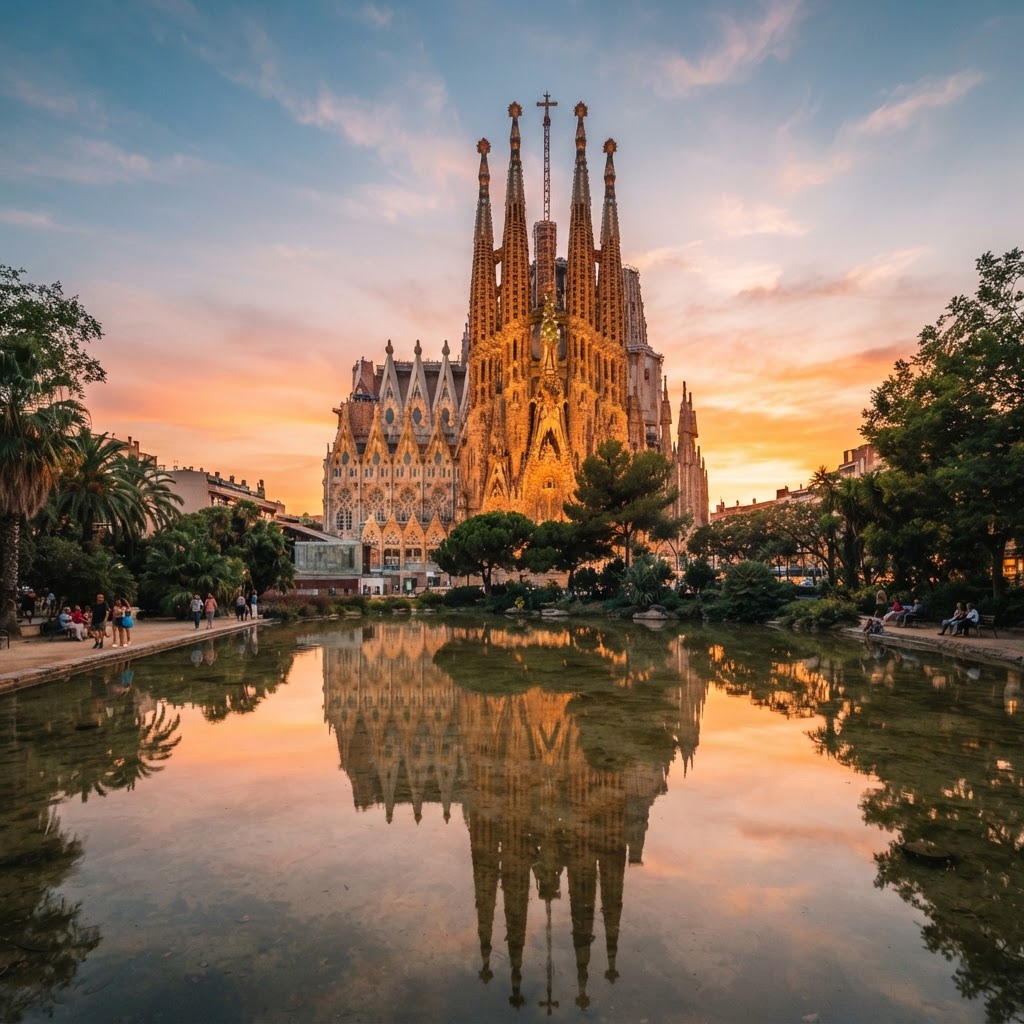
The Sagrada Familia is perhaps the most challenging and rewarding subject for those chasing the golden light, as its massive scale creates complex lighting dynamics. Antoni Gaudí’s magnum opus is a mountain of stone that reaches toward the sky, meaning different facades receive light at distinct intervals. As the sun sets, the Nativity facade is often bathed in a soft, orange light that highlights sculptural work, creating a three-dimensional effect. To capture this, arrive at least 90 minutes before sunset to scout the Plaça de Gaudí; the reflection pool here acts as a natural mirror, capturing the warm glow on the church spires against the purpling sky.
Modernisme Elegance: Casa Batllo and Casa Mila
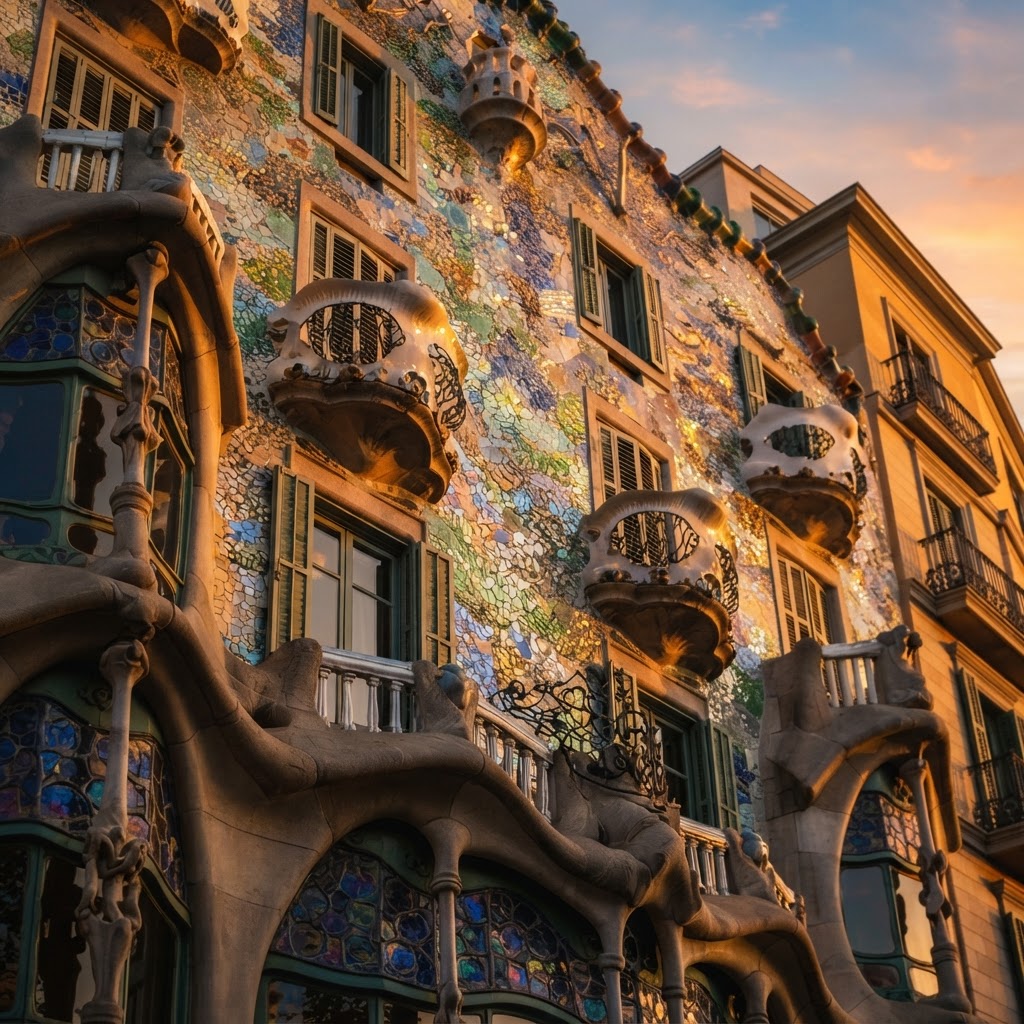
The Eixample district is home to Gaudí’s most famous residential masterpieces, Casa Batlló and Casa Milà, which are essentially designed to be highlighted by the setting sun. Casa Batlló, the ‘House of Bones,’ features colorful glass mosaics that sparkle intensely during the golden hour. When the sun hits the ceramic shards at a low angle, the facade shimmers as if it were underwater, creating a dynamic visual that changes every second. Similarly, Casa Milà (La Pedrera) utilizes deep, wavy limestone carvings that emphasize the fluid, ocean-like movement of its design when hit by evening light. These buildings require a slightly later shooting time than the Sagrada Familia to capture the most intense reflections on their glass elements.
The Gothic Quarter: A Study in Light and Shadow
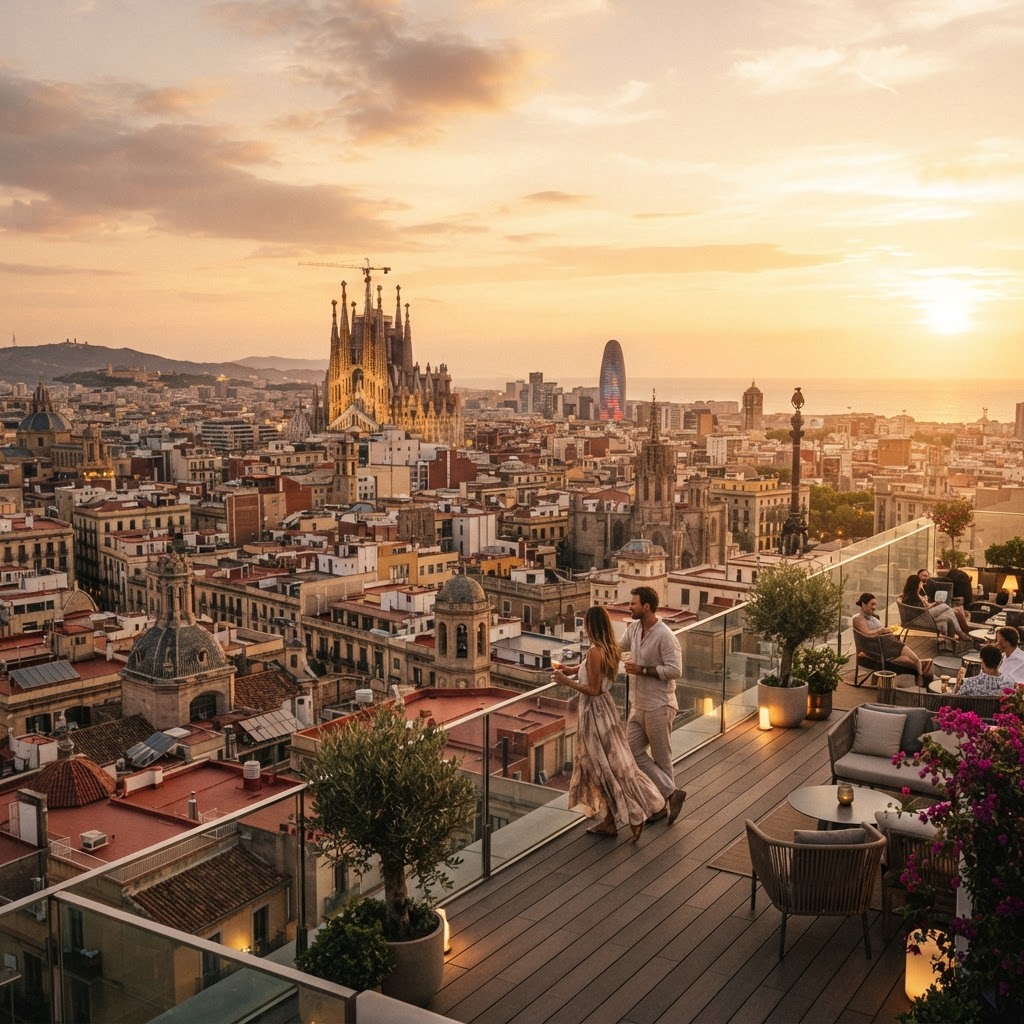
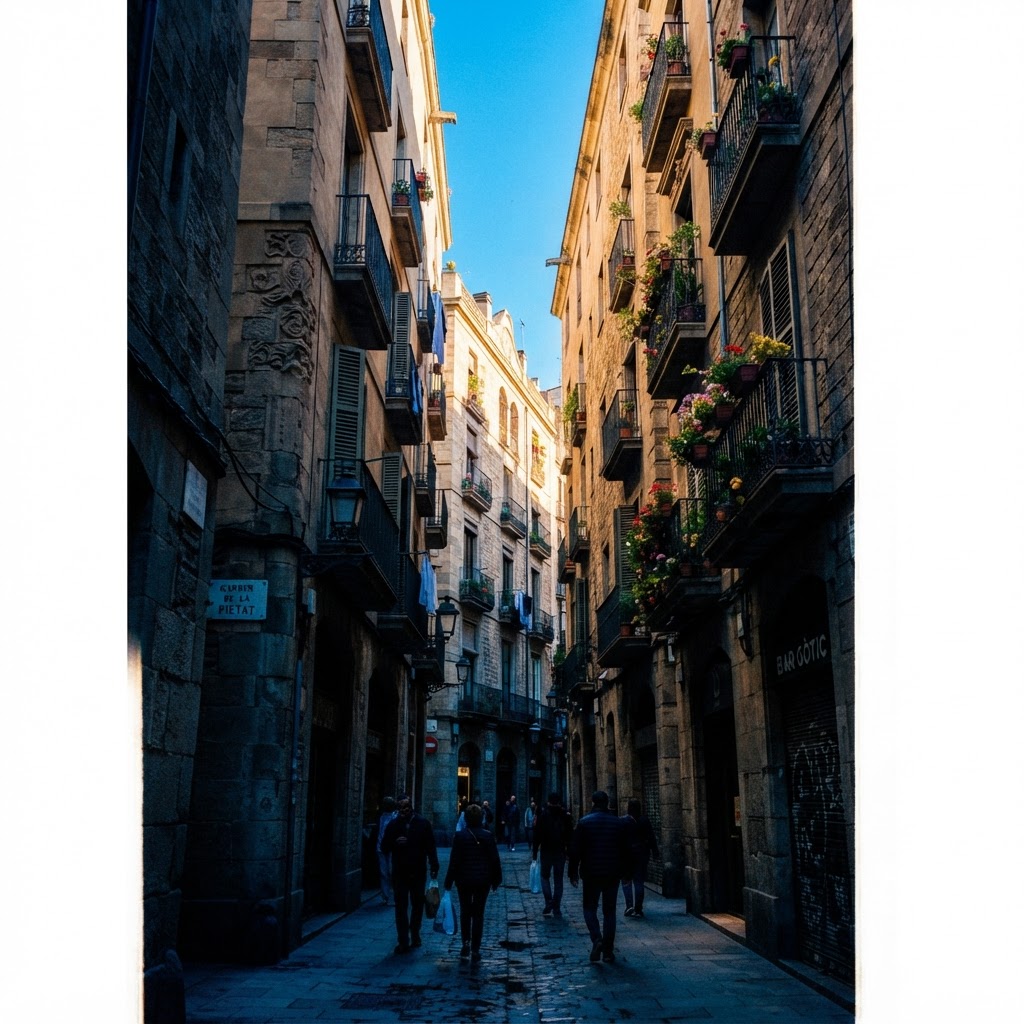
Venturing into the Barri Gòtic offers a unique photographic challenge, as the narrow, winding alleys act as natural light funnels that create high-contrast vertical gradients. While the street level remains in cool, blue shadow, the upper levels of the medieval stone buildings are ignited in shades of rich ochre and gold as the sun descends. This environment is perfect for photographers interested in composition, textures, and the juxtaposition of light and darkness. Focus on elevated vantage points, such as the Barcelona Cathedral roof, to capture the transition from the golden rooftops to the darkening alleys below.
Recommended Locations in the Gothic Quarter
- Plaça de Sant Felip Neri: Excellent for capturing light hitting church walls during the final 20 minutes of sun.
- Carrer del Bisbe: The ornate bridge creates a perfect silhouette against the warm sky.
- Barcelona Cathedral: Offers panoramic views ideal for time-lapses of the city’s light transition.
Essential Gear and Techniques
To make the most of the golden light in Barcelona, you must prepare your gear for rapid changes in exposure. A versatile wide-angle zoom lens is the best choice for capturing both the grand facades and the narrow street views without constant lens swapping. Using a tripod is non-negotiable for the ‘Blue Hour’ that immediately follows the golden hour, as light levels drop significantly.
Setting Your Camera for Success
Achieving the perfect ‘golden’ aesthetic requires manual control over your white balance rather than relying on automatic settings. Set your camera’s white balance to ‘Cloudy’ or ‘Shade’ to prevent the camera from neutralizing the warm, amber tones of the sunset. Additionally, consider underexposing your shots by 0.7 to 1.0 stops; this helps preserve the rich color of the sky and prevents highlight clipping on the illuminated stone textures.
FAQ
Q: When is the best time for golden hour photography in Barcelona?
Golden hour in Barcelona typically begins about 60 to 90 minutes before sunset. However, in the narrow streets of the Gothic Quarter, you should arrive earlier to capture the light hitting the tops of buildings before it disappears behind the tall structures.
Q: Should I use a tripod for Barcelona sunset photography?
Yes, a tripod is essential for high-quality results. While you can shoot handheld during the peak golden hour, the following ‘Blue Hour’ requires long exposures to maintain image sharpness and low ISO values as the light levels drop rapidly.
Q: What camera settings are best for capturing the golden glow?
Use a ‘Cloudy’ or ‘Shade’ white balance setting to emphasize the warm orange and gold tones of the sun. Shooting in RAW format is also critical, as it allows you to recover shadow detail in post-processing, especially when photographing high-contrast scenes like narrow alleys.
Q: Which Barcelona landmark is best for sunset shots?
The Sagrada Familia is widely considered the best subject for sunset due to its intricate, light-catching stone facades. The Plaça de Gaudí, located in front of the church, provides the most iconic vantage point, especially when the reflection pool is calm.
Leave a Reply