8 Hidden Courtyards of Seville You Will Fall In Love With
Seville’s hidden courtyards, known as patios, are historic architectural sanctuaries that blend Roman, Islamic, and Renaissance design to provide natural cooling and intimate social spaces. While most are private, key locations like the Casa de Pilatos and Palacio de las Dueñas offer public access to these vibrant, plant-filled cultural icons.
The Architecture of Seville Patios
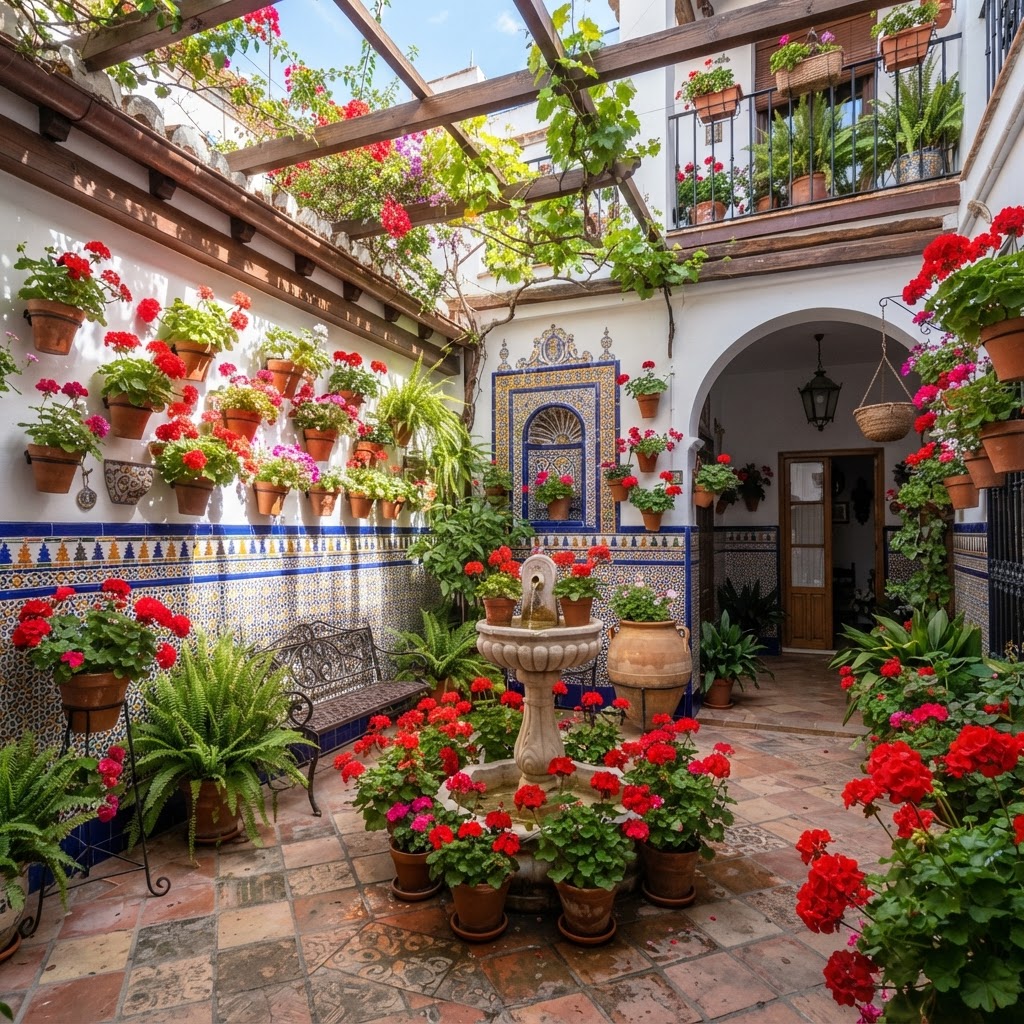
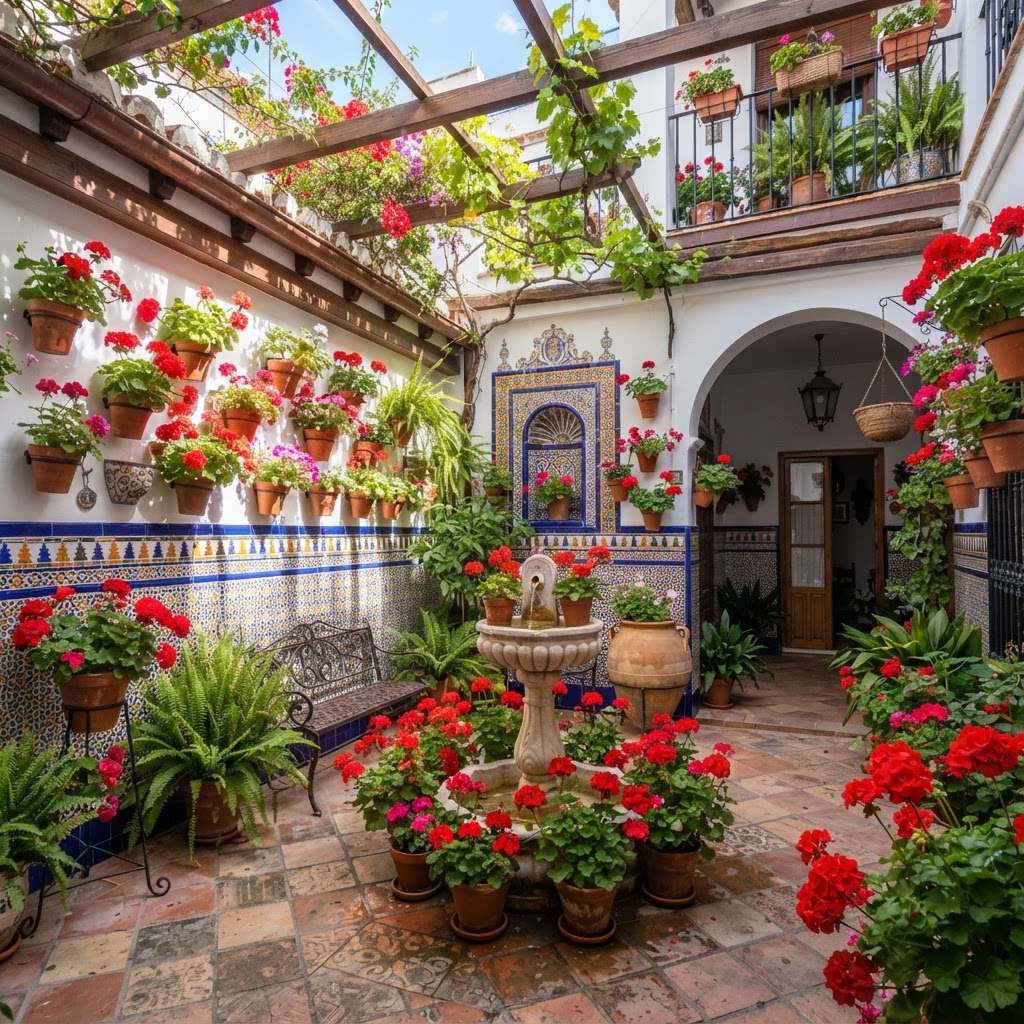
Seville’s patio architecture functions as a sophisticated, pre-modern climate control system rooted in the Roman ‘domus’ design. By utilizing thick masonry walls, marble flooring, and strategic vegetation, these spaces act as thermal insulators against the intense Iberian sun, which regularly exceeds 40°C (104°F) in summer months. The central fountain, or ‘alberca,’ is not merely decorative; it facilitates evaporative cooling, lowering the temperature of incoming air before it circulates into the surrounding living quarters. Furthermore, the layout is specifically engineered to catch prevailing winds, channeling cool air through the house while keeping the heat outside. The inclusion of ‘azulejos’—glazed ceramic tiles—further aids cooling by maintaining a surface temperature lower than brick or plaster. This architectural synergy creates an micro-environment that remains significantly cooler than the street outside. Architects today study these designs as a gold standard for sustainable urban cooling in arid climates. Every element, from the height of the walls to the placement of climbing jasmine, is optimized to manage light and heat, proving that traditional Andalusian engineering was centuries ahead of modern HVAC systems in terms of passive energy efficiency.
Why Courtyards are Essential to Sevillian Culture
For the people of Seville, the patio is a living extension of the home designed for social intimacy and community connection. During the vibrant Patio Festival, held annually in May, private homeowners open their doors to the public, showcasing a competitive tradition of floral displays and intricate tilework. This cultural practice transforms the home into a semi-public sphere where neighbors exchange conversation and cooling breezes. The patio serves as the heart of daily life, acting as a dining area, garden, and sanctuary from the bustling city streets. Understanding the cultural significance of these spaces allows travelers to appreciate the quiet dignity and craftsmanship that define Sevillian identity. The maintenance of these spaces is often a multi-generational labor of love, with families curating specific species of ferns, geraniums, and orange trees to ensure their patio maintains the perfect scent profile. This tradition of “living rooms under the sky” remains the most distinct element of local domestic life in Andalusia.
Casa de Pilatos: The Gold Standard of Patios
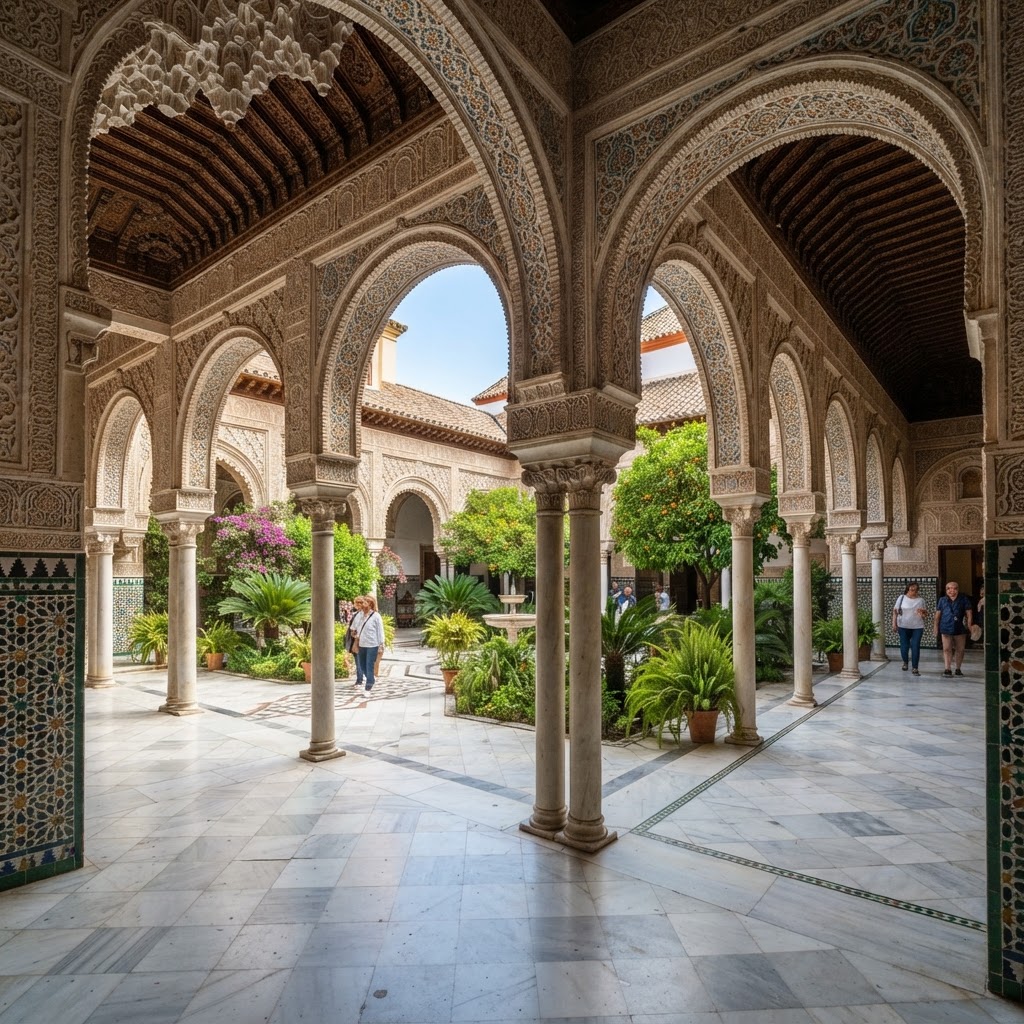
Casa de Pilatos is the premier example of 16th-century Mudejar-Renaissance architecture, serving as a masterclass in Sevillian courtyard design. As the permanent residence of the Dukes of Medinaceli, this palace boasts a central courtyard adorned with 24 Roman busts and over 150 types of colorful azulejo tiles. The structure is celebrated for its “arcos polilobulados” (multi-lobed arches) that showcase an intellectual blend of Islamic geometry and Renaissance statuary. Visitors can explore the ground floor for approximately €12, gaining access to one of the most well-preserved architectural timelines in Spain. The sheer scale of the patio, combined with the delicacy of the stucco carvings, makes it a mandatory stop for anyone wishing to understand the pinnacle of aristocratic Andalusian living. Unlike many smaller, hidden courtyards, the Casa de Pilatos offers a grand, symmetrical layout that emphasizes the wealth and political power of its former inhabitants. It remains a UNESCO-adjacent experience, capturing the essence of a bygone era where architectural detail was a measure of social status.
Features to Notice
When visiting, take time to look at the ‘arcos polilobulados’ (multi-lobed arches) that define the colonnade. These structures were designed to showcase the wealth and intellectual curiosity of the nobility. The integration of classical Roman busts into the Islamic-inspired arches highlights the unique cultural syncretism that makes Seville so fascinating.
Palacio de las Dueñas: A Botanical Treasure
Palacio de las Dueñas offers a more organic, romantic experience compared to the rigid symmetry of other palaces, functioning as a lush botanical living museum. Formerly the residence of the Duchess of Alba, the estate is famous for its dense, diverse vegetation, including massive 100-year-old rubber trees and cascading bougainvillea that climb several stories. The entrance fee is roughly €10–€12, and the experience is significantly different from the formal Casa de Pilatos; it feels like walking through a private, enchanted garden rather than a public building. The courtyard is intentionally designed to be “lived in,” with family memorabilia and personal artifacts scattered throughout the galleries that open into the greenery. The scent of orange blossoms from the estate’s trees is particularly intense in spring, often considered the best olfactory experience in the city. The garden layout utilizes a series of interconnected smaller patios, which prevents the space from feeling overwhelming and maintains an atmosphere of seclusion. This residence is a testament to the bohemian lifestyle of the Spanish aristocracy, favoring plant health and scent profiles over strict architectural geometry, making it a favorite for photography and quiet contemplation.
The Lived-In Feel
This palace was the residence of the Duchess of Alba, and the personal touches remain visible. Walking through the courtyards, you aren’t just looking at a museum; you are walking through the history of a family. The scent of orange blossoms from the trees in the garden is overwhelming in the best way possible, serving as a reminder that Seville is, at its core, a city of scent and color.
Hidden Gems in the Barrio de Santa Cruz
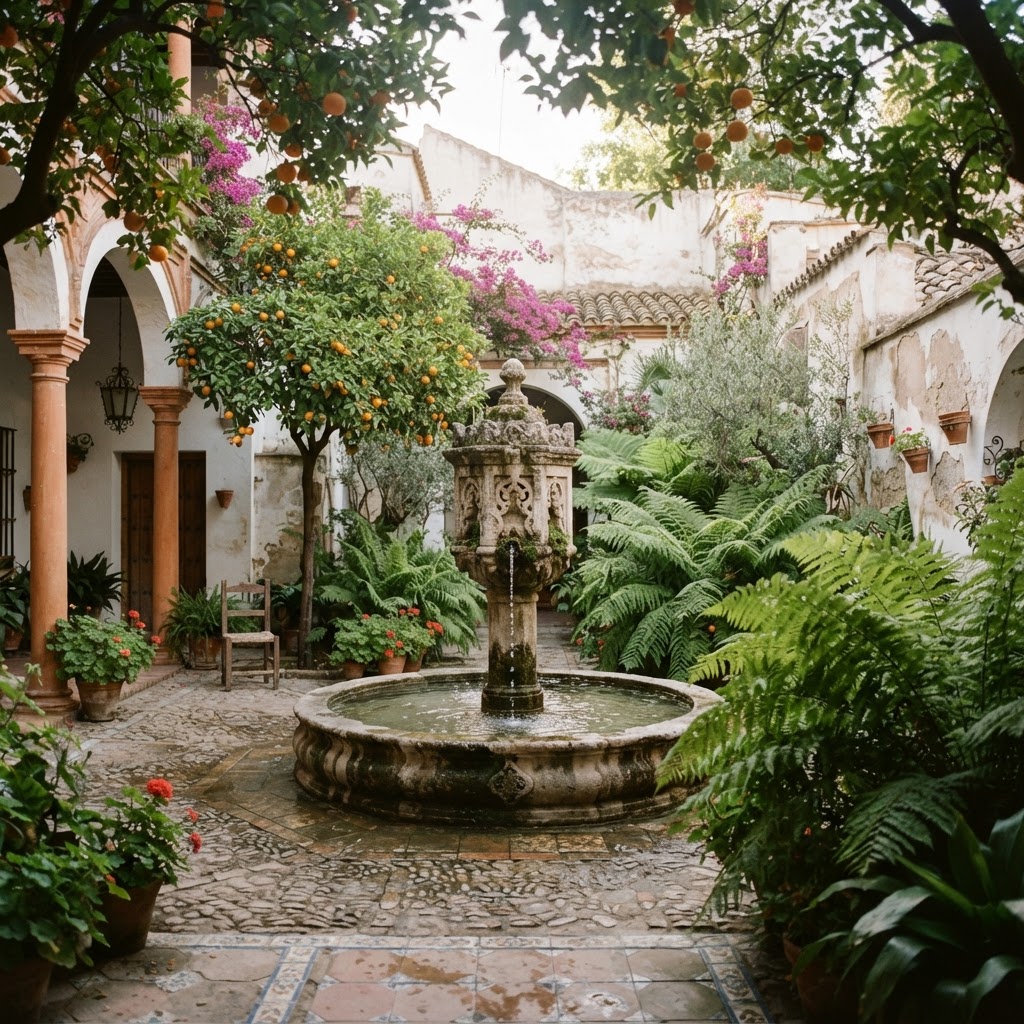
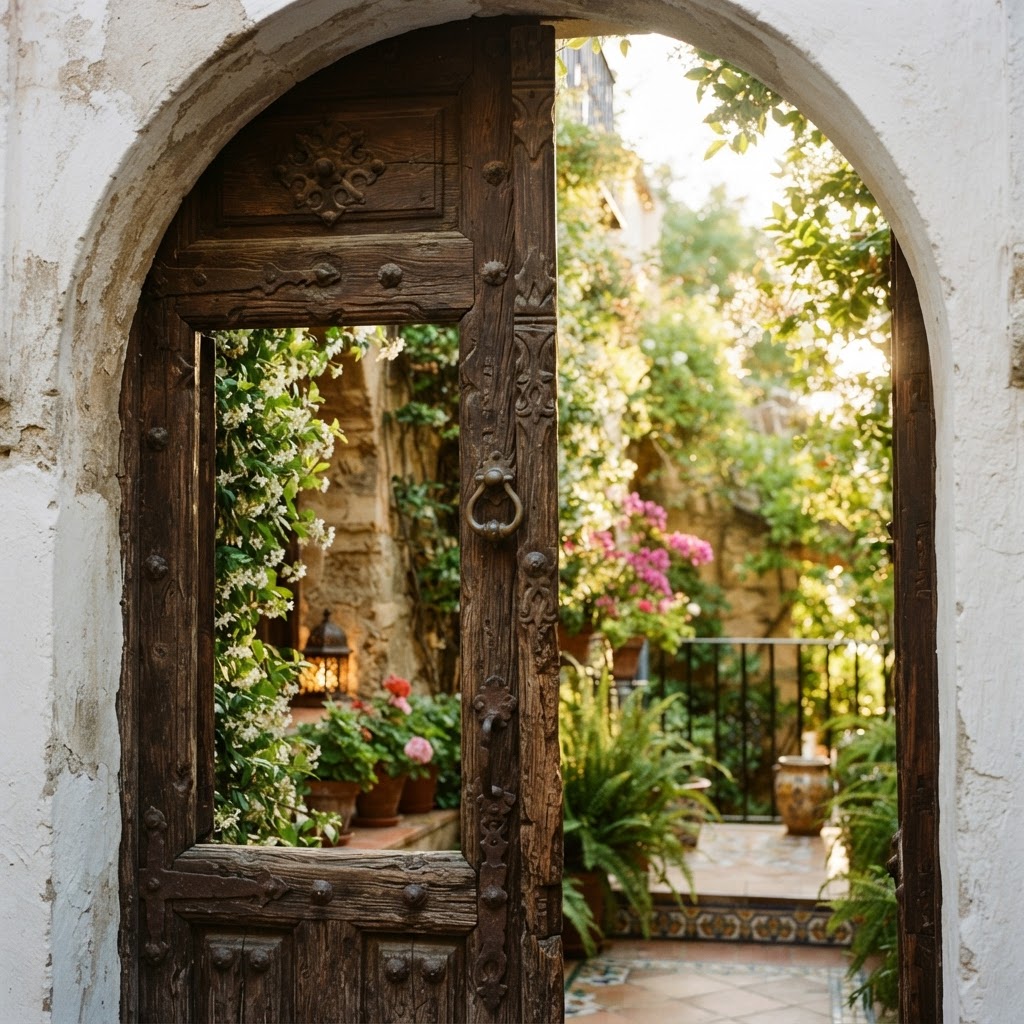
The Barrio de Santa Cruz is a labyrinthine maze of Jewish Quarter streets where the best “hidden” courtyards are often found behind anonymous, understated doorways. While the main tourist attractions are busy, the neighborhood contains at least 30 semi-public courtyards hidden inside boutique hotels, art galleries, and small museums. These spaces are characterized by their extreme narrowness and use of high, whitewashed walls to trap cool air in the dark shadows. To find them, travelers should wander the side streets off Plaza de Santa Marta between 5:00 PM and 8:00 PM, when residents traditionally leave their iron-grille doors open. Unlike the grand palaces, these are intimate, residential-scale spaces that highlight the true vernacular architecture of Seville. Many are free to enter if they are part of a public gallery, though others are strictly private. The interplay of shadows and light against whitewashed walls creates a photographer’s dream. When searching for these gems, listen for the sound of dripping water or look for ceramic pots perched on high window sills, as these are clear indicators of a well-tended hidden patio.
Tips for Exploring
To find the best hidden spots, wander away from the main tourist drag of the Juderia. Look for doors that are slightly ajar or listen for the faint trickling of water. Many of the most beautiful courtyards are found in the older, residential pockets where residents still maintain the tradition of keeping their doors open during the early evening hours, allowing for a fragrant breeze to filter through the neighborhood.
Hospital de los Venerables: A Baroque Masterpiece
Located in the heart of the historic center, the Hospital de los Venerables serves as the premier example of 17th-century Baroque patio design adapted for philanthropy. Originally built as a residence for retired priests, the two-story, gallery-enclosed courtyard is a masterpiece of symmetry and light management. The patio is surrounded by elegant marble columns and arches that support a higher mezzanine level, allowing for more natural light than traditional Mudejar patios while maintaining cooling efficiency. Today, it houses the Velázquez Center and requires a ticket (approx. €10) to access the patio and permanent art collection. The courtyard is uniquely quiet compared to nearby plazas, owing to its thick limestone walls and acoustic dampening provided by the surrounding galleries. It serves as a perfect example of how the Spanish Baroque style prioritized order and religious devotion alongside the classic, functional cooling of the traditional Sevillian home. Visitors should note that the patio is one of the most photogenic in the city, especially during the “golden hour” when the sun hits the upper galleries, creating soft, warm lighting across the stone.
The Role of Water and Vegetation
No discussion of these courtyards is complete without mentioning the essential elements of water and plants. The ‘fuente’ (fountain) is the centerpiece, providing a rhythmic, calming sound. The greenery—typically ferns, geraniums in clay pots, and creeping ivy—is chosen specifically for its ability to thrive in the microclimate of the patio. This combination creates an oasis effect that lowers the ambient temperature by several degrees. The plants are not just aesthetic; they are functional air purifiers that increase humidity in an otherwise dry climate. Most patios feature a “revolving” plant cycle, where seasonal flowers like carnations and petunias are rotated into the space to ensure year-round color. This botanical management requires significant time, with most courtyard owners spending upwards of 5–10 hours per week watering and pruning. This dedication preserves the “oasis” microclimate that makes Seville livable during the 40°C summer heat. The use of clay pots is also critical, as the porous material helps regulate soil moisture, preventing root rot while providing a natural, rustic aesthetic that has remained unchanged for centuries.
The Language of Flowers
In Seville, the way a courtyard is decorated is a sign of pride. Residents compete informally to see whose geraniums grow the tallest or whose jasmine is the most fragrant. This competitive spirit ensures that the hidden courtyards of Seville remain well-maintained and continue to be a vibrant part of the city’s visual identity, bridging the gap between indoor and outdoor life.
Practical Guide to Visiting Seville Patios
If you are planning a trip to see these spaces, timing is everything. The best time to visit is during the spring, particularly in May, when the weather is mild and the flowers are in full bloom. Many of the private courtyards are part of the ‘Ruta de los Patios,’ an unofficial but highly recommended walking tour that focuses on the architectural history of the city.
FAQ
Q: When is the best time to visit Seville’s courtyards?
The best time to visit is during the month of May, specifically during the annual Patio Festival. During this time, many private homeowners open their doors to the public, offering the best opportunity to see the flowers in full bloom and experience the vibrant local culture.
Q: Are there free courtyards I can visit in Seville?
While most historic palaces charge an entry fee, many smaller art galleries and historic houses in the Barrio de Santa Cruz are free to enter. Look for open doorways on side streets, but always respect the privacy of residents if a space is clearly marked as a private home.
Q: Why do Sevillian courtyards have fountains?
Fountains are installed in Sevillian patios primarily to provide evaporative cooling, which lowers the air temperature in the house during the hot summer months. The rhythmic sound of water also creates a calming, meditative atmosphere that defines the “oasis” feel of the traditional Andalusian home.
Q: Can I take photos of the private courtyards?
Photography is generally welcomed in public-access palaces, but you should always ask permission before taking photos in private residences or boutique hotels. Many locals take great pride in their courtyards, so a polite request in Spanish is usually met with a friendly response.
Q: Are the courtyards open year-round?
Most public-access courtyards are open year-round, but the floral displays reach their peak brilliance only during the spring months of April and May. If you visit in winter, you will see the structural beauty of the tiles and arches, but the lush, green garden elements will be less vibrant.
Leave a Reply