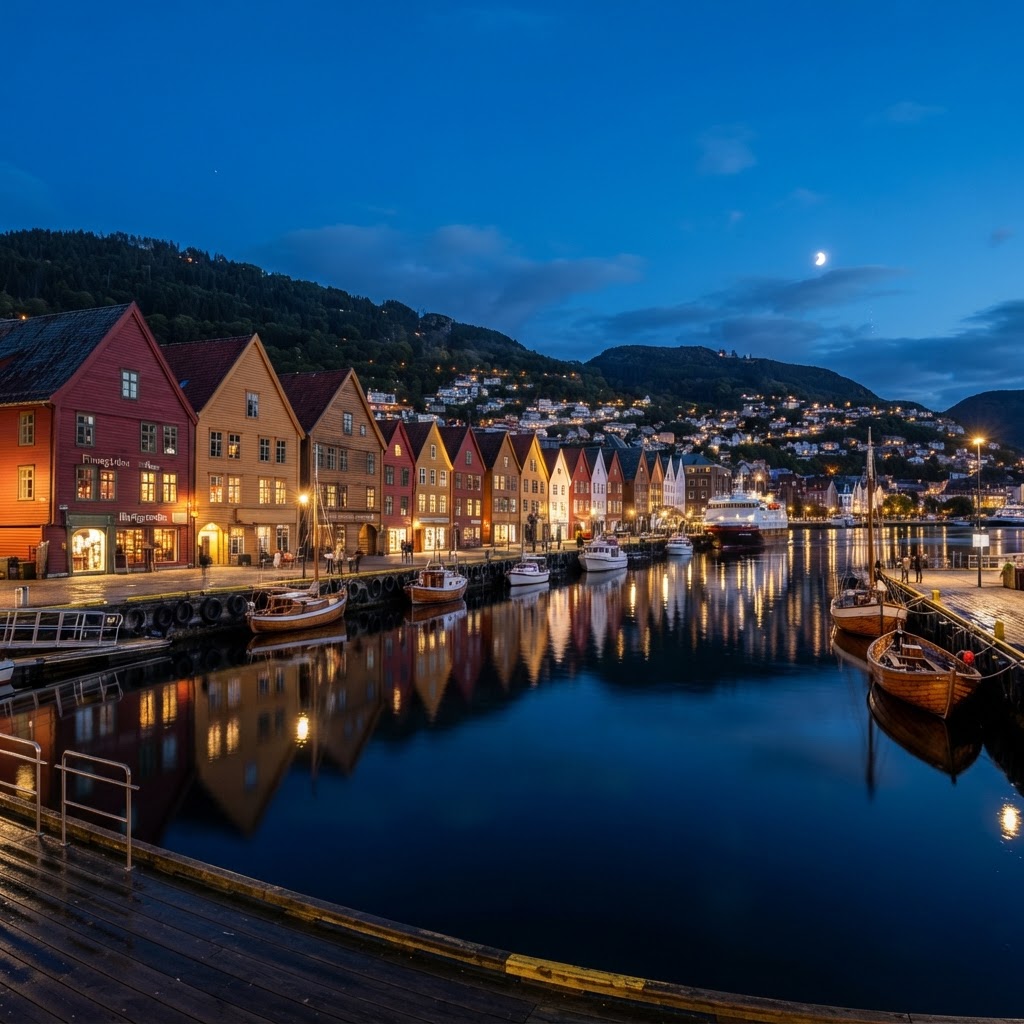
Bergen’s Colorful Harbor at Dusk: A Magic Hour Guide
Bergen’s harbor, particularly the UNESCO-listed Bryggen wharf, reaches its visual peak during the “magic hour”—the hour surrounding sunset when soft, diffused light illuminates the historic wooden facades against the deep blue Nordic sky. Photographers and travelers find this the ideal time for capturing the city’s iconic reflections, architectural textures, and authentic maritime atmosphere without the daytime crowds.
The Historical Context of Bryggen
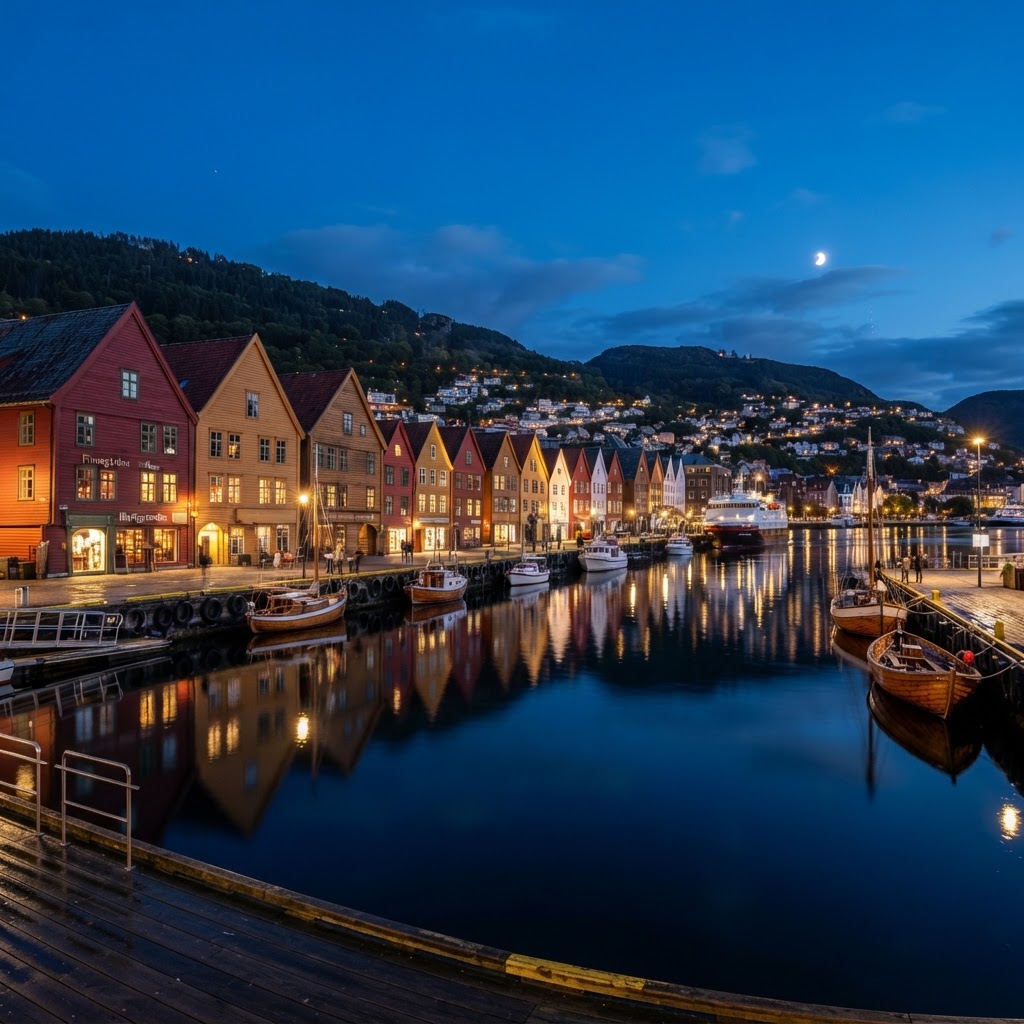
Bryggen serves as the heart of Bergen’s history, representing the Hanseatic League’s dominance in Northern European trade from the 14th to the mid-16th century. These wooden structures, characterized by their tilted facades and narrow, winding alleyways, were originally used as warehouses for stockfish—dried cod exported across the continent. Despite enduring multiple catastrophic fires—most notably in 1702, 1955, and 1958—the site remains a UNESCO World Heritage treasure, with many buildings painstakingly reconstructed using traditional medieval techniques.
Walking along the docks, visitors can experience the density of 900 years of history. The wood, weathered by salt and high-latitude winds, glows with a deep intensity during the golden hour, highlighting the organic ochre, red, and yellow pigments derived from natural minerals. Unlike many modern tourist sites, Bryggen is a living monument; archaeologists still conduct ongoing excavations here, often uncovering artifacts dating back to the late Viking Age. This layer of historical authenticity, combined with the structural resilience of the timber, provides a unique aesthetic that changes based on the angle of the low-hanging sun. For historians and photographers alike, it is a site that demands patience to observe how light alters the perception of these ancient, resilient structures.
Why Dusk is the Best Time to Visit
Visiting Bergen’s harbor during the twilight transition provides superior lighting conditions and a more intimate visitor experience compared to the busy midday hours. When the sun drops behind the coastal mountains, the harsh shadows of noon disappear, replaced by a soft, directional light that brings out the intricate textures of the wooden planks. During these hours, foot traffic typically decreases by approximately 60%, allowing travelers to wander through the quiet alleys without the obstruction of cruise ship crowds.
Beyond the lighting, the water in Vågen bay often turns into a glassy mirror during the calmest part of the evening. This creates a “double exposure” effect where the vibrant, saturated colors of the Bryggen wharf are reflected perfectly on the harbor surface. This natural phenomenon enhances the fairy-tale aesthetic often cited in travel literature, transforming the working harbor into a surreal, painterly landscape that is impossible to replicate during the bright, busy morning or afternoon hours.
Must-Visit Photography Spots
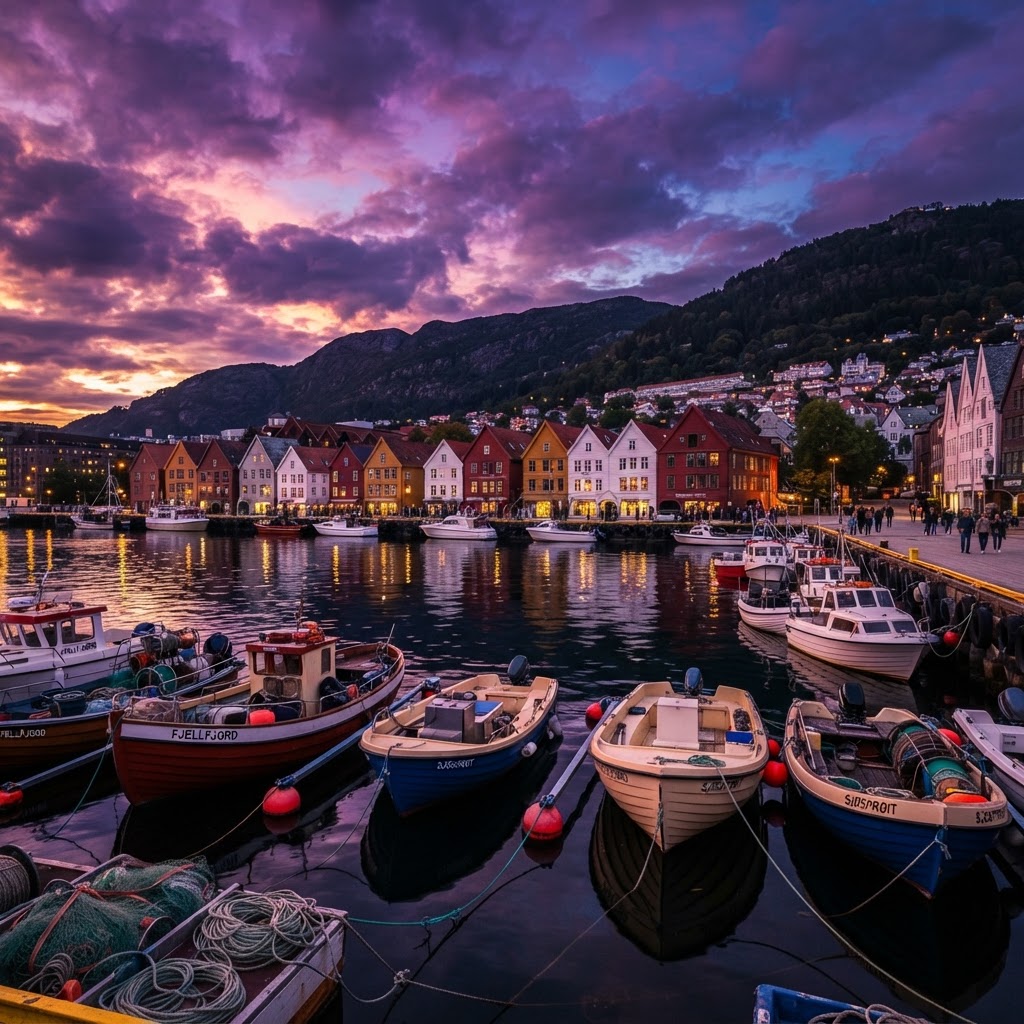
Finding the perfect vantage point in Bergen requires balancing panoramic scope with intimate detail. For the classic wide-angle shot that frames the entire length of the Bryggen wharf, stand near the Fisketorget (Fish Market) area. This position allows you to include the surrounding mountains in the background, anchoring the architecture within the dramatic Norwegian geography. If you are shooting during blue hour, ensure your aperture is set between f/8 and f/11 to capture the sharpness of the timber detailing while maintaining a beautiful depth of field.
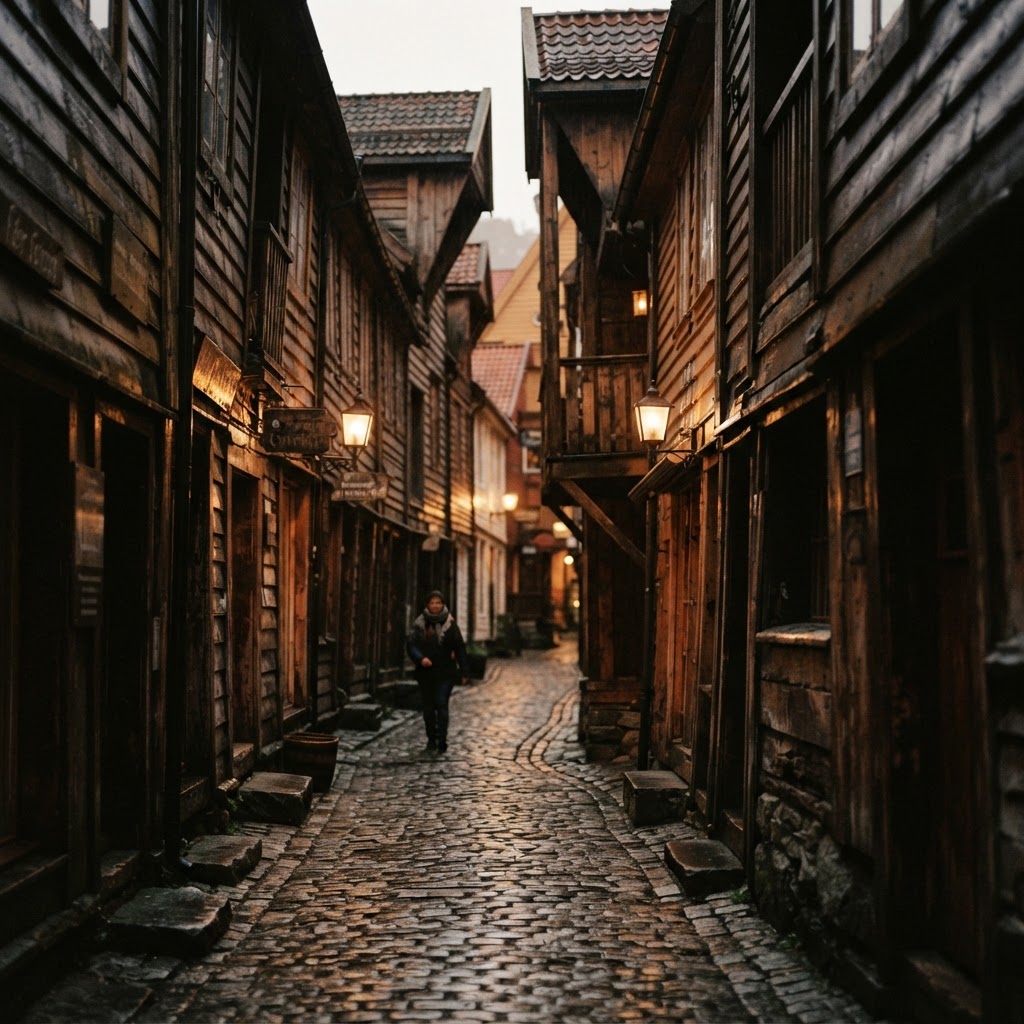
For more atmospheric or abstract imagery, venture into the “Bryggestredet,” the narrow passages between the buildings. These corridors provide a unique vertical framing opportunity where the leaning wooden walls create leading lines that draw the viewer’s eye toward the sky. Here, the warm glow of hanging lanterns contrasts with the cool, dim ambient light of the alleys, producing a moody, mysterious, and cinematic look.
Recommended Gear for Twilight Shoots
- Sturdy Tripod: Required for shutter speeds longer than 1/60s to maintain sharpness in low light.
- Wide-Angle Lens (16-35mm): Essential for capturing the full scale of the wharf facades.
- Polarizing Filter: Necessary to cut the glare on the harbor water and enhance reflections.
- Extra Batteries: Lithium-ion batteries drain up to 30% faster in the damp, cool evening air of Bergen.
Connecting with Local Culture
Bergen functions as a vibrant cultural center where the transition from business to leisure is marked by the shifting light of the evening. As the harbor transitions into night, the area surrounding the wharf becomes a hub for dining, with many converted warehouses now housing high-end seafood restaurants specializing in local ingredients like Bergen-style fish soup, king crab, and fresh salmon. Sitting in a waterfront café, travelers can observe the daily rhythm of local workers returning home, a practice that adds an authentic layer of life to the tourist experience.
This connection to the sea is the heartbeat of Bergen, a city that has prioritized its maritime heritage for over 900 years. Unlike many “theme park” style historic districts, the shops and studios within Bryggen are actively used by local artists, goldsmiths, and boutique crafters. Engaging with these artisans before they close for the night provides a window into contemporary Norwegian culture that exists simultaneously with the historical backdrop. By choosing to spend your evening here rather than in a hotel room, you witness the city’s steady, rhythmic transition from a productive trading hub into a serene, illuminated coastal sanctuary.
Navigating Weather Shifts
Bergen is officially one of the wettest cities in Europe, averaging over 2,250mm of rainfall annually, yet this precipitation is a secret weapon for photographers. When rain showers pass, the wet cobblestones become highly reflective surfaces, acting as natural mirrors that bounce the colorful lights of the harbor back toward your lens. This creates a dramatic, cinematic “city at night” look that feels much more vibrant than a dry, overcast evening.
To navigate these shifts, preparation is essential: a waterproof cover for your camera and a durable rain jacket for yourself are non-negotiable. Often, the most spectacular, high-contrast light occurs immediately after a heavy rain shower, when the clouds break and the low sun creates a “god-light” effect on the wharf. Do not retreat to a café the moment the rain starts; instead, wait for that critical 10-minute window of clearing skies to capture the most rewarding images of your trip.
Seasonal Variations in Lighting
The perception of time and light in Bergen changes dramatically based on your travel dates. During the summer solstice in June, the sun barely dips below the horizon, creating a prolonged, surreal blue hour that can last for several hours, providing an extended window for golden-hour photography that feels like an endless afternoon. In contrast, the winter months see the sun setting as early as 3:30 PM, leading to a quick, sharp transition into darkness characterized by cozy, festive lighting and the glow of interior lamps.
Essential Travel Tips for Bergen
FAQ
Q: What is the best month to photograph Bryggen at dusk?
September and October are ideal for photography because they offer a perfect balance of stable weather, reasonable sunset hours (around 7:00 PM), and the beautiful turning colors of the autumn foliage against the red timber.
Q: Do I need a permit to take professional photos at the harbor?
No, public photography for personal use is permitted throughout the harbor area and Bryggen. However, if you are conducting a commercial shoot with lighting rigs or models, you must contact the local municipal authority in Bergen for a temporary filming permit.
Q: Are the wooden buildings at Bryggen safe to enter at night?
Yes, the public areas of the wharf are safe and well-lit, though the narrow, uneven wooden floors and low ceilings require caution. Stick to the marked paths, as many of the upper stories are private workshops and artist studios that close in the evenings.
Q: Can I use a drone to film the harbor at dusk?
Generally, drone usage is heavily restricted in the city center and near the harbor due to high pedestrian traffic and safety regulations. Always check the local “Avinor” drone map before flying, as unauthorized use can lead to significant fines.
Q: Is there an entrance fee to walk around Bryggen?
There is no entrance fee to explore the outdoor alleyways and the public docks of Bryggen. You can walk through the historic site 24/7, though the individual shops and galleries generally maintain standard business hours of 10:00 AM to 5:00 PM.
Mastering the Golden Hour: Pro Tips for Your Shoot
You need a tripod. The light fades quickly in Norway, and long exposures are essential for capturing those glassy reflections on the water. Use a wide-angle lens to capture the verticality of the warehouses, but switch to a 50mm prime to isolate the intricate textures of the salt-worn timber.
Don’t shoot only toward the wharf. Turn around and face the hills behind the city. As the sun sets behind Mount Ulriken, the sky turns a vibrant shade of violet that complements the ochre buildings perfectly. This provides a balanced color palette that is often missing from typical tourist photos.
The Hidden Alleyway Perspective
Most visitors stay on the main wooden dock. Walk deep into the dark, narrow alleys between the buildings instead. These spaces act as natural light tunnels. When the sun is very low, it hits the end of the alley, creating a dramatic silhouette effect that emphasizes the age of the wood.
A Practical Timeline for Your Evening
Start your walk at the fish market precisely two hours before sunset. This gives you time to scout the best angles while the shops are still buzzing with activity. By the time the golden hour begins, you will already be positioned in the quietest, most photogenic spots near the Hanseatic Museum.
- 60 minutes before sunset: Scout the northern end of the docks for clear water reflections.
- Sunset: Position your camera at the water’s edge for the classic wharf glow.
- 30 minutes after sunset: Move to the elevated viewpoints near the fortress for a panoramic perspective.
Skip the expensive harbor cruises during these hours. You will get better photos by staying on solid ground where you can control your exposure time. Save that money for a warm bowl of fish soup at one of the local bistros nearby.
Common Pitfalls to Avoid
The biggest mistake is ignoring the weather forecast. Bergen is famous for its rain, but rain is not necessarily bad for photography. Wet wood reflects light much better than dry wood. If it starts to drizzle, keep shooting. The colors become richer and deeper under a cloudy, wet sky.
Another error is arriving too late. Once the sun dips below the mountains, the light drops off exponentially in just fifteen minutes. If you arrive exactly at sunset, you have already missed the best intensity of the golden light.
Essential Traveler Checklist
- Bring a microfiber cloth to wipe spray and moisture off your lens constantly.
- Wear waterproof boots, as the wooden docks can be slippery and wet.
- Carry a spare battery kept in an inside pocket to keep it warm.
- Download a high-quality sunrise and sunset tracker app for local precision.
Frequently Asked Questions
Is it safe to walk around the harbor at night?
Yes, Bergen is exceptionally safe for solo travelers and photographers. The city center is well-lit, and even the narrow alleys of Bryggen feel secure, though they can be quite dark due to the lack of modern street lighting.
Do I need to pay an entrance fee to explore the wharf?
No, the wharf is a public space and completely free to explore. You only pay if you enter the specific museums or private workshops located within the buildings.
What is the best month to catch this light?
September is ideal. The sun sets at a reasonable time, allowing you to enjoy the magic hour without staying up until midnight as you would in mid-summer.
Leave a Reply