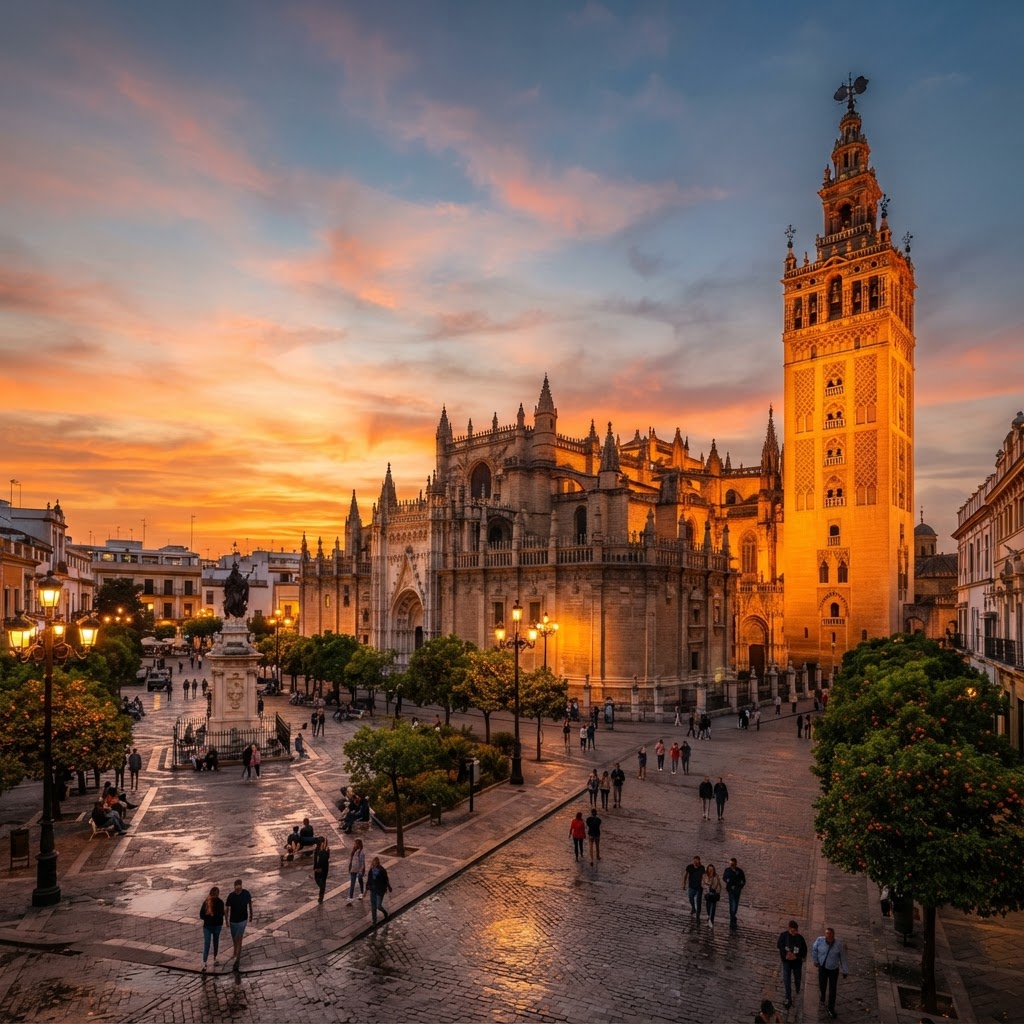
Inside the Most Beautiful Cathedral in Spain
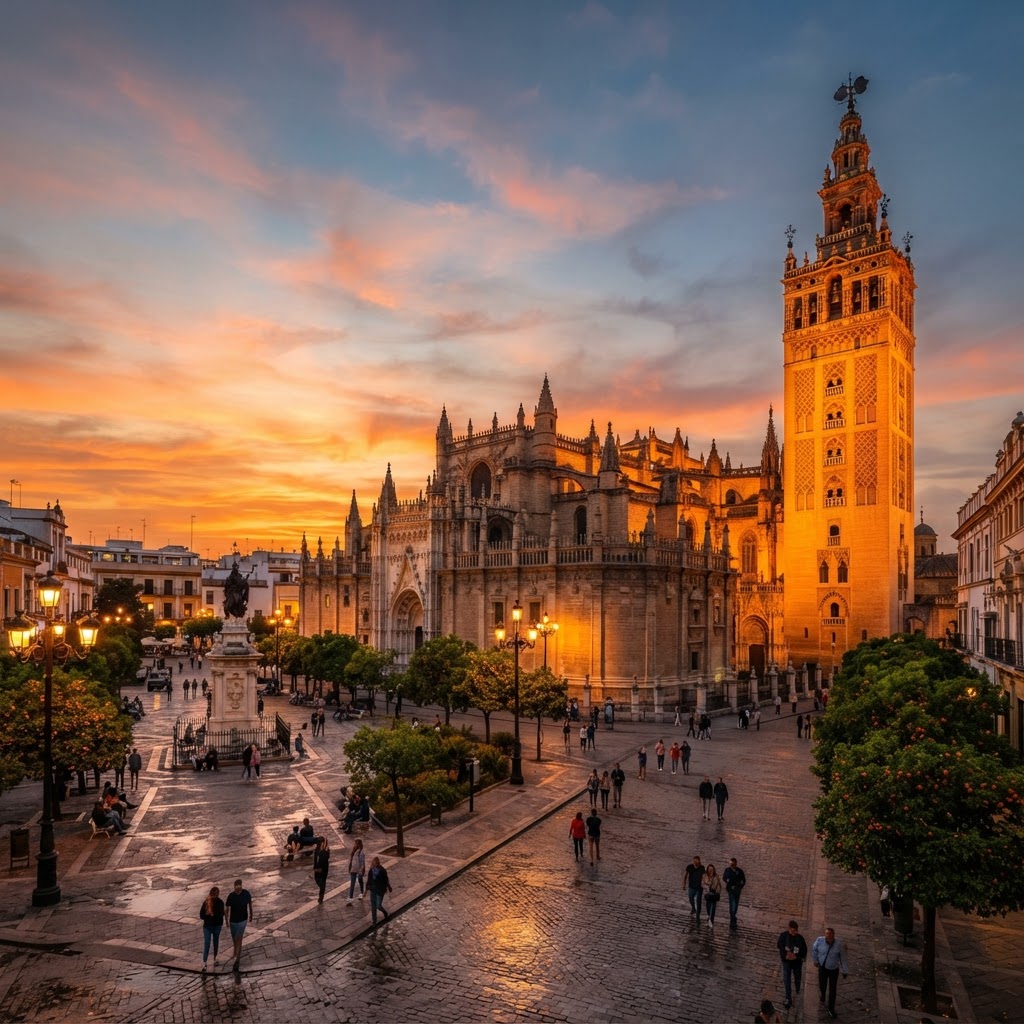
The Seville Cathedral, or Cathedral of Saint Mary of the See, is officially recognized as the most beautiful cathedral in Spain due to its status as the world’s largest Gothic church and its unique fusion of Almohad Islamic architecture and grand Catholic design. This UNESCO World Heritage site serves as the ultimate symbol of Andalusia’s historic, religious, and artistic evolution.
The History of the Most Beautiful Cathedral in Spain
The history of the Seville Cathedral is defined by a radical transformation from an Almohad-era mosque into a symbol of Catholic supremacy following the 1248 Reconquista. By 1401, city officials mandated the construction of a temple so immense that future generations would consider them insane, leading to over a century of labor by master architects and craftsmen. The site preserves the “Patio de los Naranjos,” the original mosque courtyard, which serves as a physical bridge between the city’s Islamic roots and its subsequent Christian identity. This historical duality is precisely why architectural historians and travelers alike rank this structure as the most beautiful cathedral in Spain. The evolution from the Great Mosque to a Gothic masterpiece showcases how different cultural layers can coexist within a single monumental footprint, providing a tangible narrative of Spanish history that spans over 800 years of change, conquest, and artistic innovation.
Unveiling Gothic Architecture at Its Finest
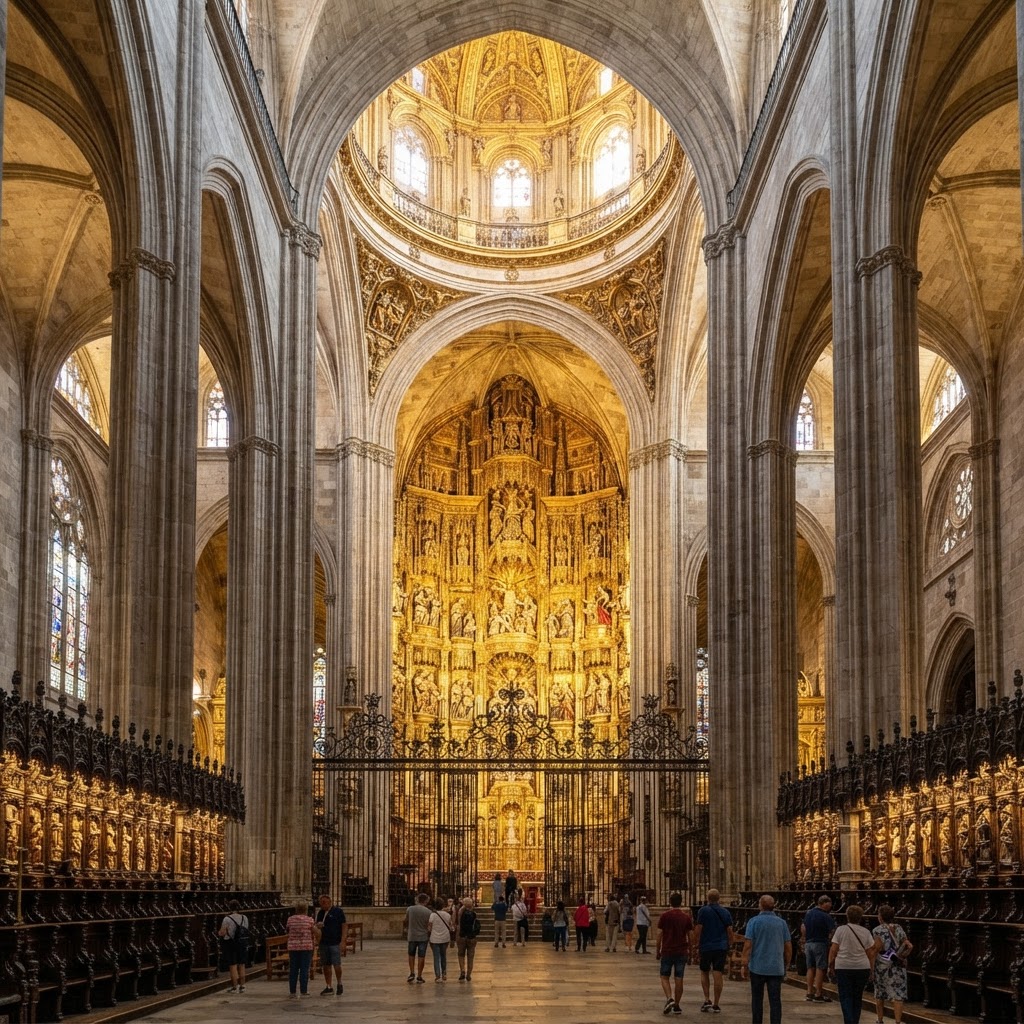
Spanish Gothic architecture finds its most ambitious expression within the Seville Cathedral, characterized by vast verticality, heavy structural columns, and an overwhelming interior volume that dwarfs contemporary European cathedrals. Unlike the ethereal, light-focused French Gothic style, the interior here feels monumental and grounded, drawing the eye toward the ceiling to emphasize the sheer scale of the nave. The Capilla Mayor houses the world’s largest retablo, a colossal altarpiece carved from wood and gilded in an estimated 2.5 tons of gold. This masterpiece represents the zenith of 15th and 16th-century craftsmanship. Visitors often note that the light filtering through the stained-glass windows creates a distinct, moody atmosphere that highlights the heavy stone vaults and the intricate carvings of the choir stalls. These architectural choices create an immersive experience that feels both ancient and awe-inspiring, solidifying its reputation as a structural triumph that remains unmatched in its complexity.
Architectural Highlights to Notice
- The Flamboyant Gothic arches that decorate the triforium.
- The intricate stained-glass windows that filter the Andalusian sunlight.
- The massive supporting buttresses that keep the structure standing against the passage of time.
- The Renaissance-style sacristies that show a departure from the strict Gothic form.
| Feature | Description | Importance |
|---|---|---|
| Altarpiece | Largest in the world | Artistic pinnacle |
| Construction Period | 1401–1506 | Gothic evolution |
| Primary Style | Spanish Gothic | Cultural significance |
Climbing the Iconic Giralda Tower
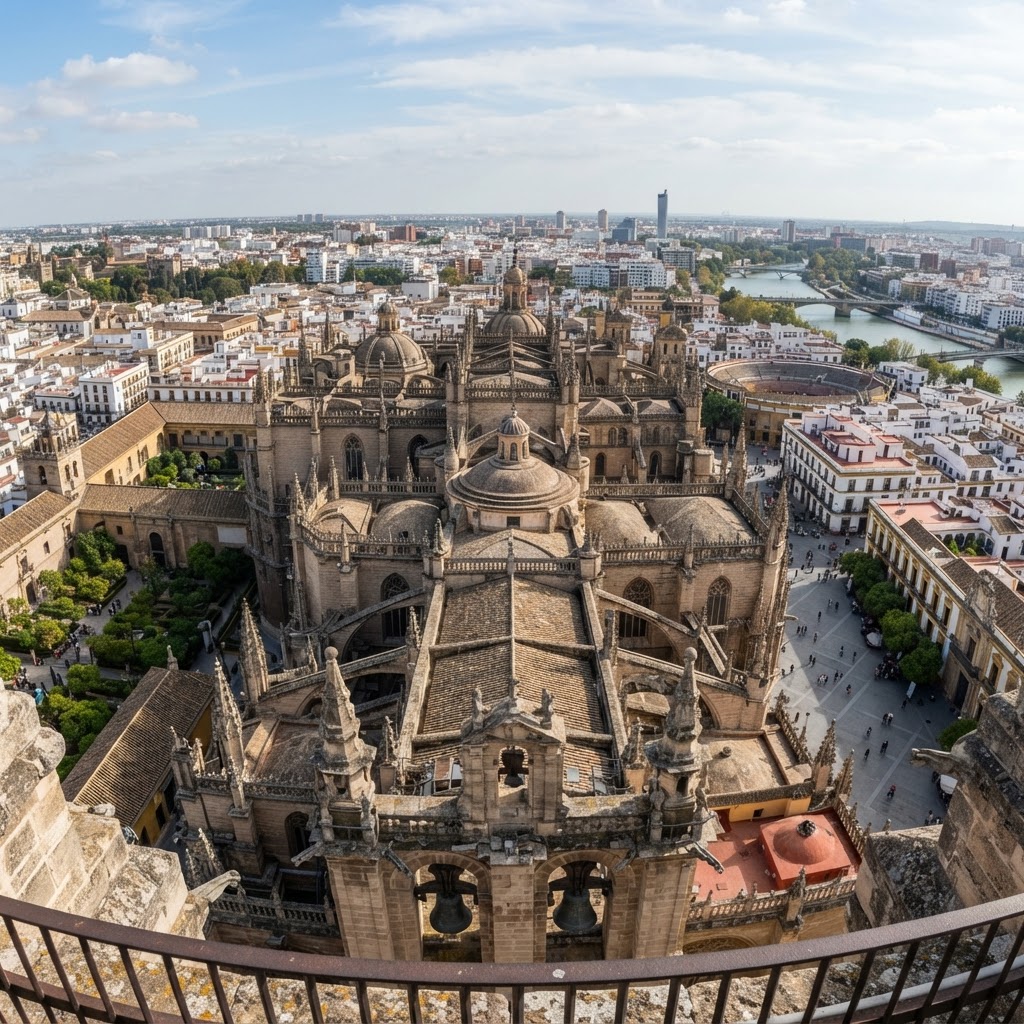
Ascending the Giralda tower is a fundamental part of the Seville experience, offering a unique opportunity to climb 35 gentle ramps instead of stairs, a design originally intended to allow the Muezzin to ride a horse to the summit. Standing at 104 meters tall, the tower served as the minaret for the original mosque and now acts as the cathedral’s iconic bell tower. The climb provides a panoramic vantage point of the Seville skyline, where you can observe the distinct layout of the Jewish Quarter (Santa Cruz) and the surrounding rooftops of the city. The architectural transition from the brickwork of the Almohad period to the Renaissance-style belfry added in the 16th century is clearly visible from the top. Visitors should anticipate a moderate workout during the ascent, but the view of the Cathedral’s roof and the surrounding Alcázar gardens justifies every step. This climb is not merely a sightseeing opportunity; it is a physical connection to the layered historical timeline of the city.
The Legacy of Christopher Columbus
The tomb of Christopher Columbus stands as the most famous funerary monument in the Seville Cathedral, featuring an elaborate bronze cenotaph depicting the four pallbearers representing the historic kingdoms of Castile, Leon, Aragon, and Navarre. The explorer’s remains were brought here in 1899, symbolizing the inextricable link between the cathedral’s wealth—funded by the riches of the New World—and the Age of Discovery. The tomb is elevated on a stone platform to ensure it remains dry, a testament to the complex history of moving the remains across the Atlantic. For history enthusiasts, the tomb serves as a focal point to discuss Spain’s colonial past and the global influence that Seville held as a major maritime hub in the 16th century. It remains one of the most photographed and visited sites within the complex, serving as a solemn reminder of the monumental shifts in human geography initiated by Columbus’s voyages.
Planning Your Visit to Seville
To optimize your visit, purchase tickets online at least 48 hours in advance to avoid long queues, as capacity is strictly managed daily. Standard general admission typically ranges from €12 to €16, depending on whether you book through the official site or a guided tour operator. We recommend arriving at the 9:30 AM opening time to experience the nave before the midday tour groups arrive, providing a better atmosphere for viewing the interior. When planning your itinerary, allocate at least 3 hours for the cathedral and Giralda, and pair this with an afternoon visit to the nearby Royal Alcázar to capture the full scope of Seville’s dual heritage. Note that modesty is required; shoulders and knees must be covered to enter this sacred space. By scheduling your visit for weekdays, you can avoid the weekend surge of local and international tourists.
| Tip | Recommendation |
|---|---|
| Best Time | 9:30 AM (Opening) |
| Booking | Online (Mandatory) |
| Duration | 3 Hours Minimum |
| Dress Code | Modest (No sleeveless) |
FAQ
Is Seville Cathedral the biggest in the world?
Yes, the Seville Cathedral is officially recognized as the largest Gothic cathedral in the world. Its massive scale is verified by its total interior volume, which covers approximately 11,520 square meters of floor space.
Do I need to buy tickets in advance?
Yes, purchasing tickets in advance is highly recommended due to high visitor volume. During peak tourist seasons and weekends, tickets often sell out online, and purchasing at the door can result in multi-hour wait times.
How long does it take to see the cathedral?
Plan for at least three hours to explore the cathedral, the tomb of Christopher Columbus, and the climb to the top of the Giralda tower. If you intend to use an audio guide or explore the courtyards, consider adding another hour.
Is the climb up the Giralda tower difficult?
No, the climb is not strenuous because the tower uses a system of 35 ramps rather than traditional stairs. This allows for a gradual, steady ascent that is accessible to most people in good health.
What should I wear to visit the cathedral?
Visitors must adhere to a modest dress code to be granted entry. This generally means covering your shoulders, avoiding short skirts or shorts, and ensuring your midriff is not exposed, as it remains a place of active worship.
Leave a Reply