
Ålesund is a uniquely picturesque Norwegian town renowned for being one of the world’s finest examples of Art Nouveau (Jugendstil) architecture, famously rebuilt in this uniform style following a catastrophic city-wide fire in 1904. It serves as the primary coastal gateway to the iconic Geirangerfjord and Hjørundfjord, blending urban cultural refinement with rugged mountain access.
The Phoenix Rising from the Ashes
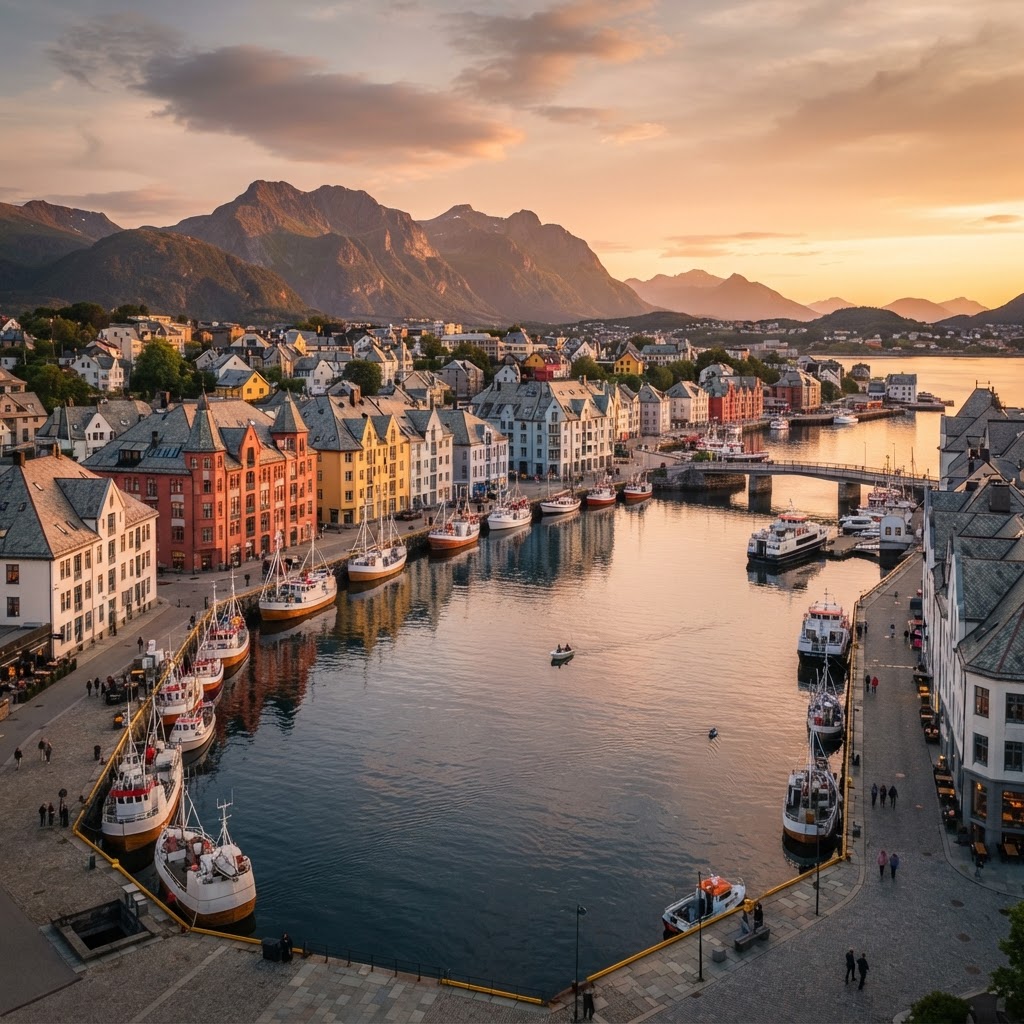
The story of Ålesund is one of resilience, defined by a fire on January 23, 1904, that destroyed 850 houses and left 10,000 people homeless in the middle of winter. In a monumental feat of urban planning, the town was reconstructed over three years by approximately 50 Norwegian architects who adopted the fashionable Jugendstil aesthetic. This period resulted in a cohesive, uniform cityscape characterized by stone masonry, rounded towers, and decorative gables that resisted the spread of future fires. Unlike most Norwegian towns that evolved sporadically, Ålesund stands as a singular, architecturally planned masterpiece. Visitors can trace this history through the deliberate symmetry and ornate facades that dominate the town center, which remain remarkably preserved as a living museum of early 20th-century design. The architectural density here is unrivaled in Northern Europe, with hundreds of buildings featuring motifs of mythical beasts and flora that distinguish the town from the typical wooden-constructed fishing ports of the region.
The Architecture of Dreams
The buildings in Ålesund feature ornate decorations, rounded corners, and asymmetrical shapes that contrast beautifully with the stark, jagged mountains in the background. Walking through the streets, one can spot mythical creatures, flora, and fauna carved into the stone facades, a hallmark of the Art Nouveau influence that celebrates organic movement and whimsical design. This period of rapid reconstruction ensured that the town looks unlike any other place in Norway, maintaining a cohesive aesthetic that feels like a living museum of early 20th-century design.
Exploring the Heart of the Town
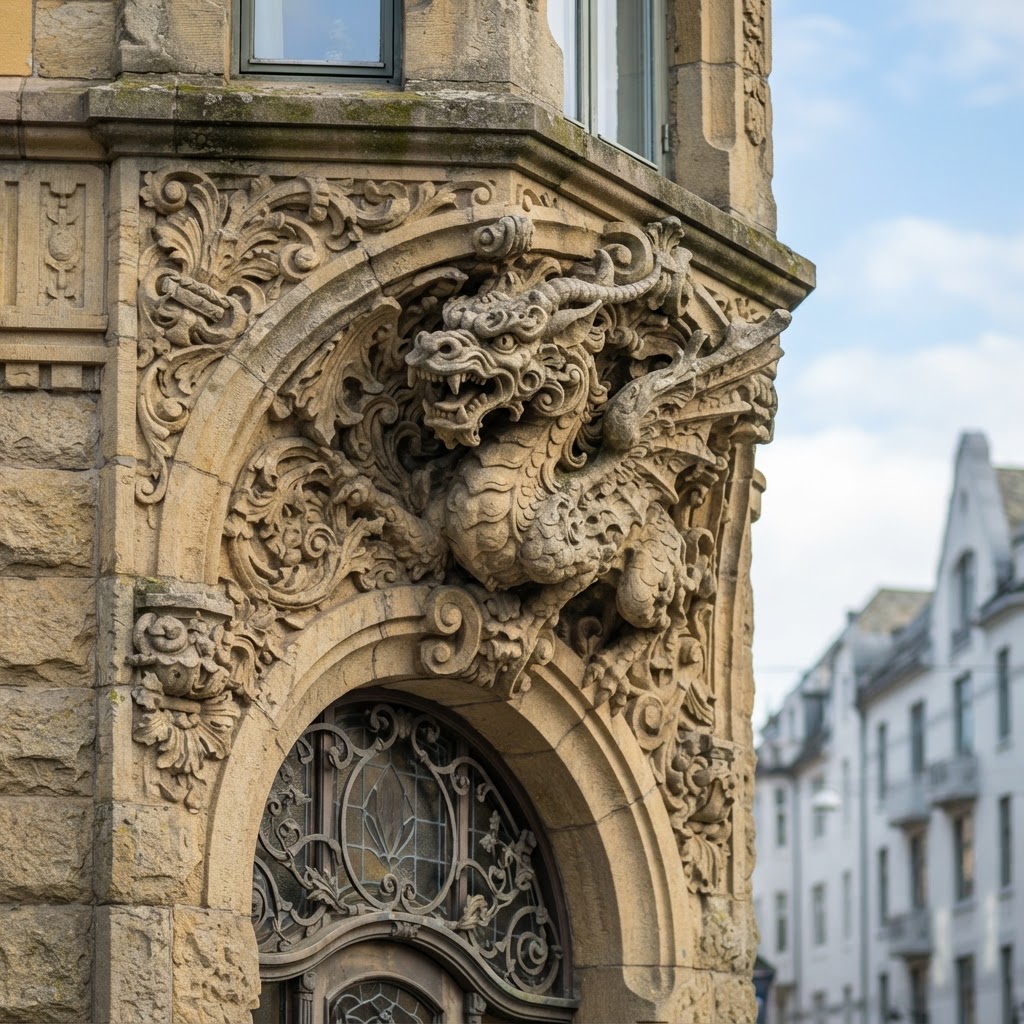
The best way to experience Ålesund is by walking through the ‘Jugendstilbyen’ downtown, a compact district that is fully pedestrian-friendly. Start your exploration at Apotekergata, where you can view the most architecturally significant facades that survived the 1904 reconstruction efforts. To optimize your visit, consider the following mobility options:
As you stroll, notice how every corner was meticulously planned to prevent fire spread, resulting in wider-than-average streets for the time. Spend time near the Brosundet canal, which serves as the visual artery of the town, connecting the harbor to the main shopping streets. The concentration of historical plaques on these buildings provides context for the rapid rebuilding efforts, often detailing the specific architect who designed each structure. The lack of modern high-rises in the historic center preserves the 1900s skyline, allowing for authentic photography and an immersive experience of Northern European urban planning from the turn of the century.
Unrivaled Views from Mount Aksla
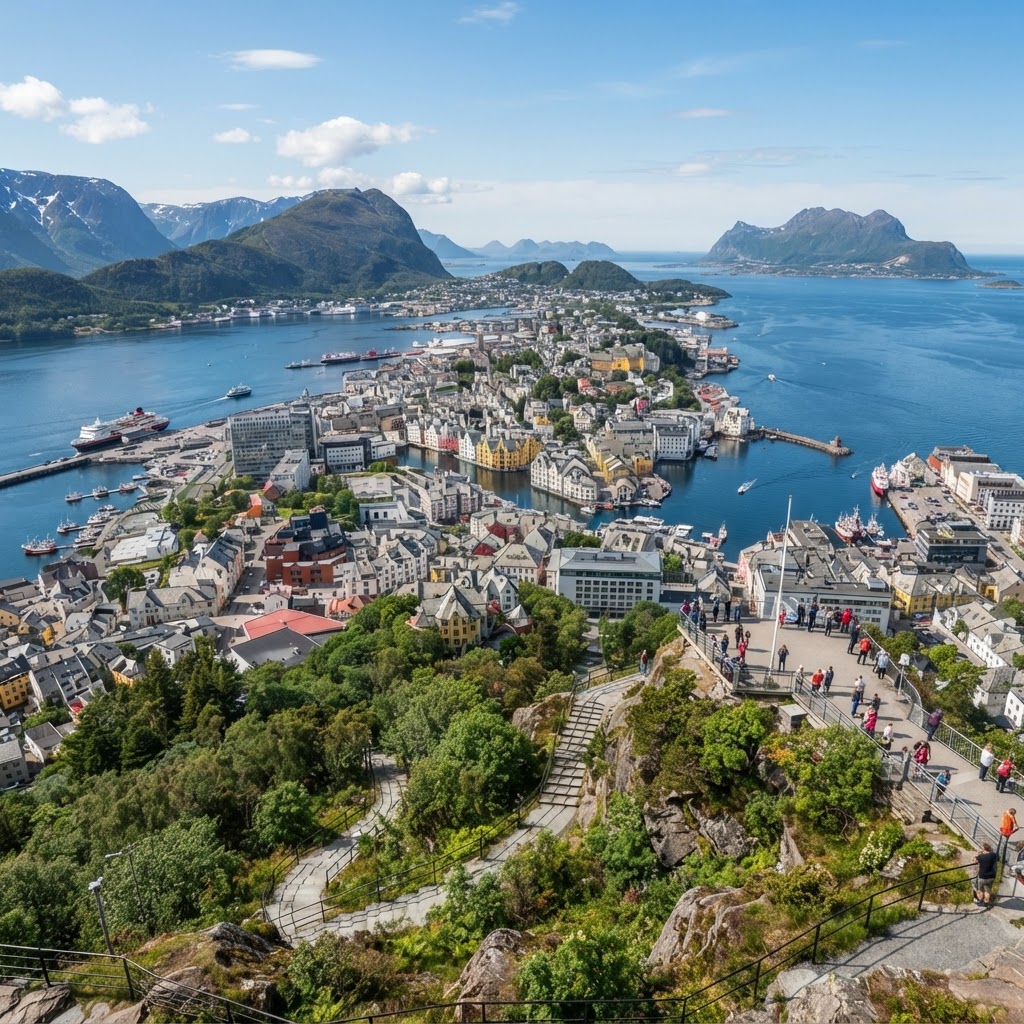
No trip to this coastal paradise would be complete without witnessing the town from the Aksla viewpoint, which sits 189 meters above sea level and offers a complete 360-degree perspective of the archipelago. While Ålesund offers incredible panoramic vistas from Mount Aksla, those traveling elsewhere in Europe seeking stunning balcony views should check out our guide to the best spots in Santorini. To reach this vantage point, visitors can either climb the 418 stone steps from the City Park (Byparken), which takes approximately 15-20 minutes, or utilize the Fjellstua road via taxi or rental car. The panoramic view allows you to see how the islands of Aspøya and Nørvøya are interconnected by bridges, creating a unique urban layout that sits directly against the Sunnmøre Alps. For photography enthusiasts, the best lighting occurs during the “Golden Hour” in summer, when the midnight sun provides a soft, warm glow that lasts for several hours, highlighting the spire-heavy rooftops against the deep blue of the Atlantic. The Fjellstua restaurant at the top also provides a convenient stop for traditional Norwegian waffles and coffee while enjoying the vista. Remember that the stairs can be slippery during rainy conditions, so sturdy footwear is highly recommended regardless of the season.
A Gateway to the Fjords
Beyond its architectural merits, Ålesund acts as the primary maritime gateway to UNESCO-listed fjords, offering unmatched access to Norway’s most iconic natural landmarks. The town’s location at the mouth of these massive waterways makes it the optimal base for travelers looking to balance high-end architecture with deep wilderness exploration. Key day-trip destinations accessible from the harbor include:
Geirangerfjord is the most famous, reachable by cruise or a 2.5-hour drive that includes the dramatic Eagle Road switchbacks. For a quieter experience, the Hjørundfjord offers vertical mountain walls that plunge directly into the sea, providing a more rugged landscape than the tourist-heavy Geiranger. Runde Bird Island is a must-visit between May and August, when nesting puffins and gannets provide spectacular wildlife viewing opportunities. Many operators offer guided boat tours directly from the Ålesund harbor, which can save visitors the hassle of coordinating rental car logistics for fjord access.
Cultural Heritage and Museums
To fully appreciate the historical significance of the town, take time to visit the Jugendstilsenteret, or the Art Nouveau Centre. Housed in the old Swan Pharmacy building, this museum offers an immersive experience that explains the 1904 fire and the subsequent reconstruction process. It is a fantastic educational stop that provides context to the physical beauty you see around you.
Another must-visit is the Fisheries Museum, located in the charming Molja district. This museum sheds light on the lifeblood of the community: the sea. For centuries, the wealth of this region was built on the back of the fishing industry, particularly cod harvesting and export. Understanding the economic backbone of Ålesund helps explain why it grew from a collection of small farms into a prosperous urban hub.
Culinary Traditions of the Coast
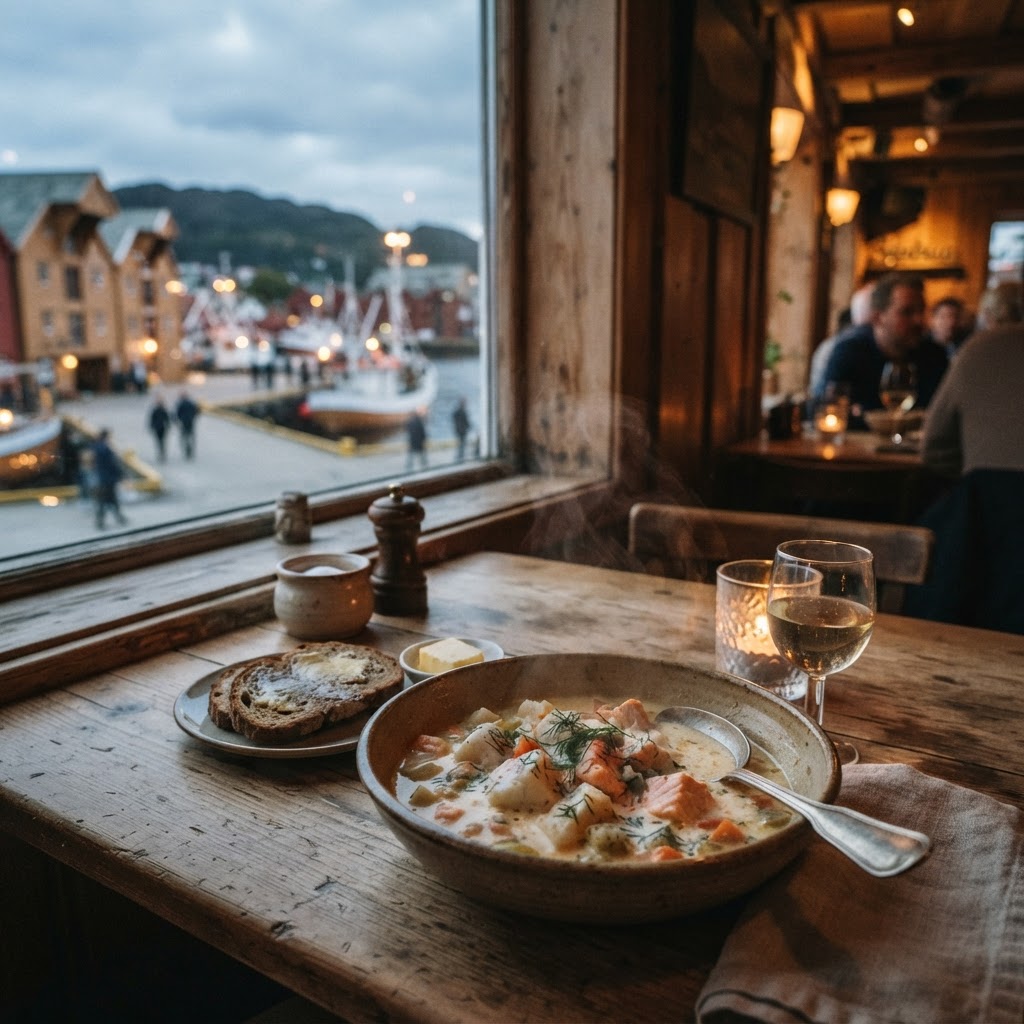
Norwegian cuisine is often misunderstood by outsiders, but the coastal region around Ålesund offers some of the freshest seafood in the world. You have not truly visited the town until you have sampled local delicacies such as bacalao, a dried and salted cod stew that has been a staple of the region for generations. Because of the town’s strong historical trade connections with Southern Europe, this dish is prepared with a level of expertise that is hard to find elsewhere.
Where to Eat Like a Local
If you want to experience the best of local flavors, prioritize restaurants that focus on “kortreist mat” or short-traveled food. This philosophy ensures that you are eating fresh fish caught that morning or produce sourced from nearby valleys. The harbor area is lined with excellent eateries where you can dine while watching the fishing boats return to port, grounding the experience in the authentic, working rhythms of a Norwegian coastal town.
Practical Tips for Your Visit
Traveling to Norway can be expensive, but careful planning makes it accessible. The weather in this region is notoriously unpredictable—it is not uncommon to experience four seasons in a single hour. Pack high-quality rain gear and layers, regardless of the time of year you choose to visit.
For those looking for the ultimate experience, visit between June and August when the midnight sun provides nearly 24 hours of light, allowing you to maximize your exploration of the surrounding islands and mountain trails.
FAQ
Q: What is the best time of year to visit Ålesund?
The best time to visit is between June and August, as this period offers the most stable weather, endless daylight for sightseeing, and full access to fjord cruises and puffin-watching tours on Runde Island.
Q: How many days should I spend in Ålesund?
Two to three days is ideal for most travelers to explore the town’s Art Nouveau architecture, hike Mount Aksla, and take at least one full-day fjord excursion to Geiranger or Hjørundfjord.
Q: Is Ålesund expensive for tourists?
Yes, Norway is a high-cost destination; however, you can manage expenses by using public transportation, staying in mid-range hotels, and choosing local cafes for ‘kortreist mat’ instead of high-end fine dining.
Q: Are the Mount Aksla steps difficult to climb?
The climb involves 418 stone steps and is considered moderate, taking about 15-20 minutes. If you have mobility issues, you can easily access the summit by driving or taking a local taxi to the Fjellstua restaurant.
Q: Can you see the Northern Lights in Ålesund?
Yes, you can see the Northern Lights between late September and March, though visibility depends on solar activity and cloud cover, which can be frequent in this coastal climate.
Leave a Reply