
Italian Summer Evenings: The Magic That Never Ends
Italian summer evenings are a cultural tradition defined by the ‘passeggiata’ stroll, late-night al fresco dining starting after 8:30 PM, and the ‘aperitivo’ ritual. These golden hours emphasize ‘la dolce vita,’ where locals prioritize slow, multi-hour social connections and outdoor gatherings to escape the peak daytime heat.
The Philosophy of La Dolce Vita After Dark
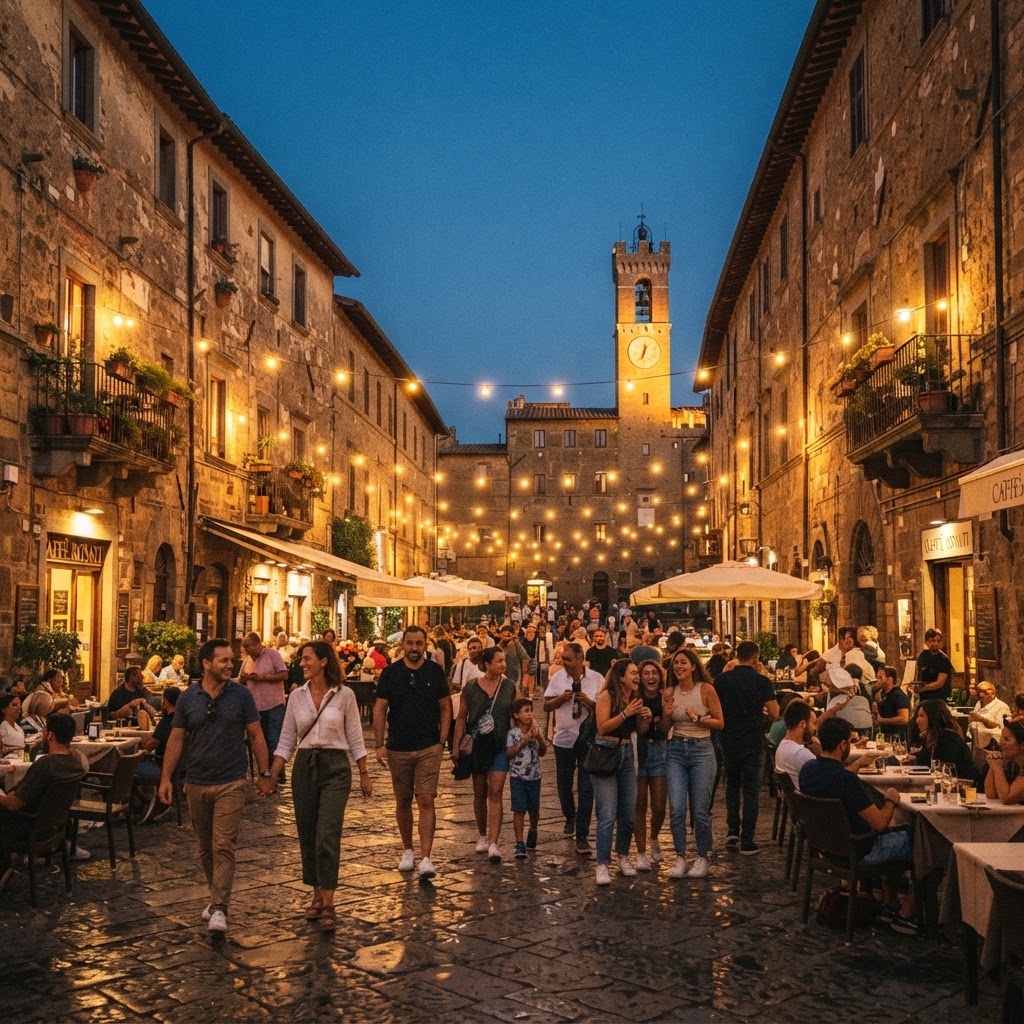
At the heart of the Italian experience is the concept of ‘la dolce vita,’ or the sweet life, which reaches its zenith during the warm summer months. Because temperatures often exceed 30°C (86°F) in July and August, the Italian lifestyle pivots to favor the cooler, more vibrant post-dusk hours. By delaying daily tasks and prioritizing evening socialization, Italians transform the heat-induced pause of the afternoon into a high-energy, social-heavy night. This philosophy encourages travelers to abandon rigid itineraries in favor of a flexible, lingering pace.
Dinner in Italy is a deliberate, multi-hour social performance rather than a functional necessity, typically beginning between 8:30 PM and 9:30 PM and frequently lasting past midnight. Unlike rapid dining cultures, the Italian table is reserved for the entire night, allowing patrons to savor local wines and lengthy conversations without the pressure of a “turnover” time. Embracing this rhythm allows visitors to integrate into the local social fabric, moving from the role of a tourist to an active participant in the community. When you commit to a single table for three hours, you unlock the true essence of Italian hospitality and the “dolce far niente” (the sweetness of doing nothing).
The Ritual of the Passeggiata
No discussion of Italian summer evenings is complete without mentioning the ‘passeggiata,’ a foundational cultural institution serving as the mandatory transition between the workday and the evening meal. This ritualized, slow-paced stroll typically occurs through the historic town center or the main piazza between 7:30 PM and 9:00 PM. The primary objective is communal visibility; locals dress in their best attire to see neighbors, catch up on town news, and allow the remaining heat of the day to dissipate under the evening breeze.
During summer, the passeggiata transforms public spaces into a living room. The air fills with the scents of jasmine, blooming oleander, and wood-fired pizza ovens, while the soundscape is dominated by church bells and local chatter. For the visitor, participating in the passeggiata is the single most authentic way to feel the heartbeat of an Italian city. It is a time for reflection and intentional observation. To fully adopt this ritual, leave your phone in your pocket, adopt a slow walking speed, and be prepared to acknowledge shopkeepers and fellow pedestrians with a polite “buonasera.” It is not about reaching a destination; the walk itself is the purpose.
Al Fresco Dining: A Sensory Experience
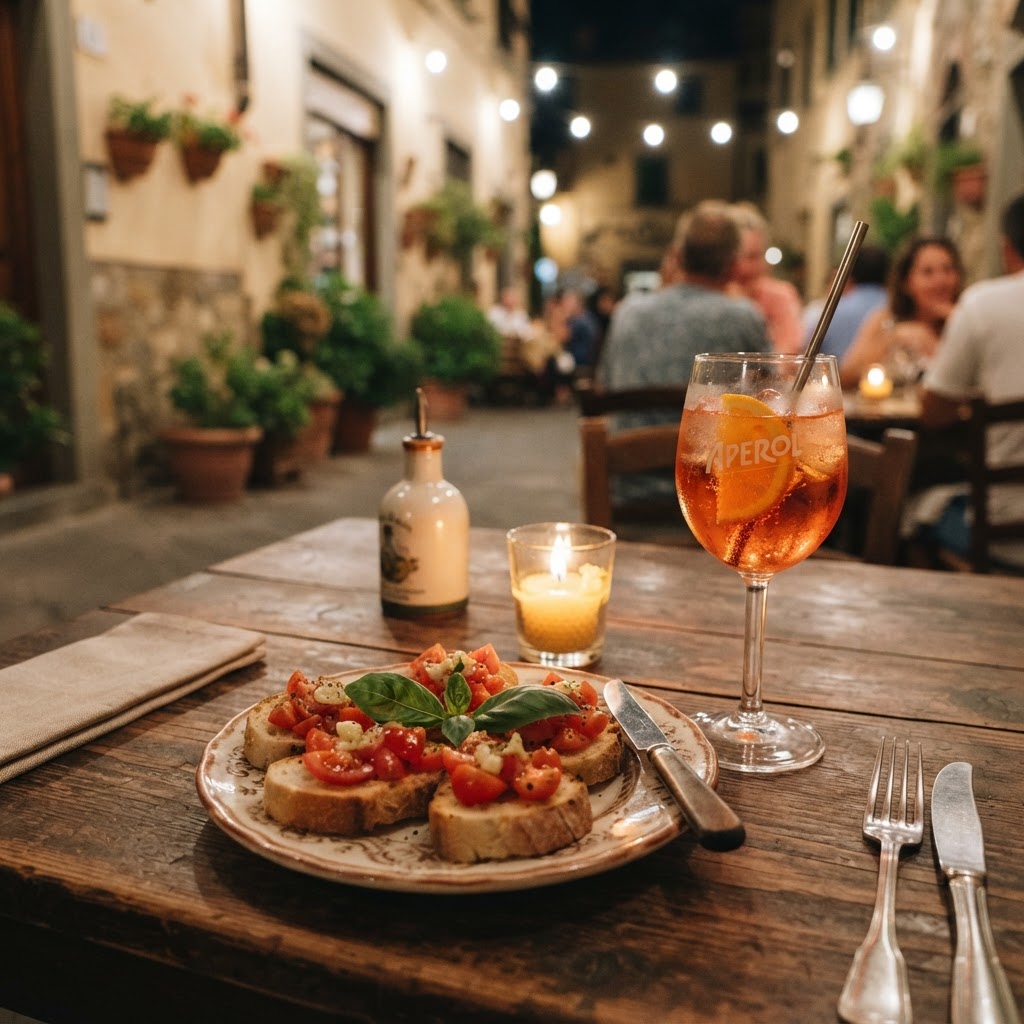
Dining outside is a mandatory sensory experience in Italy, where the environment serves as an extension of the culinary craft. As the sun sets, restaurants strategically expand their seating onto cobblestone streets, narrow alleyways, and grand historic terraces to capture the evening’s cooling thermal drafts. This setting is fundamentally designed to enhance the connection between the diner, the architecture, and the local climate.
To maximize your al fresco experience, focus on seasonal regional menus that highlight peak summer ingredients. Seek out dishes featuring zucchini blossoms (fiori di zucca), fresh tomatoes (pomodori ramati), and catch-of-the-day seafood. When ordering, remember that Italian service is intentionally unhurried; requesting the check before you are finished is considered rude. The table is your base for the evening, often accompanied by a bottle of local house wine, which is usually cheaper and higher quality than international imports. Prices for dining al fresco remain standard, though some popular tourist centers may include a ‘coperto’ charge of €2–€4 per person, which covers bread and table service. Always confirm you have a reservation, as the best outdoor tables in cities like Florence or Rome are often booked 24 to 48 hours in advance.
Essential Tips for Dining Like a Local
- Make reservations in advance for popular spots, especially those with garden or terrace seating.
- Do not be afraid of the ‘coperto,’ a small cover charge that covers bread and service.
- Embrace the ‘aperitivo’ hour before your meal to stimulate your appetite.
- Keep your pace slow; in Italy, the table is yours for the night.
The Aperitivo Hour: An Essential Transition
Before the main meal begins, there is the sacred hour of ‘aperitivo,’ typically occurring between 6:00 PM and 8:00 PM. This is the designated window to enjoy a light, bitter-forward alcoholic beverage paired with small, salty snacks designed specifically to cleanse the palate and trigger gastric juices for the coming meal.
Classic choices include the iconic Negroni (gin, vermouth, and Campari), the refreshing Aperol Spritz, or a crisp, dry Franciacorta or Prosecco. These drinks are universally served with complimentary nibbles like green cerignola olives, toasted nuts, or crostini with tapenade. The cost of an aperitivo ranges from €6 to €12 in city centers, and in some regions like Milan or Turin, this purchase includes an ‘apericena’ buffet. This transitionary period is the social glue of the Italian evening. It is the moment when the formal workday strictly ends and the personal, leisure-focused night begins. Use this time to observe local patterns and prepare yourself for the long, languid dining sequence that follows.
Hidden Gems and Nighttime Markets
Beyond the primary restaurant scene, Italian summer evenings frequently reveal ‘sagre’ and nocturnal community events that only materialize after the sun descends. Many smaller towns host night markets, outdoor film screenings, and open-air concerts that are essential to the Italian summer experience. These events provide an intimate window into regional culture that traditional tourist maps often overlook.
In rural areas, look for ‘sagre’—regional food festivals dedicated to specific local crops or traditional culinary specialties. These events usually take place in village squares under the stars, utilizing long communal tables that encourage interactions with locals. Whether it is a sagra dedicated to truffle pasta, wild boar, or handmade gnocchi, these events are highly affordable, with plates usually priced between €5 and €15. In larger cities, the nightlife pivots toward ‘lungotevere’ setups or rooftop cinema clubs. Attending these festivals is the fastest way to experience authentic regional food in an energetic, festive, and non-commercialized environment. Check local municipal websites or town Facebook pages for ‘eventi estivi’ (summer events) listings to find exact dates for these rotating festivals.
Crafting the Perfect Night Under the Stars
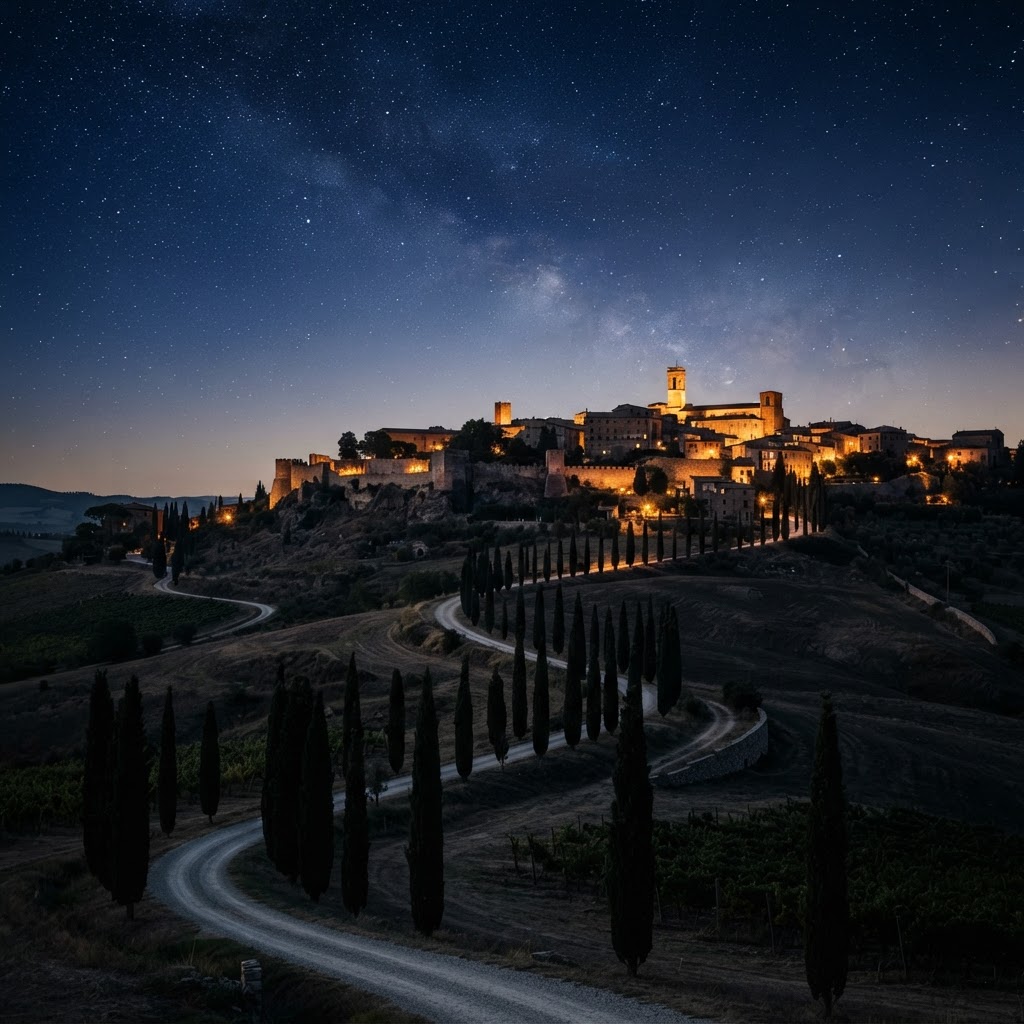
If you find yourself in the Italian countryside, the summer evening experience shifts toward profound stillness and astronomical clarity. Away from the light pollution of metropolitan centers like Milan or Naples, the rural sky becomes a brilliant canopy, ideal for stargazing while enjoying local vintages. Tuscany, Puglia, and Umbria offer unique opportunities for “agriturismo” stays, where the evening is spent on private terraces overlooking vineyards or olive groves.
To replicate this atmosphere or prepare for your next trip, focus on the triad of Italian evening success: high-quality seasonal produce, a comfortable outdoor environment, and a commitment to “slow time.” The Italian approach teaches us that the setting is less important than the intention of the guests. It is about creating a space where the clock is ignored and the pressures of the day are physically separated from the evening. If planning a trip, prioritize locations that offer late-night terrace access; in rural Italy, dinner often concludes with a digestivo like Limoncello or Amaro Averna, which serves as the final, relaxing bridge to a restful sleep.
Navigating the Italian Nightlife
While Italy is famous for slow dining, it also possesses a sophisticated nightlife scene that ranges from high-end Milanese rooftop lounges to hidden subterranean jazz bars in Rome. The golden rule for navigating this scene is simple: do not arrive too early. Bars and clubs in major Italian cities rarely see significant foot traffic before 11:00 PM, and the peak energy often builds between 1:00 AM and 2:00 AM.
If you prefer a lively evening, prioritize venues that feature rooftop architecture or open-air garden access, as these provide the best airflow during the humid summer months. Be mindful of the local “quiet hours”; Italy’s historic city centers are often dense residential areas, and locals place a high value on silence after midnight. Always follow the lead of the crowd—if a street is quiet, keep your volume low. By respecting these architectural and social boundaries, you gain access to the more intimate, “insider” nightlife spots that define the modern Italian pulse. For the best experience, ask a local bartender for a “locale di tendenza” (a trendy spot) to avoid the generic, overpriced tourist bars found near major landmarks.
FAQ
Q: What time should I make dinner reservations in Italy during summer?
For an authentic experience, make your dinner reservations for between 8:30 PM and 9:30 PM. Dining earlier than 8:00 PM is considered early by local standards and may result in sitting in an empty restaurant without the vibrant atmosphere that defines Italian summer evenings.
Q: What is a ‘passeggiata’ and should I participate?
A ‘passeggiata’ is the traditional evening stroll taken by Italians through the main streets of a town. Yes, you should participate as it is the most effective way to observe local culture, decompress after your day, and feel the social heartbeat of the city.
Q: How much does an average aperitivo cost in Italy?
An aperitivo typically costs between €6 and €12 per person, depending on the city and the prestige of the venue. This price usually includes your chosen alcoholic drink and a variety of complimentary snacks like olives, nuts, or bruschetta.
Q: What is the ‘coperto’ charge on my restaurant bill?
The ‘coperto’ is a standard cover charge, typically ranging from €2 to €4 per person, that covers the cost of bread and basic table service. It is not a tip, but a mandatory fee that is added to the bill by law in most Italian regions.
Q: Is tipping mandatory for dinner in Italy?
Tipping is not mandatory or expected in Italy as it is in the United States, because service is typically included in the ‘coperto’ or bill. However, it is polite to leave a small amount of cash, such as rounding up the bill or leaving a few euros, for exceptional service.
Leave a Reply