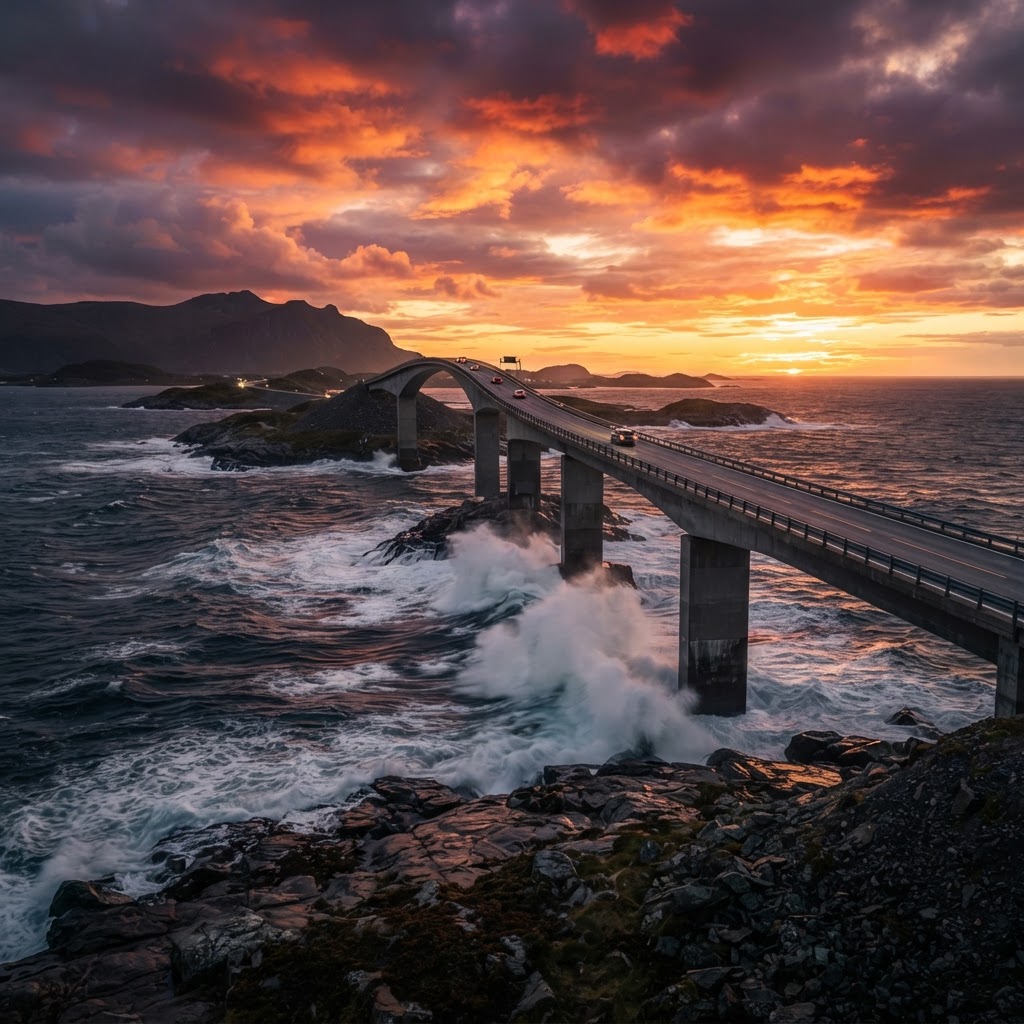
This Norwegian Road Will Ruin All Other Roads for You
The Atlantic Ocean Road (Atlanterhavsvegen) is a 8.3-kilometer masterpiece of civil engineering in Norway that connects Averøy and Eide through eight bridges spanning the churning North Atlantic. This coastal route offers a uniquely visceral, sensory-rich driving experience that consistently sets an impossible standard for scenic beauty and architectural integration compared to any other road trip worldwide.
The Engineering Marvel of Atlanterhavsvegen
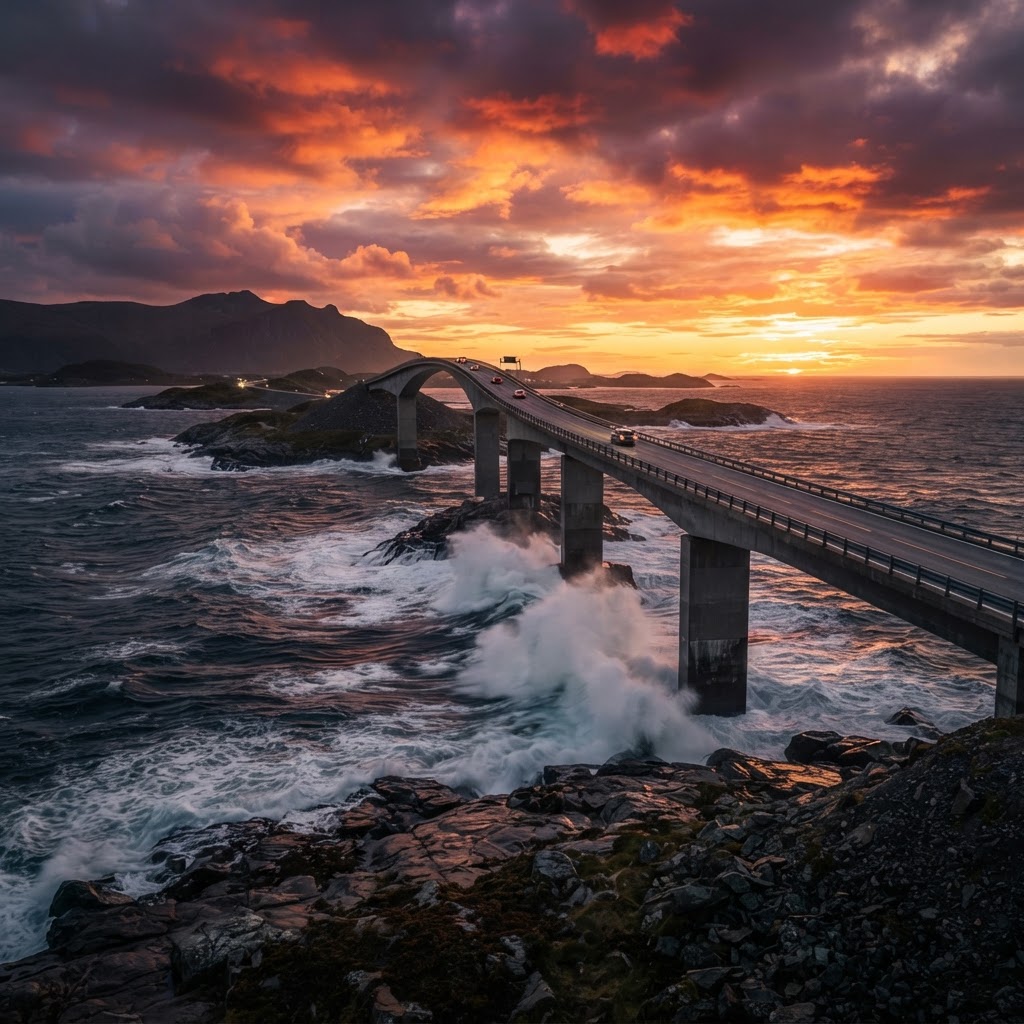
Spanning roughly 8.3 kilometers, the Atlantic Ocean Road is a masterpiece of modern civil engineering. Connecting the islands of Averøy and Eide, the route consists of eight bridges that arch dramatically over the sea. It was designated as Norway’s ‘Construction of the Century’ in 2005, and it is not hard to see why. The architects faced the immense challenge of building a stable road in one of the most volatile marine environments on Earth. Engineers utilized specialized construction methods to ensure the road could withstand the pressure of North Atlantic storms, which frequently bring wind speeds exceeding 100 kilometers per hour. By utilizing low-profile causeways combined with high-arched bridges like the iconic Storseisundet, the infrastructure manages to remain both functional and aesthetically stunning, securing its place as one of the most significant engineering projects in Scandinavian history. The construction cost approximately 122 million NOK (at the time) and required six years of intensive labor before opening to the public in 1989.
Surviving the North Atlantic
Building in this region meant contending with violent storms and towering swells. Engineers had to design structures capable of withstanding the literal onslaught of the ocean, using sophisticated techniques to secure the road against the forces of nature. The result is a testament to human ingenuity that feels like an extension of the rugged landscape rather than an imposition upon it. Specialized concrete additives were used to resist salt corrosion, a critical factor given the constant exposure to sea spray and high-salinity air. This attention to durability ensures the structure remains safe for the thousands of travelers who visit annually, even during the harsh winter months when waves routinely wash over the lower road sections.
Why This Drive Ruins Other Roads
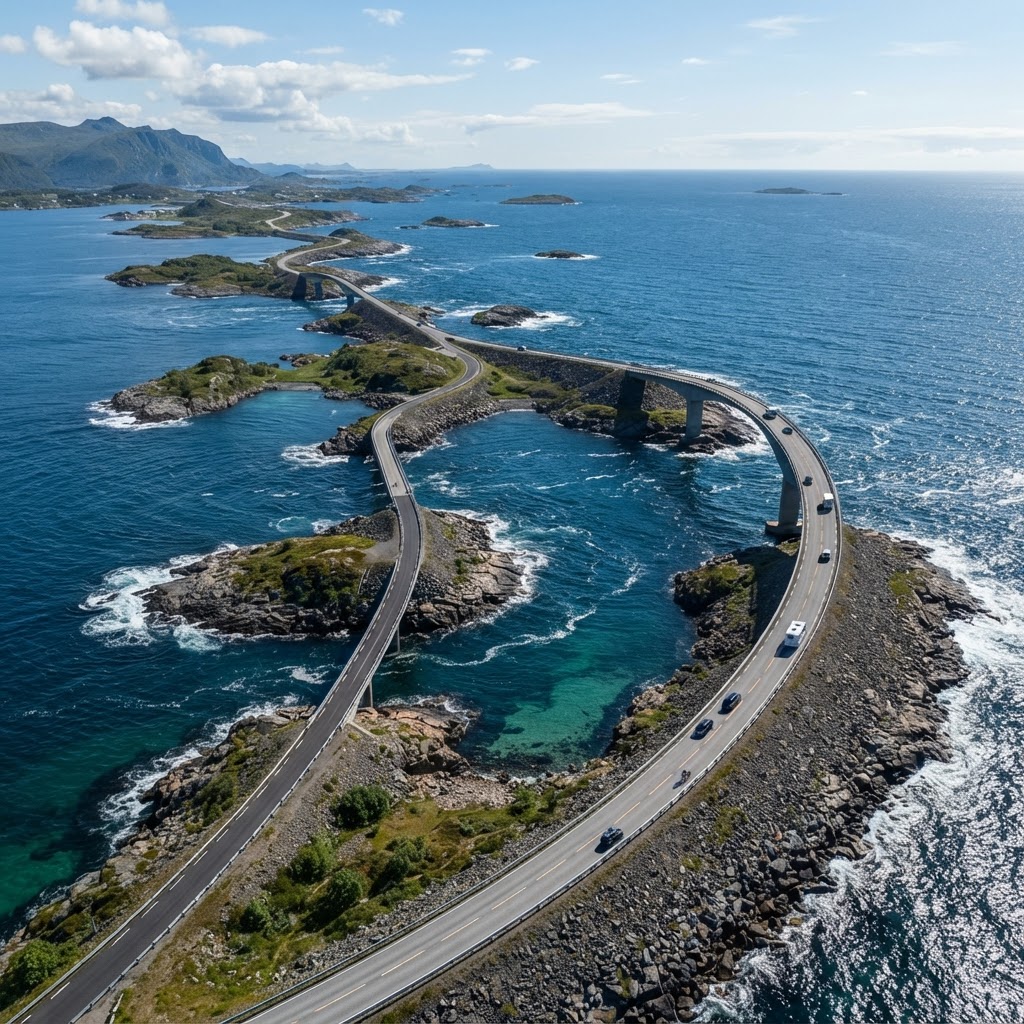
Many roads claim to be scenic, yet they often provide only fleeting glimpses of the horizon behind protective barriers. The Atlantic Ocean Road is different because of its visceral intimacy. You do not just view the ocean here; you feel it. When the weather turns, waves crash over the Storseisundet Bridge, creating a spray that makes the driving experience both terrifying and utterly exhilarating. While most scenic highways rely on distance to provide views, this road prioritizes proximity, placing travelers within meters of the churning sea. This level of exposure creates a physiological response that traditional mountain or forest drives simply cannot replicate. Because the road follows the natural curvature of the archipelago, every turn offers a dynamic shift in perspective that keeps drivers hyper-engaged with the environment. Unlike inland routes, the Atlantic Ocean Road forces you to confront the raw power of the elements, turning a mundane commute into a high-stakes adventure that makes standard scenic roads feel static and detached.
A Sensory Overload
Unlike traditional highways that isolate you from the environment, this road pulls you into the very heart of the coastal ecosystem. You can smell the salt in the air, hear the roar of the surf, and witness the shifting moods of the Norwegian sky. This sensory engagement is what makes subsequent road trips feel static by comparison. You aren’t just a passenger; you are an observer in a vast, wild theater. The combination of the auditory experience—the crashing of waves against the concrete pillars—and the visual spectacle of the horizon creates a memory anchor that few other locations can provide.
Navigating the Best Stops Along the Route
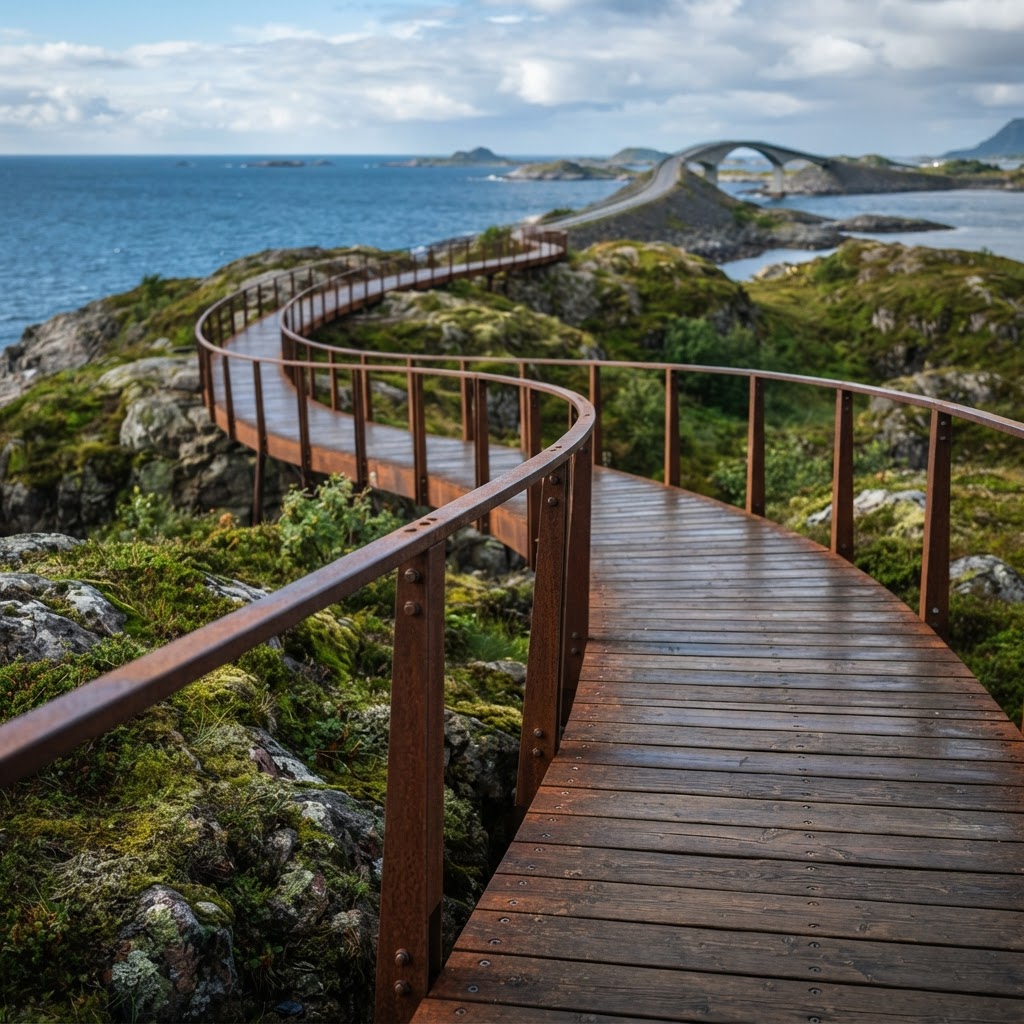
While the entire 8.3-kilometer stretch is spectacular, there are specific areas where you should absolutely pull over. Taking your time is essential to fully appreciate the scope of the infrastructure and the surrounding nature. These stops are perfect for photography, bird watching, or simply standing in awe of the horizon. Each stop is equipped with parking and, in some cases, advanced pedestrian facilities designed to blend into the granite landscape. Visitors should prioritize spending at least 2-3 hours on the route to allow for stops at the viewing platforms, as rushing through the section prevents you from observing the unique flora and fauna of the coastal tundra. Accessibility is a high priority, with several paths designed for all mobility levels, ensuring that the “Atlantic Ocean Road experience” remains inclusive for all types of travelers, from road-tripping families to professional nature photographers.
The Floating Pathway at Eldhusøya
One of the most impressive additions to the route is the walking path at Eldhusøya. This elevated walkway allows visitors to loop around the island without damaging the fragile tundra landscape. It provides an elevated vantage point to look back at the bridges as they arc gracefully toward the sky, offering a perspective that is impossible to gain from a vehicle. The path, built with a grated steel design, allows the natural terrain to remain visible beneath your feet, emphasizing the commitment to environmental preservation. Visitors can often spot local seabirds and, occasionally, whales or seals from these vantage points, adding a wildlife component to the architectural tour.
The Seasonal Transformation of the Coast
Part of the magic of this road is that it is never the same twice. In the height of summer, the midnight sun casts a golden hue over the water, turning the granite rocks into glowing jewels. The experience is peaceful, inviting, and ethereal. However, it is in autumn and winter that the road truly earns its reputation for ‘ruining’ other drives. The seasonal shift changes the character of the road from a tourist-friendly path to a rugged, elemental battleground. Photographers often favor the shoulder seasons—late September or early May—when the light is soft and the weather provides dramatic cloud formations. This variability means that even frequent visitors find new elements to appreciate, whether it is the arrival of migratory birds or the changing patterns of the tides against the bridge abutments. Understanding the seasonal cycle is vital, as it dictates everything from clothing requirements to the accessibility of peripheral hiking trails.
Winter’s Dramatic Fury
During the colder months, the North Atlantic comes alive with storms that test the limits of the bridges. Watching the sea spray climb the supports of the Storseisundet Bridge is a primal experience. For those who enjoy the raw power of nature, there is no place on the planet that delivers quite as effectively as this Norwegian gem. It is a stark reminder that nature is always in charge, a lesson that most other roads try their best to ignore. Winter driving requires caution, as the road surface can become icy, and wind gusts are powerful enough to affect high-profile vehicles. However, those who visit during a storm are rewarded with an adrenaline-filled display of natural dominance that makes the serene summer version of the road feel like an entirely different location.
Safety and Practical Tips for Travelers
Because this area is subject to extreme weather, safety must be your top priority. While the road is incredibly well-maintained, the conditions can change in minutes. Always check the local weather forecasts before you set out, and ensure your vehicle is equipped to handle potentially slippery or gusty conditions, especially if you are traveling outside of the summer season. Emergency services are available in the nearby towns of Kristiansund and Molde, but drivers should exercise self-reliance. It is highly recommended to carry a fully charged mobile phone, extra warm layers, and a reliable GPS or map, as cell service can be intermittent during intense weather events. Obeying posted speed limits is non-negotiable; while the urge to focus on the scenery is strong, the road requires full attention due to its narrow nature and the prevalence of cyclists and pedestrians near the viewing platforms.
Respecting the Environment
Norway takes pride in its pristine landscapes, and visitors are expected to help maintain that standard. Stick to marked paths, use the provided waste disposal facilities, and never attempt to climb on the bridge railings for a photo. The beauty of this place lies in its preservation, and it remains a highlight of Norway precisely because it has been treated with respect. By following the ‘Leave No Trace’ principles, you help ensure that the unique tundra ecosystem at Eldhusøya remains intact for future generations. Respecting local closures or safety barriers is critical, as these are put in place not only for your physical protection but to prevent erosion and degradation of the fragile coastal soil.
Beyond the Atlantic Ocean Road
Once you have driven this legendary stretch, you might find yourself questioning the appeal of your usual commute or standard weekend road trips. This is the ‘Atlantic Ocean Road effect.’ It sets a bar for architectural beauty and environmental interaction that is difficult for any other project to reach. However, it also serves as a gateway to explore more of Norway’s stunning fjord country. If you are starting your journey in the nation’s heart, be sure to check out our comprehensive travel guide to Oslo before heading toward the coast. Integrating this road into a larger itinerary allows for a diverse exploration of Norway, from the bustling urban culture of the capital to the isolated, wild beauty of the Møre og Romsdal coastline. Many travelers pair the road with visits to nearby fishing villages, which provide authentic Norwegian cuisine and historical context to the region’s long-standing relationship with the sea.
Connecting to Further Adventures
The road is situated perfectly for those looking to continue their journey toward the Trollstigen pass or the Geirangerfjord. By integrating this experience into a larger itinerary, you can compare the stark, marine beauty of the coast with the lush, vertical majesty of the inland mountains. It is a contrast that highlights why Norway is consistently ranked as one of the most beautiful countries in the world. Plan for at least 7-10 days to fully explore the region surrounding the Atlantic Ocean Road, as the proximity to other world-class attractions makes it a convenient hub for a deeper dive into Scandinavian landscapes. Whether you are an architectural enthusiast or a nature seeker, the connection between these points provides a comprehensive view of why Norway’s infrastructure is celebrated globally.
FAQ
Q: Is there a toll fee to drive the Atlantic Ocean Road?
No, there is currently no toll fee to drive the Atlantic Ocean Road. While it was once a toll road to recover construction costs, the debt was fully paid off in 1999, and the route is now completely free to travel for all vehicles.
Q: How long does it take to drive the Atlantic Ocean Road?
The drive itself takes about 15 to 20 minutes if you drive straight through the 8.3-kilometer stretch without stopping. However, most visitors should budget at least 2 to 3 hours to enjoy the viewpoints, walk the trails at Eldhusøya, and take photographs.
Q: When is the best time of year to visit the Atlantic Ocean Road?
The best time depends on your preference; summer (June through August) offers the most reliable weather and the midnight sun, while autumn (September and October) is ideal for those wanting to witness the dramatic, storm-tossed waves the road is famous for.
Q: Is the Atlantic Ocean Road dangerous to drive?
While generally safe, the road can be dangerous during extreme weather conditions due to high winds and waves that occasionally wash over the lower sections. Always check local weather alerts before driving and exercise extra caution if you are traveling during late autumn or winter.
Q: Can you stay overnight near the Atlantic Ocean Road?
Yes, there are several accommodation options including hotels, cabins, and camping sites in the nearby towns of Averøy and Bud. Staying overnight allows you to experience the road during sunrise or sunset, which are the best times for photography and avoiding peak tourist traffic.
Leave a Reply