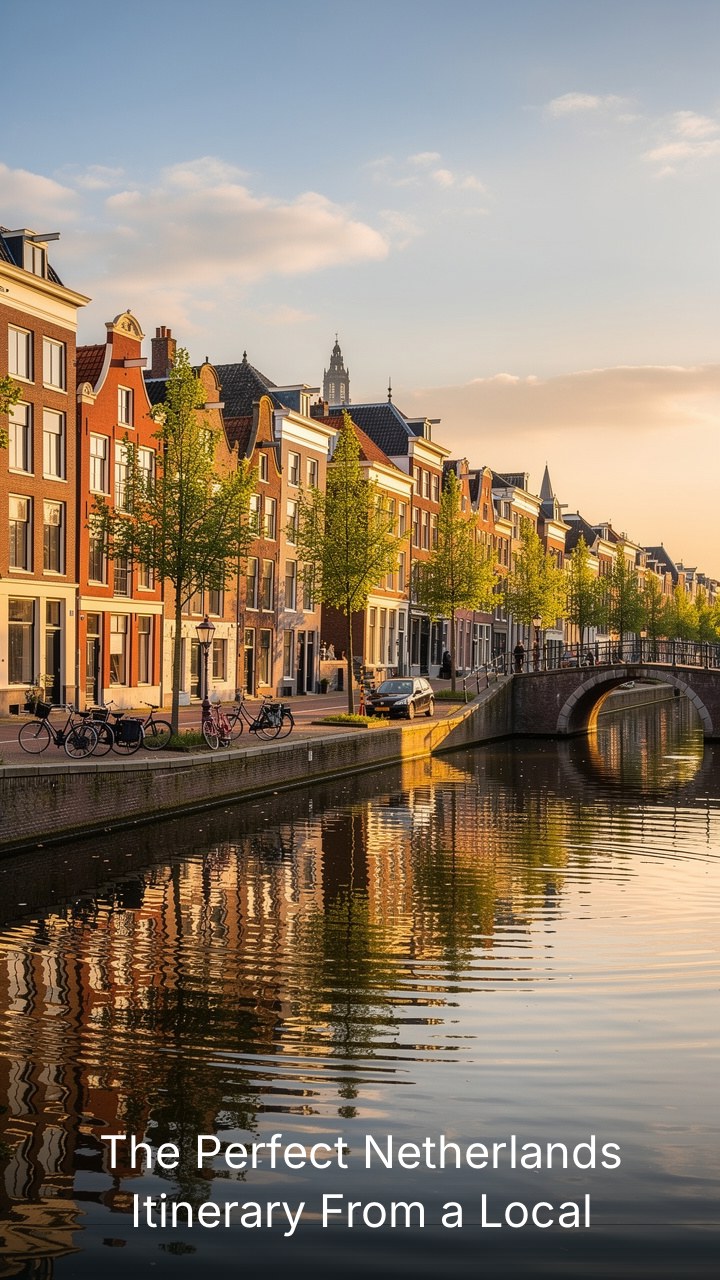
The Perfect Netherlands Itinerary From a Local (13 Cities Inside)
To experience the authentic Netherlands beyond the Amsterdam tourist trail, dedicate at least 10-14 days to explore a mix of iconic canal cities and historical regional hubs. A local-recommended route includes Amsterdam, Haarlem, Leiden, Delft, Rotterdam, The Hague, Alkmaar, Utrecht, Zwolle, Deventer, and Maastricht, connected efficiently by the national train network.
Understanding Dutch Logistics
The Dutch national train network, operated by NS (Nederlandse Spoorwegen), is the most efficient way to travel between the 13 cities on this itinerary. Travelers should use a contactless bank card or an OV-chipkaart to tap in and out at yellow gates, which avoids the one-euro paper ticket surcharge applied at machines. Trains are high-frequency, typically running every 15 minutes between major hubs like Amsterdam and Utrecht, making advance booking unnecessary for domestic intercity travel.

To optimize your travel, download the NS app to monitor real-time delays, which are updated with high precision to help you navigate connections without waiting on exposed platforms. While intercity travel is seamless, prioritize using the app to check platform changes, especially during peak commuter hours. By treating the train system as a local commuter would, you eliminate the stress of parking and expensive car rental fees while maximizing your time in each destination.
The Itinerary: From West to East
A balanced Netherlands itinerary prioritizes depth over quantity, starting with a 48-hour focus on Amsterdam’s Jordaan district before transitioning to regional gems. Travel 15 minutes to Haarlem for a quieter, historic alternative to the capital, followed by the university city of Leiden and Delft, which is world-renowned for its authentic blue pottery.

When visiting Delft, prioritize a tour of the Royal Delft factory to witness the traditional glazing process. Continue your journey to Rotterdam, the architectural engine of the country, where you should skip the Euromast and instead walk the iconic Erasmus Bridge for a better sense of the city’s post-war modernism. This west-to-east progression allows you to experience the transition from 17th-century canal rings to industrial innovation and eventually to the medieval structures found in the eastern provinces.
Deepening Your Dutch Experience
Continuing east from the coastal cities, visit The Hague to explore the Peace Palace before heading north to Alkmaar on Friday mornings for the traditional cheese market. Arriving at the Waagplein by 9:00 AM is essential to secure a prime viewing spot for the spectacle, which dates back to the 14th century and offers a glimpse into traditional Dutch commerce.

As you move into the heart of the country, Utrecht provides a unique atmosphere with its wharf-level cafes, which are set into old cellar vaults along the Oudegracht canal. Further east, towns like Zwolle and Deventer serve as excellent portals into Hanseatic history, offering architecture from the 16th century that remains largely preserved. Conclude your trip in Maastricht, located at the southernmost tip; its culinary scene and hilly landscape provide a distinctly different feel from the northern flatlands, mirroring the atmosphere of nearby Belgium and France.
Common Mistakes and How to Avoid Them
Avoiding logistical errors, such as renting a car or rushing through multiple cities in one day, will significantly improve your travel quality. Parking in Dutch city centers can cost up to 8 euros per hour in major hubs like Amsterdam or Rotterdam, making the train network the only cost-effective and stress-free option for visitors.

Instead of driving, embrace local bike-sharing services like OV-fiets, which typically cost around 4.50 euros per 24 hours. Always ensure you have a personal OV-chipkaart to unlock these services and remember to inspect the tires and brakes before leaving the rental point. Rather than attempting to visit three cities in one afternoon, designate a primary base city for every two to three nights. For example, staying in Utrecht allows you to perform easy, low-stress day trips to surrounding areas like Amersfoort or Gouda, keeping your travel fatigue at a minimum while ensuring a deeper connection to the culture.
Practical Tips for Success
Success in the Netherlands requires preparing for volatile weather and navigating complex visitor rules. Always carry a windproof rain jacket, as local custom dictates against using umbrellas due to the high coastal winds that can easily damage them. For museum-heavy itineraries, purchasing a Museumkaart is the most cost-effective strategy, as it often pays for itself within four or five museum visits.
Plan your visits to major attractions like the Rijksmuseum for mid-week time slots to avoid the dense weekend crowds that plague peak hours. When navigating urban environments, exercise strict caution regarding bike paths; never walk on the red asphalt designated for cyclists. Local riders expect pedestrians to respect these zones and will not hesitate to use their bells to warn those obstructing the flow of traffic.
Myths vs Facts
Contrary to the popular myth that the Netherlands is solely flat farmland and windmills, the country contains vast geographical diversity including shifting dunes and the dense forests of the Veluwe. While English proficiency is exceptionally high in urban centers, learning basic phrases like “dank je wel” (thank you) is highly valued by local shopkeepers and creates a friendlier interaction during your stay.
Distinguishing between local terminology is also crucial for a smooth trip. Do not mistake a “coffee shop” for a cafe; the former is a licensed establishment for cannabis consumption, while a “koffiehuis” or specialty cafe is where you will find high-quality roasted coffee. The specialty coffee scene is currently experiencing a rapid expansion in cities like Groningen and Nijmegen, offering a far superior experience for coffee enthusiasts compared to tourist-heavy chains in the central districts.
FAQ
Can I visit all 13 cities in one week?
It is technically possible to visit 13 cities in one week, but it is highly discouraged as you will spend the majority of your time in train stations. Stick to a maximum of five cities to ensure you have enough time to actually experience the culture and local atmosphere.
Is Sunday a bad day to travel?
Sunday is a perfectly acceptable travel day, as most museums and cafes operate on normal schedules in larger cities. While some retail shops in smaller towns may have reduced hours or remain closed, the overall tourist infrastructure remains fully functional for visitors.
What is the best season to visit?
May is widely considered the best month to visit due to the blooming tulip fields and mild, temperate weather. September serves as the second-best option, as it provides similar weather conditions while avoiding the extreme heat and peak-season tourist crowds found in July and August.
Do I need to book train tickets in advance?
For domestic travel within the Netherlands, there is no need to book train tickets in advance. You can simply use a contactless bank card or an OV-chipkaart to tap in and out at the gates for all intercity and regional train journeys.
Leave a Reply