
Positano Cliffs: A Living Painting on the Amalfi Coast
Positano’s cliffs look like a painting because its pastel-hued buildings are vertically stacked into the limestone Lattari Mountains, creating a dramatic, terraced architectural mosaic that rises directly from the Tyrrhenian Sea. This unique geographical formation forces the town upward, blending human design with raw, jagged geology to create a visually iconic, multi-dimensional masterpiece.
The Geology Behind the Beauty
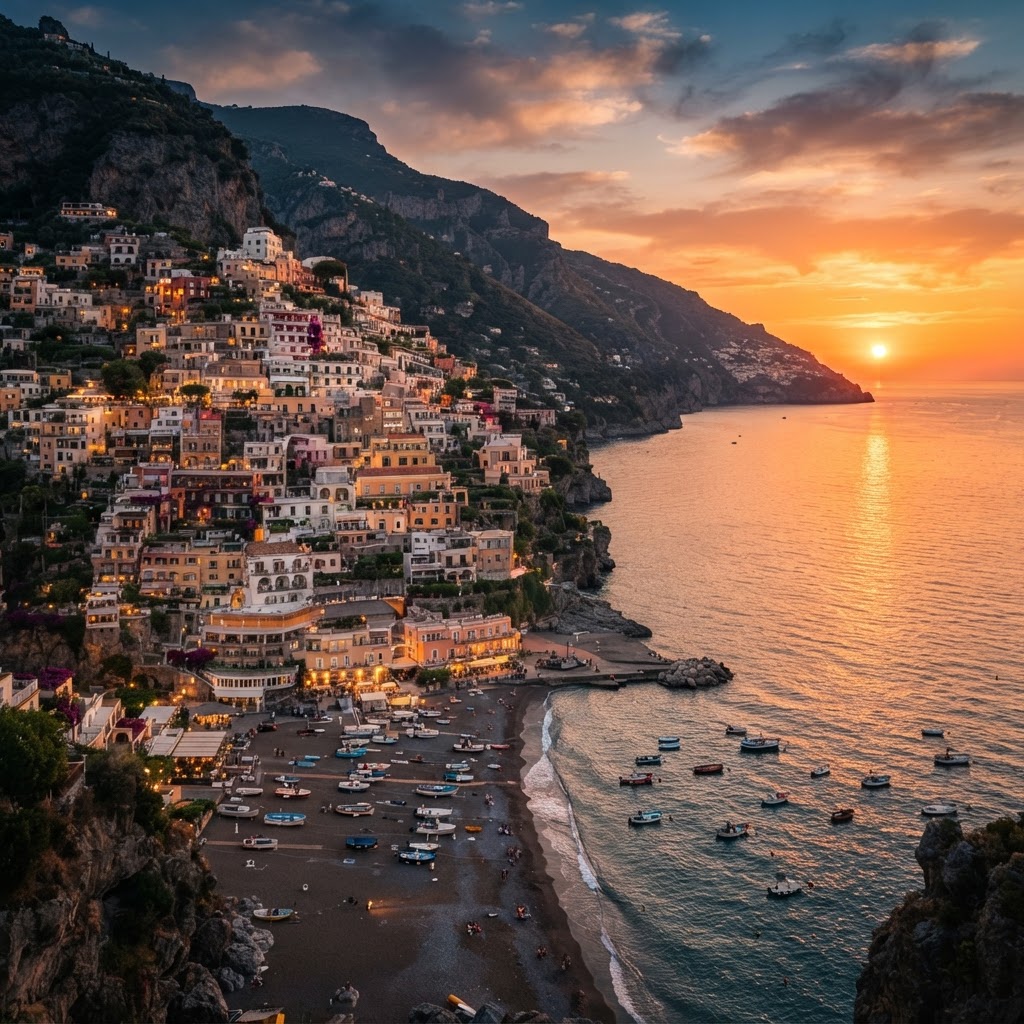
The aesthetic perfection of Positano is fundamentally rooted in the geological history of the Lattari Mountains, which are composed of hard, erosion-resistant Triassic limestone. These cliffs were formed over 200 million years ago, with the vertical faces created by intense seismic uplift and subsequent karstic erosion, resulting in the steep, 60-degree-plus gradients that define the coastline. This extreme terrain acts as a natural stage, elevating each building to ensure unobstructed views of the Mediterranean, unlike traditional coastal towns built on flat land. The interaction between the white-gray limestone and the Mediterranean salt air creates a unique, porous surface that has dictated the town’s architecture for centuries. Because the soil is thin and rocky, local builders had to anchor foundations directly into the cliffside, using mortar and stone to create the “clinging” effect that gives the town its famous appearance. This geological framework acts as the primary structure for the town’s “vertical architecture,” where residential density is restricted by the precipice itself. By building vertically, Positano’s early inhabitants unintentionally created an engineering marvel that maximizes solar exposure and cross-breezes, elements that remain vital in Mediterranean climate management today.
The Vertical Architecture
Because the terrain is so steep, early residents had no choice but to build upwards rather than outwards. This necessity turned into an aesthetic triumph, as every balcony, terrace, and rooftop garden becomes a part of the vertical mosaic. The density of the town ensures that from almost any vantage point, the sheer volume of the cliffside remains visible, serving as a constant reminder of the epic scale of the landscape.
Capturing the Iconic Vista
Achieving the perfect photograph of Positano requires precise positioning along the Via Cristoforo Colombo, which offers the optimal elevation to capture the town’s architectural “cascade” against the sea. To help travelers plan their photography, it is essential to understand the best times and tools for the job.
Tips for the Best Photos
- Visit during the “Golden Hour” shortly before sunset for a soft, warm glow.
- Utilize a polarizing filter to bring out the deep blues of the Mediterranean Sea.
- Move higher up toward the Nocelle area for a panoramic view that includes the entire coastline.
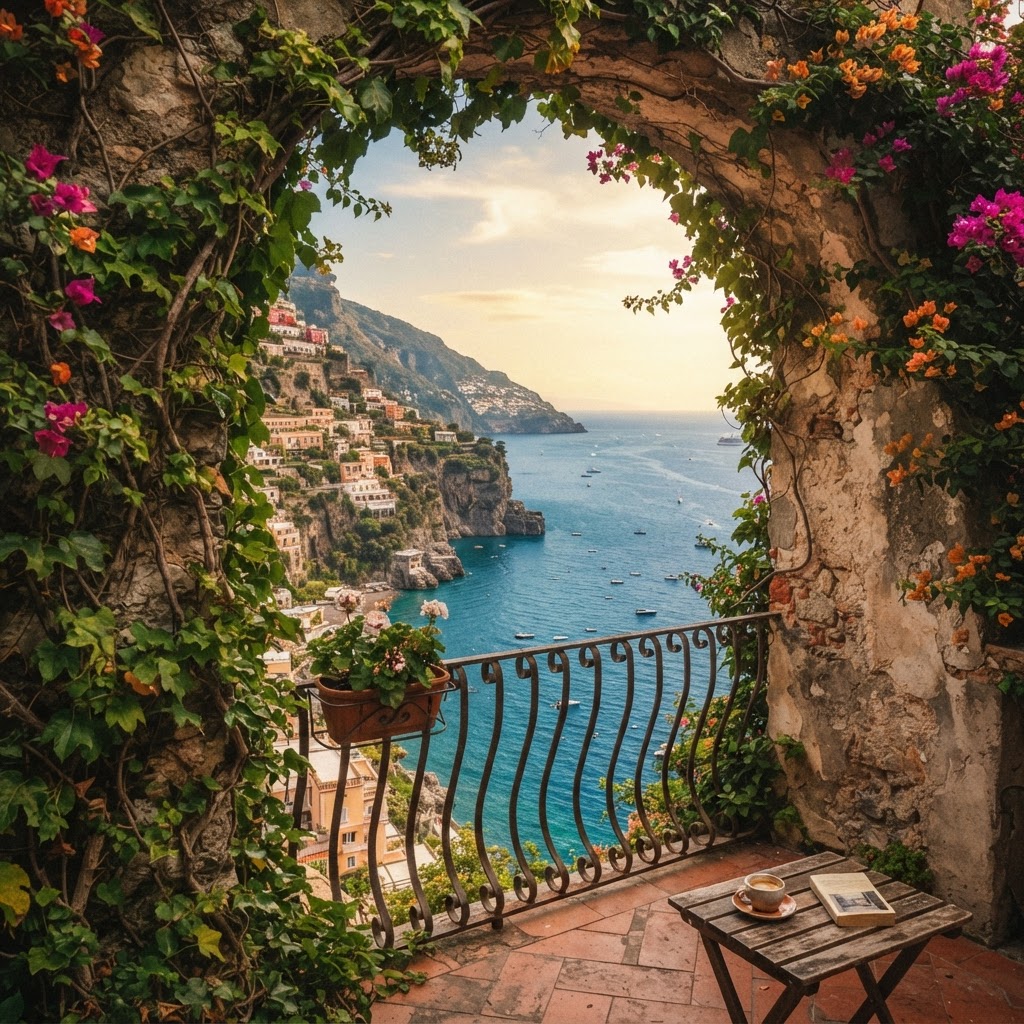
- Look for framing opportunities through the arches of local bougainvillea-covered doorways.
Seasonal Changes and Artistic Lighting
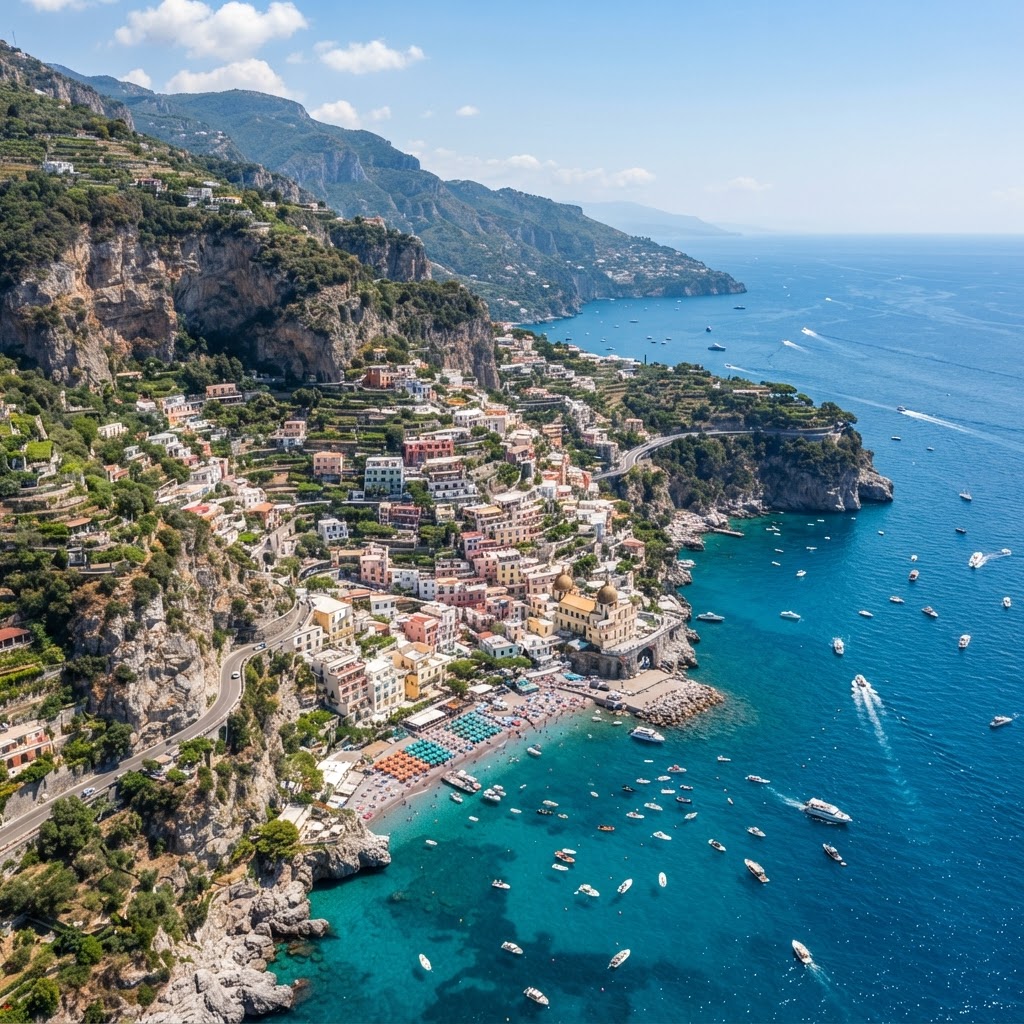
Seasonal light shifts in Positano fundamentally alter the aesthetic “palette” of the town, moving from the vibrant, high-contrast greens of spring to the warm, amber-toned shadows of autumn. During the spring months of April and May, the cliffside is covered in wild flora, and the sunlight is direct and bright, highlighting the crisp, clean whites and pastels of the buildings. By contrast, in the autumn months of October and November, the sun drops lower in the sky, creating longer, more dramatic shadows that emphasize the rugged texture of the limestone cliffs.
Even in the winter, when the crowds have dispersed, the atmospheric mood shift brings out a different kind of beauty. Moody skies can turn the cliffs into a dramatic, brooding masterpiece, perfect for those who prefer a more somber, romantic interpretation of the Italian landscape. Understanding these shifts allows you to plan your visit around the specific aesthetic you want to experience or document.
Exploring the Vertical Streets
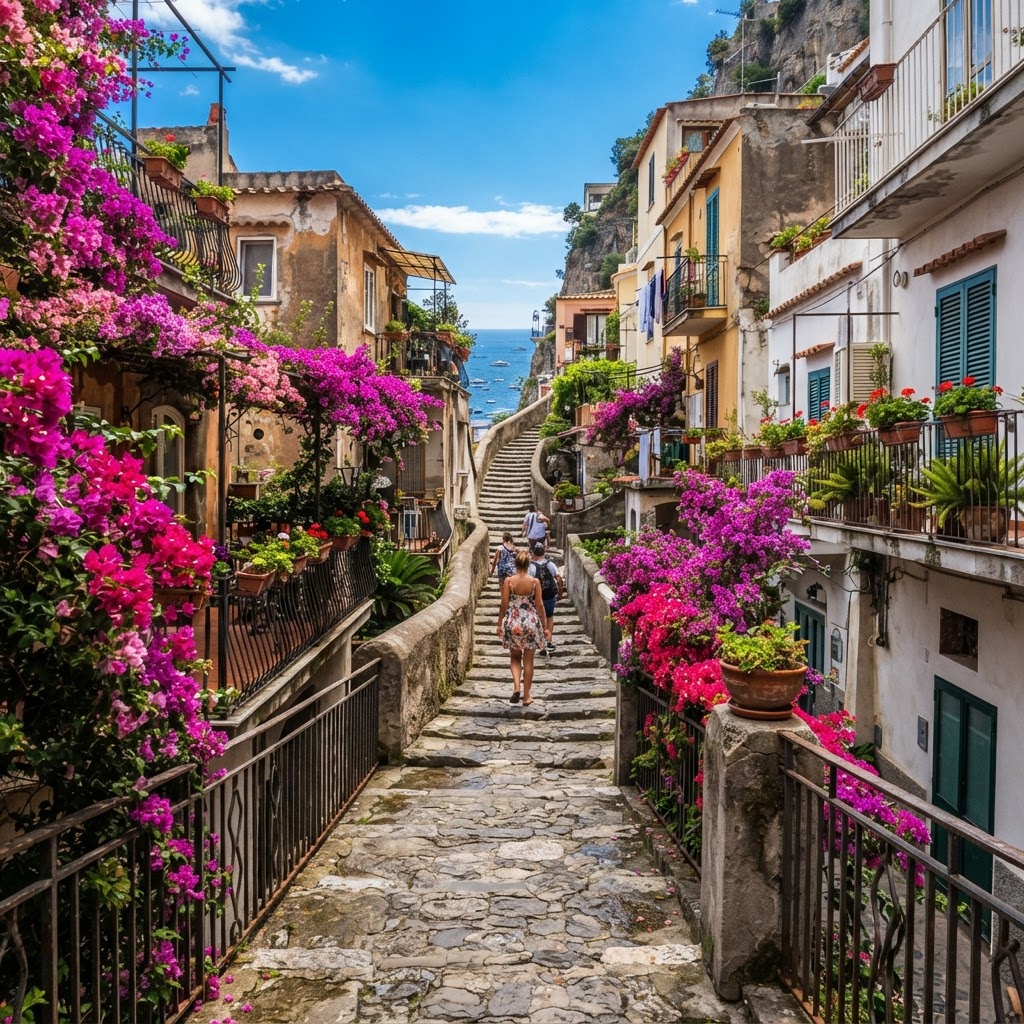
Navigating Positano is an immersive, high-intensity activity centered around the town’s historic ‘scalinatellas,’ or steep pedestrian stairways that connect the beach to the upper heights. Because traditional vehicular traffic is impossible on these narrow, ancient paths, the town relies on a “staircase-first” infrastructure, meaning you will climb over 1,000 steps if walking from the harbor to the upper residential tiers. This unique urban layout requires a high level of physical endurance, but it also creates a sensory-rich experience where you encounter hidden gardens, artisan workshops, and local laundry hanging between pastel facades. Everything from fresh groceries to building supplies is moved via human power or specialized micro-carts, keeping the streets free of modern traffic and preserving the 18th-century layout. The narrowness of these paths means the sun rarely reaches the ground floor for long, keeping the streets cool even in the heat of summer. Visitors should note that accessibility is limited for those with mobility issues, as there are very few flat areas outside of the immediate beachfront and the primary Piazza dei Mulini.
Life on the Precipice
Living and working on these steep slopes requires a certain resilience. Everything from grocery delivery to construction is handled with small, motorized carts or even human power, as the narrow, winding stairs are inaccessible to traditional cars. This adds a layer of authentic charm, as you share the paths with locals carrying fresh produce or laundry, grounding the ethereal beauty of the cliffs in the reality of everyday life.
The Cultural Impact of the Landscape
It is no surprise that Positano has long been a sanctuary for writers, painters, and filmmakers. The surreal quality of the scenery serves as an endless muse. The cliffs have been featured in countless films, serving as the backdrop for stories of love, drama, and escape. When people reference the Positano cliffs that look like a painting, they are often tapping into a collective cultural memory that places this town at the center of the ‘La Dolce Vita’ lifestyle.
Essential Travel Planning
Effective travel planning for Positano demands an awareness of the town’s extreme verticality, which significantly impacts accessibility and daily logistics. For those visiting, packing is critical; prioritize rubber-soled, broken-in walking shoes, as the stone steps become extremely slick during infrequent rainfall. If you intend to stay in the upper reaches of the town, be prepared to factor in daily climbing efforts or rely on the local Sita bus service, which runs along the main road. The most effective strategy to avoid the crushing tourist crowds, which can number in the thousands during July and August, is to schedule your visit during the shoulder periods.
Logistics for Visitors
A Sanctuary for the Soul
Beyond the aesthetic, there is a profound sense of peace to be found among these vertical heights. Standing on a terrace overlooking the sea, with the ancient rocks behind you and the vast, shimmering water in front, provides a perspective that is hard to achieve elsewhere. It is a place that forces you to slow down, breathe, and simply observe the world in its most beautiful, natural form.
FAQ
Q: Why does Positano look like a painting?
Positano looks like a painting because its vertical arrangement of pastel-colored buildings creates a high-contrast, layered effect against the jagged gray limestone. This unique cliffside density transforms a standard coastal town into a dramatic, three-dimensional mosaic that looks artificial and artistic to the human eye.
Q: What is the best month to visit Positano for photos?
May and September are the best months for photography because they offer stable weather, fewer crowds than mid-summer, and the perfect sun angle. During these months, the lighting is soft and golden for longer periods, providing the ideal “painterly” quality that makes the cliffs look most stunning.
Q: Can you walk everywhere in Positano?
Yes, you can walk everywhere in Positano, but you must be physically capable of navigating hundreds of stone stairs. The town is primarily pedestrianized, and because there are no traditional roads in the center, walking is the only way to reach most of the shops, hotels, and beaches.
Q: Are the Positano cliffs safe for hiking?
The marked hiking trails, such as the famous ‘Path of the Gods,’ are safe and well-maintained if you have standard fitness levels and proper hiking boots. However, hikers should avoid wandering off-trail on the cliff faces, as the limestone is brittle, prone to erosion, and can be dangerously unstable in some sections.
Q: Do I need a car in Positano?
No, you should not bring a car to Positano because parking is exceptionally limited and expensive, and the narrow streets are impossible to navigate for standard vehicles. It is much more practical to arrive via ferry or private transfer and use the local bus system or walking paths once in town.
Leave a Reply