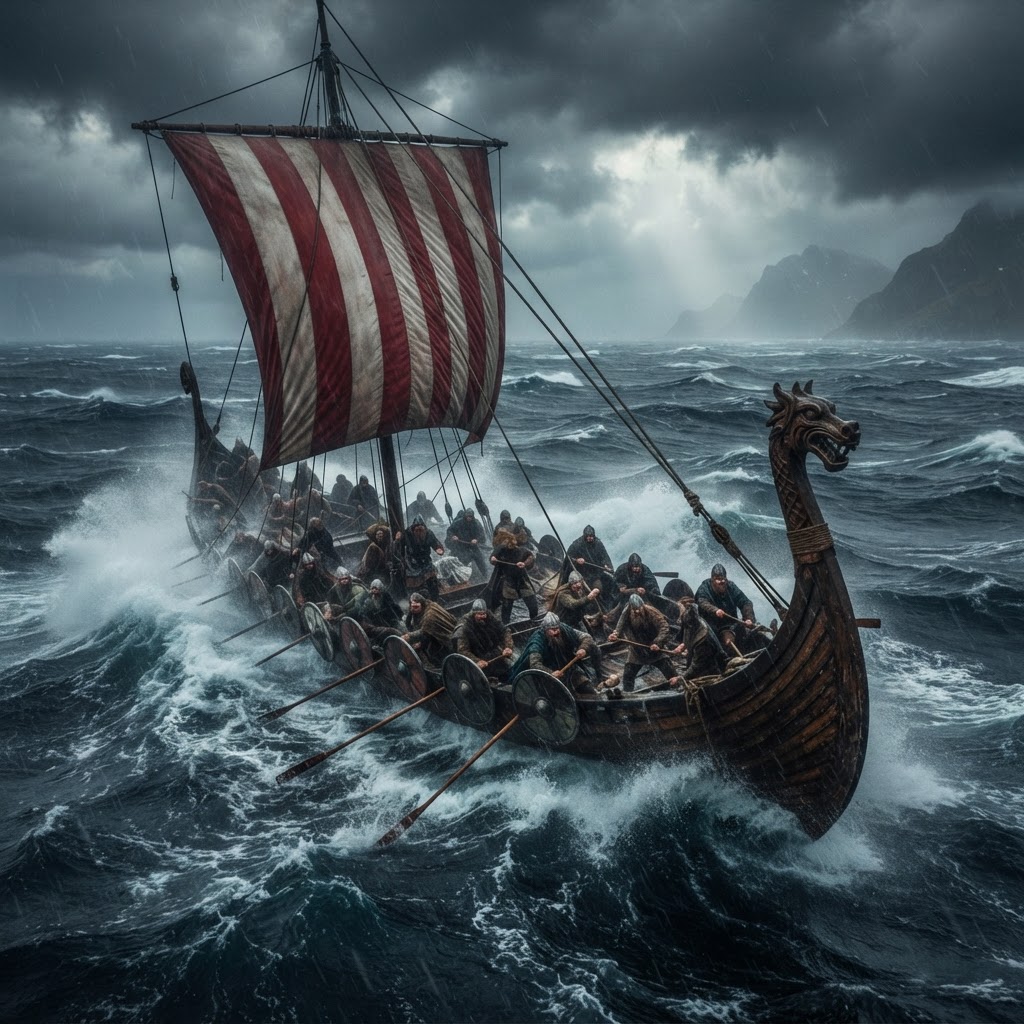
Where Vikings Once Sailed: A Maritime Odyssey
Vikings sailed across a vast maritime network extending from the icy fjords of Scandinavia to North America, the Mediterranean, and the Caspian Sea. Between 793 and 1066 AD, Norse mariners utilized advanced longship engineering and celestial navigation to connect distant cultures, establish global trade hubs, and settle territories across the North Atlantic.
The Engineering Behind the Viking Longship
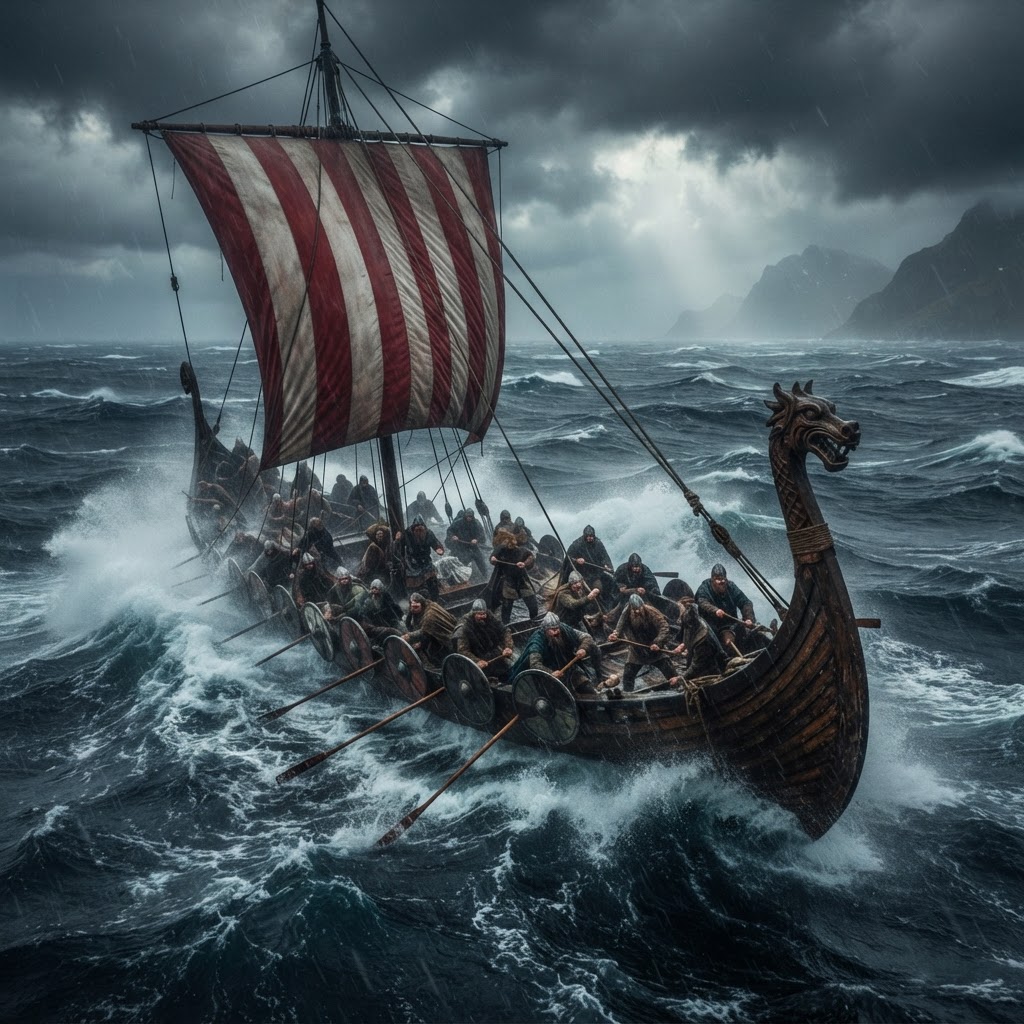
The foundation of Viking success lay in the evolution of the longship, a masterpiece of medieval naval architecture designed for both open-ocean endurance and shallow-water maneuverability. By utilizing a shallow draft, these vessels could sail across the North Atlantic and simultaneously penetrate deep inland through river systems like the Seine or the Dnieper. This versatility allowed the Norse to strike deep into European territories that were previously thought inaccessible to maritime forces.
Advancements in Naval Construction
Key to their speed and agility was the clinker-built hull construction technique. By overlapping wooden planks—typically oak or pine—and securing them with high-grade iron rivets, builders created a flexible, resilient structure. Unlike rigid hulls, clinker-built ships could flex with the stress of crashing waves, preventing catastrophic cracking during intense storms. This flexibility, combined with a large square sail capable of harnessing winds up to 15 knots, allowed longships to reach speeds of 10 to 12 knots, an unmatched pace for the 9th century.
Navigating the Uncharted North Atlantic
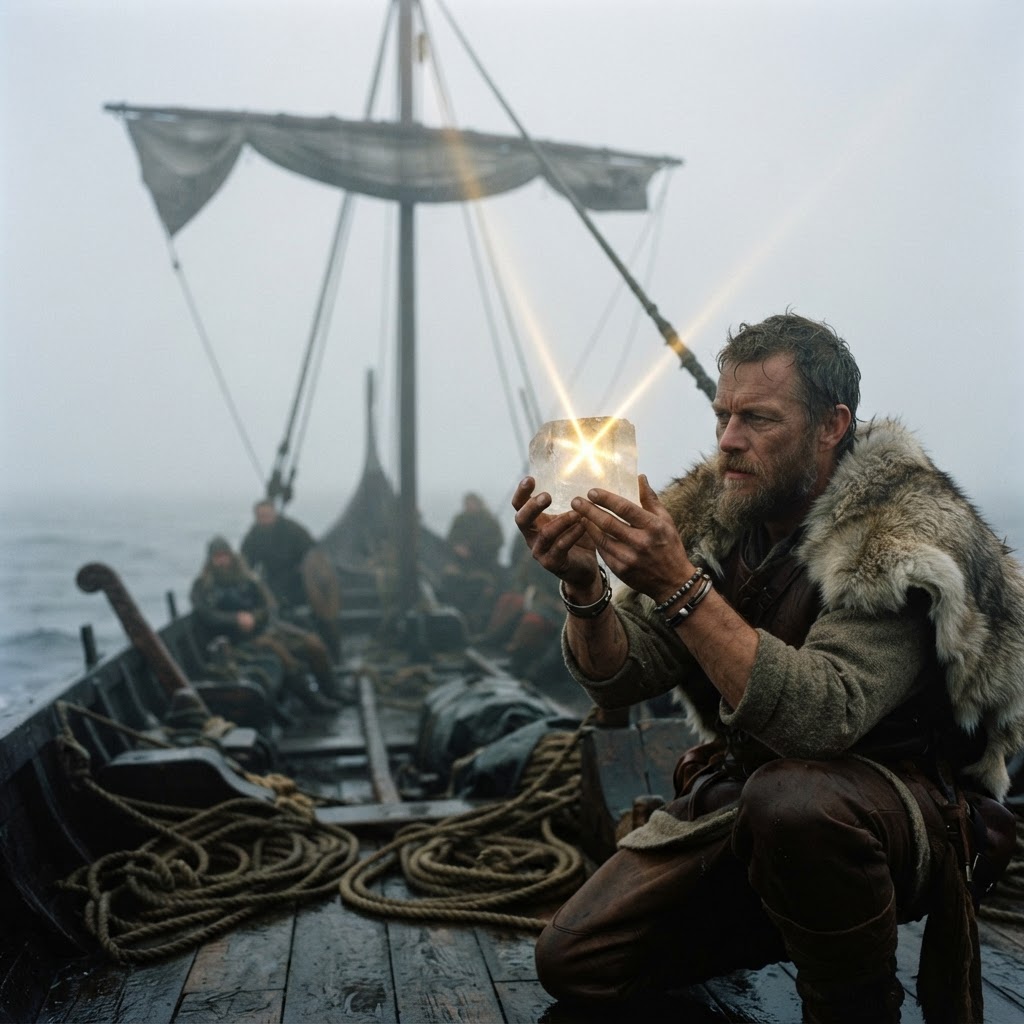
Norse sailors navigated the uncharted North Atlantic by combining deep empirical knowledge of nature with primitive but highly effective optical tools. Without a magnetic compass, mariners relied on “natural beacons” such as whale migration paths, seasonal bird flight trajectories, and the specific color and temperature of seawater. In conditions of poor visibility or heavy overcast, they utilized the sun stone—likely a birefringent crystal like Icelandic spar—which could polarize light to locate the sun’s position within a margin of error of less than one degree. This allowed them to maintain a consistent latitude while crossing thousands of miles of open water.
Trade Networks of the Norse World
The Norse influence functioned as a complex, sophisticated web of mercantile activity that connected the markets of Byzantium to the fringes of the Islamic Caliphate. Viking merchants traded high-value commodities including Baltic amber, Arctic furs, walrus ivory, and enslaved people for silver dirhams and exotic luxury goods. This commercial integration transformed the medieval economy, linking the Baltic and North Seas to the wealth of the Abbasid Caliphate via the Volga and Dnieper rivers.
- Volga River trade routes: Opened direct access to Caspian Sea markets.
- Amber and fur commerce: Dominated the Baltic coastal trade corridors.
- Maritime exchange: Created a vital link between Dublin, York, and North Sea ports.
- Silver influx: Scandinavian wealth boomed due to trade with the East.
The Expansion into the North Atlantic
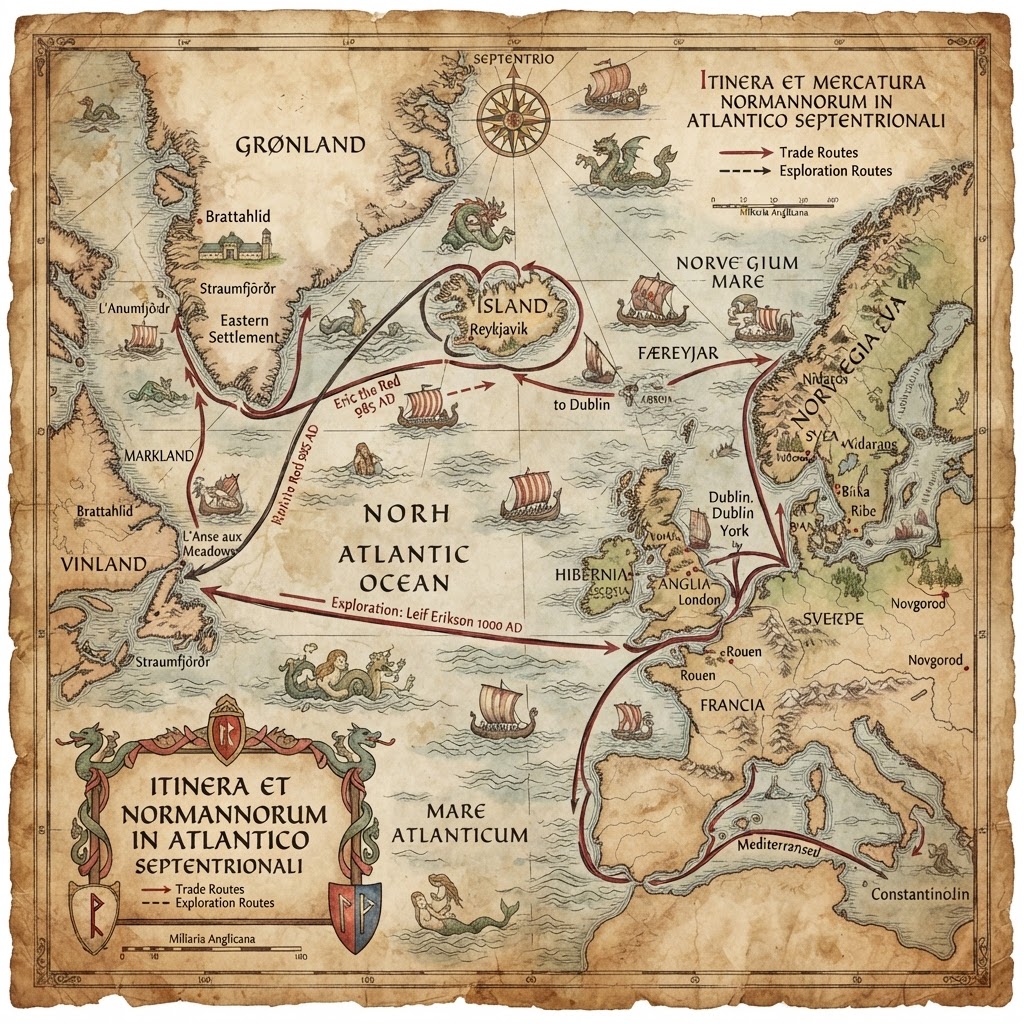
The westward expansion remains the most ambitious chapter in Viking history, proving the open ocean could be conquered for permanent settlement. Beginning with the settlement of Iceland around 870 AD, the Norse proceeded to colonize Greenland in the 980s and eventually reached Vinland (Newfoundland) by approximately 1000 AD. These colonies acted as vital stepping stones for exploration, mapping the known limits of the world. While Viking maritime expertise focused on the North Atlantic, travelers today seeking more leisurely nautical appreciation can find stunning views of Mediterranean islands by browsing our guide to the best Santorini balcony views in Oia.
Cultural Impact of Norse Seafaring
The routes established by Vikings left an indelible mark on the societal and architectural tapestry of the nations they visited or occupied. From the implementation of Danelaw legal systems in England to the linguistic influence on modern Scandinavian and English tongues, the Viking legacy is profound. Furthermore, the preservation of sagas and oral traditions provided a unique cultural conduit that introduced diverse ideas, technological maritime improvements, and distinct artistic styles to the European mainland.
Challenges and Limitations of Viking Exploration
Despite their navigational prowess, the Norse faced extreme logistical and environmental limitations that eventually halted their expansion. Harsh North Atlantic weather and resource scarcity in remote outposts like Greenland made the maintenance of long-distance supply lines economically non-viable. The onset of the Little Ice Age, characterized by a sharp drop in temperatures, ultimately made agriculture impossible in northern colonies and forced a contraction of these trade routes. This decline serves as a primary example of how environmental shifts can dismantle even the most resilient medieval trade networks.
FAQ
How did Vikings navigate without a compass?
Vikings navigated using natural cues such as bird flight paths, whale migrations, and the sun’s position. They used sun stones—birefringent crystals like calcite—to find the sun on cloudy days and relied on a “sun compass” to calculate latitude based on the solar noon.
What were the primary Viking trade goods?
Vikings traded furs, walrus ivory, amber, and slaves for silver, silk, and spices. These goods were transported from as far as the Caspian Sea and the Byzantine Empire back to Scandinavian markets, creating a trans-continental economy.
When did Vikings reach North America?
Vikings reached North America, which they called Vinland, around 1000 AD. Led by Leif Erikson, they established a settlement at L’Anse aux Meadows in modern-day Newfoundland, Canada, approximately 500 years before Christopher Columbus arrived in the Americas.
Why did the Viking age end?
The Viking age declined due to the centralization of power in Scandinavian kingdoms, the conversion of Norse societies to Christianity, and the logistical failure of remote colonies during the Little Ice Age. This caused a decrease in raiding activity and a pivot toward stable state-run trade.
Retracing the Viking Path: Practical Planning
Modern travelers can trace the Norse legacy across the North Atlantic with careful planning. Start your journey in Roskilde, Denmark, where five authentic 11th-century ships sit in the Viking Ship Museum. You will see the physical evidence of the clinker-built hull construction technique firsthand. Skip the bustling capital city centers and head straight to these coastal heritage sites for a more visceral experience. Aim for shoulder season in May or September to avoid the dense summer crowds while keeping the weather mild.
Logistical Tips for Viking Heritage Routes
- Book your ferry passage between Norway and the Faroe Islands well in advance during peak summer.
- Rent a robust vehicle in Reykjavik to access the remote Westfjords where sagas were often written.
- Bring high-quality windproof layers even in July as North Atlantic weather patterns shift with alarming speed.
- Download offline maps before heading into the rural regions of coastal Norway or northern Scotland.
Avoiding Common Tourist Traps
Many travelers waste precious time visiting reconstructed Viking villages that focus on modern theater rather than historical accuracy. Skip the heavily commercialized theme parks and look for smaller, museum-led archaeological sites where you can see active excavation work. Avoid scheduling too many locations into a single week. You will find that these coastal regions are best explored slowly to appreciate the rugged geography that shaped Norse life.
Another common mistake involves ignoring local maritime museums in smaller port towns. These venues often hold artifacts found by local fishermen that you will not see in national collections. Spend your time in places like Lindisfarne or the Shetland Islands to truly grasp the scale of the maritime horizon. Do not rely solely on public transport; the most meaningful Norse history lies in isolated coastal valleys where trains simply do not go.
The Cost of a Maritime Odyssey
Expect a daily budget of at least $200 per person if you plan to move between multiple Nordic countries. Scandinavia remains one of the most expensive regions for food and accommodation. Offset costs by grocery shopping at local supermarkets and cooking in guesthouses. Alcohol is particularly expensive in Norway and Iceland, so purchase your limited allowance at the duty-free shop upon arrival if you wish to enjoy a drink. Budget extra for guided boat tours as these are the only way to experience the fjords from a water-level perspective.
Viking Heritage Checklist
- Research the primary sagas related to the specific region you intend to visit.
- Invest in a sturdy pair of waterproof hiking boots for slippery coastal terrain.
- Carry a portable power bank for your mobile devices while exploring remote maritime ruins.
- Register with your embassy before embarking on isolated coastal road trips.
- Pack a physical map of the North Atlantic to visualize the immense scale of the Viking voyages.
Frequently Asked Questions
What is the best way to experience Viking history?
The best method is to travel by sea rather than by plane. Taking a ferry between coastal towns allows you to understand the maritime connection that defined the Norse world. Watching the coastline approach from the water gives you a unique perspective on why these mariners chose specific landing sites.
When is the absolute best time to visit Viking sites?
Late August offers the perfect balance of manageable temperatures and fewer tourists. The daylight hours remain long enough for significant exploration, but you miss the frantic rush of mid-summer school holidays. You will also find that local guides are more available to provide in-depth information during this transition period.
Do I need specialized equipment for visiting remote ruins?
You do not need specialized gear, but you do need reliable weather protection. A high-quality waterproof shell is non-negotiable because rain can arrive without warning. Sturdy footwear is vital because many historical sites are located on uneven, grassy cliffs or rugged coastal paths that are not maintained for casual tourists.
Leave a Reply