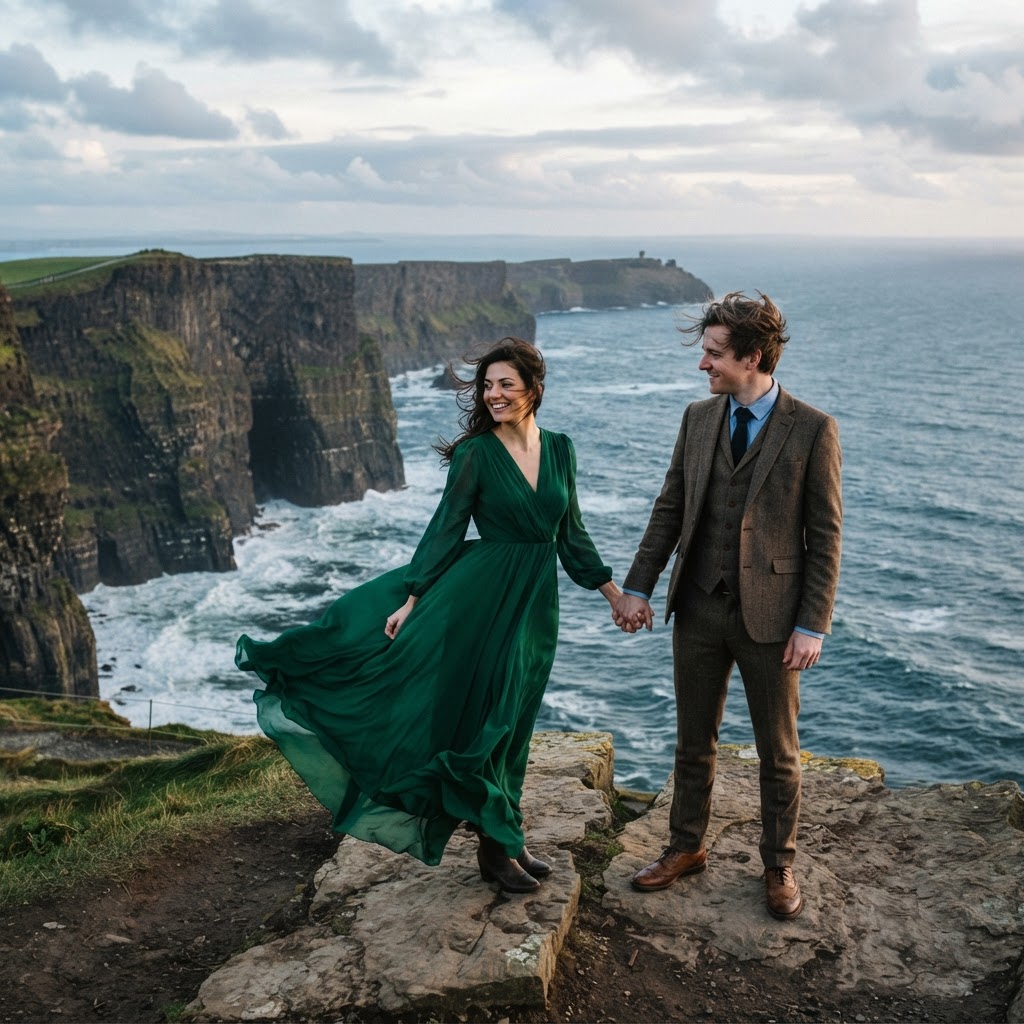
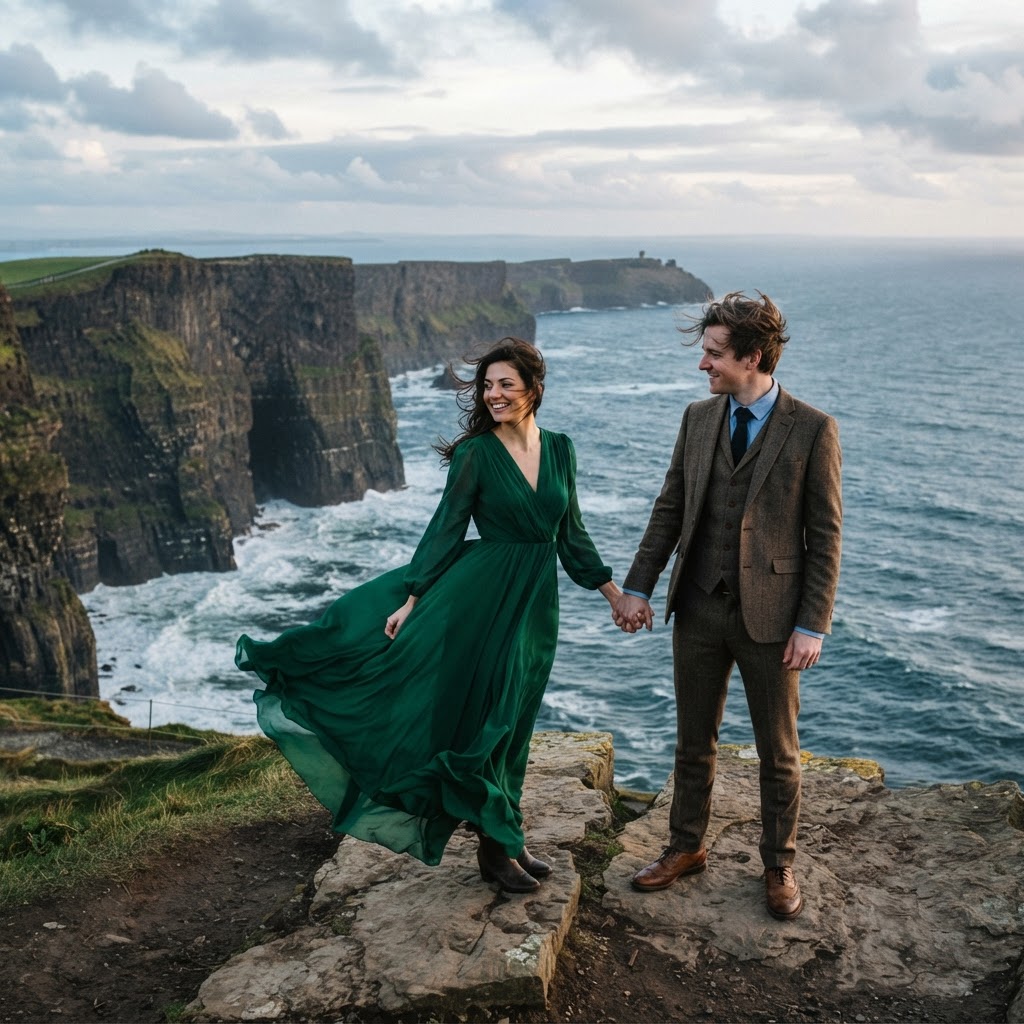
For a perfect Ireland elopement or engagement shoot, choose outfits that combine high-fashion silhouettes with functional layering, such as wool-lined capes, moisture-wicking base layers, and textured rubber-soled footwear. Prioritize flowy fabrics like chiffon to catch the wind, paired with deep jewel-toned colors that contrast beautifully against Ireland’s iconic emerald, slate, and golden landscapes.
The Importance of Layering for Irish Weather
Ireland is famous for its ‘four seasons in one day’ climate, making technical layering the absolute cornerstone of a successful wardrobe plan for your outdoor session. You should prioritize thermal base layers—often costing between $30 and $60—that remain hidden under your wedding attire to ensure core temperature regulation without sacrificing your silhouette. Consider adding a high-quality, wool-lined cape or a tailored 100% cashmere coat that complements your dress or suit; these allow you to remove outer layers instantly when the sun breaks through the clouds. Research indicates that moisture-wicking synthetic blends or merino wool are superior to cotton, as they prevent heavy dampness during the frequent mist that occurs on the Wild Atlantic Way. By planning for a temperature fluctuation of up to 10 degrees Celsius during a standard 4-hour shoot, you ensure your focus remains on the session rather than the chill. Always carry a small “emergency kit” containing clear umbrella covers and hand warmers to bridge the gap during unexpected coastal squalls.
Best Color Palettes for Dramatic Irish Landscapes
Choosing the right color palette is essential to ensure you stand out against the deep greens, slate grays, and golden browns of the Irish countryside. Deep jewel tones such as emerald, burgundy, navy, and mustard provide a stunning visual contrast against the rugged landscape, while muted neutrals like cream, sage, and dusty rose offer an ethereal, romantic aesthetic. Avoid neon shades or overly busy patterns that can distract from the breathtaking scale of the environment. Refer to this quick comparison guide for selecting your color palette based on location:
Additionally, consider the seasonal color shift: in autumn (September-November), opt for ochre and rust to mimic the foliage, while in spring (March-May), pastels and sage greens feel more harmonious with the emerging flora. A professional stylist tip is to select one “anchor color” for the primary outfit and use a secondary accent tone in accessories like scarves, pocket squares, or headpieces to tie the look together.
Footwear Essentials for Rugged Terrain
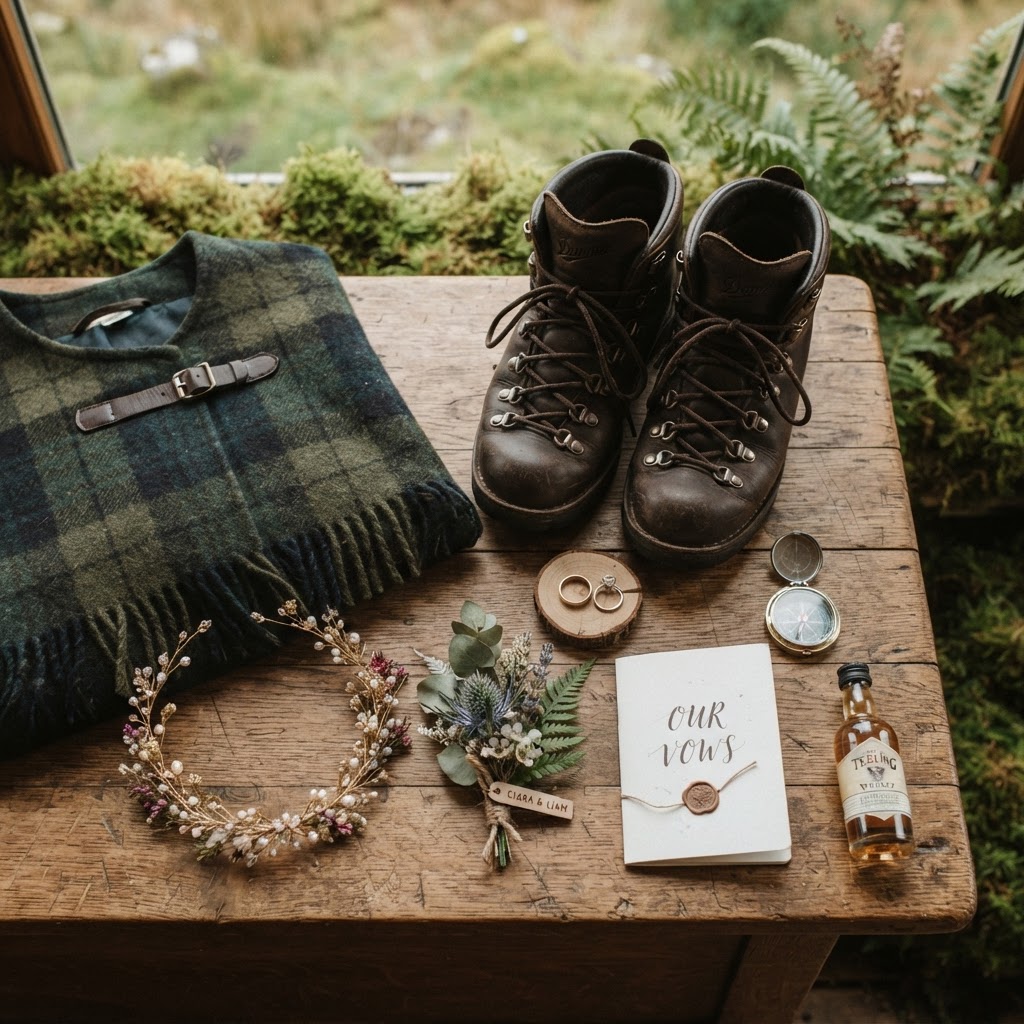
Your footwear is arguably the most important decision you will make, as Irish terrain is notoriously uneven, muddy, and unpredictable. We recommend bringing two distinct pairs of shoes: elegant leather boots or refined dress shoes for the actual photos, and sturdy, waterproof hiking boots for the trek between locations. Formal footwear for Ireland must feature a textured rubber sole to prevent slipping on damp grass or wet limestone surfaces, which are extremely common at landmarks like the Cliffs of Moher or the Burren. A common oversight is wearing new shoes that haven’t been broken in; wear your chosen footwear for at least 3-5 miles of walking prior to your flight to avoid blisters. Furthermore, pack two pairs of moisture-wicking wool socks to keep feet dry if you encounter unexpected puddles. For those seeking a compromise, “hiking-style” wedding boots with decorative lacing provide the aesthetic of a classic dress shoe with the rugged protection of a professional trail boot. When selecting your secondary travel boots, look for GORE-TEX lining to guarantee breathability and total water protection against the Irish dampness.
Styling Accessories for Wind and Rain
Wind is a frequent visitor in Ireland, so choose hair accessories and jewelry that stay secure during gusts. A simple silk ribbon or a sturdy hair vine is more reliable than a loose veil, which can become tangled in harsh winds or heavy rain. Heavy, high-quality earrings that sit flush against the earlobe are less likely to snag than long, dangling pieces. If you choose to wear a hat, ensure it is a wide-brimmed fedora with a secure chin strap or a well-fitted wool piece that won’t blow away during coastal gusts.
Essential Fabric Considerations for Movement
Your chosen attire should allow for ease of movement, especially if you plan to hike to remote locations for unique, intimate shots. Flowy fabrics like chiffon, silk-tulle, or lightweight crepe are iconic for elopements because they catch the wind beautifully, creating dynamic movement in your photos that reflects the wild spirit of the island. For grooms, tweed or heavy wool suits are not only historically appropriate for the Irish climate but also provide excellent protection against the chilling coastal breeze compared to lightweight summer suits. Avoid stiff, synthetic materials that do not breathe or wrinkle easily during transit in a garment bag. Use this comparison of fabric performance for your planning:
Always ensure your attire allows you to raise your arms above your head comfortably, as many shots involve natural posing that requires a full range of motion. If you opt for a dress with a long train, consider adding a discrete bustle or a wrist loop to manage the hem when transitioning between rugged locations, preventing damage from mud and jagged rocks.
FAQ
Should I bring an umbrella?
Yes, a clear bubble umbrella is a fantastic, stylish prop that protects your hair and makeup without blocking the view of the landscape. It is recommended to choose a reinforced frame to withstand winds up to 30mph, ensuring it won’t invert or break during your session.
What is the best season for Irish engagement photos?
Late spring (May) and early autumn (September) offer the best balance of milder weather and thinner crowds at major landmarks. These months typically see average high temperatures of 15°C (59°F), providing comfortable conditions for extended outdoor photography sessions without the peak summer tourist traffic.
Can I wear a traditional white gown?
Absolutely, white looks brilliant against the dark, moody tones of Irish cliffs, but ensure the hemline is manageable for walking on uneven ground. Opting for a dress that can be easily bustled or keeping the length tea-length can prevent your gown from collecting excess mud or debris.
How do I keep my suit looking sharp?
Invest in a hard-shell garment bag for international transit and look for wrinkle-resistant fabrics like high-quality wool blends that hold their shape well. Upon arrival, hang your suit in a steamy bathroom for 10-15 minutes to release any minor travel creases before your shoot day.
Are there specific restrictions for clothing at Irish heritage sites?
Generally, there are no strict dress codes, but respect for historical sanctity is encouraged at locations like Glendalough or ancient monastic sites. It is recommended to keep outfits tasteful and modest if planning to incorporate indoor shots within historic chapels or stone ruins.
Mastering the Logistics of Irish Terrain
You cannot wear your dream wedding heels on a cliff edge in County Clare. The ground at the Cliffs of Moher or the Skellig Ring is often boggy, uneven, and riddled with hidden rabbit holes. Pack a pair of sturdy hiking boots for the walk to your chosen spot. Switch into your elegant footwear only when you reach the flat, safe photography site. Carry your heels in a light backpack to avoid dragging mud into your dress hem.
The Strategy of Multiple Pairs
Professional elopement photographers in Ireland will tell you that footwear is the silent hero of the day. Bring a pair of white or metallic leather sneakers that can handle damp grass without soaking through. Avoid mesh running shoes, as they act like sponges in the Irish mist. If you are wearing a floor-length gown, your boots will remain invisible in 90 percent of your photos. Prioritize your comfort so you can stand on uneven rocks without wobbling.
Common Mistakes to Avoid During Your Shoot
Many couples make the mistake of overpacking their accessories. You will be moving frequently to catch the changing light, so keep your gear lightweight. Do not bring a heavy designer handbag that requires constant holding. Instead, use a hidden pocket in your dress or have your photographer carry a small, waterproof pouch. This keeps your hands free for your partner and for interacting with the wind-swept environment.
Another frequent error is ignoring the wind’s effect on your hair and veil. A cathedral-length veil sounds magical, but it becomes a tangled nightmare in a 30-mile-per-hour gust. Opt for a shorter veil or secure it with heavy-duty hidden pins. If you have long hair, consider an intricate updo to ensure your face remains visible in your engagement photos. Avoid loose, flowy styles unless you are comfortable with hair across your face for the entire session.
The Best Seasons for Your Ireland Experience
May and September are the absolute sweet spots for an Irish engagement session. You avoid the peak tourism surge of July and August while catching milder temperatures. In May, the gorse bushes bloom in vibrant yellow, creating a stunning backdrop for your portraits. September offers a softer, golden light that is perfect for late afternoon shoots. Avoid January and February, when the wind chill can make even high-end technical layers struggle to keep you warm.
Your Pre-Shoot Packing Checklist
- Thermal base layer top and bottoms in merino wool.
- Two pairs of shoes: one for hiking, one for posing.
- A clear, high-quality umbrella that won’t block the light.
- Hand warmers for your pockets to keep fingers nimble.
- A heavy-duty garment bag to protect your clothes during transit.
- Bobby pins and hair spray formulated for high-humidity environments.
- Small, localized wet wipes for cleaning hem mud before photos.
Frequently Asked Questions
Should I hire a local makeup artist who specializes in outdoor shoots?
Yes, absolutely. Local Irish stylists understand the specific challenges of humidity and salt spray on hair. They use products that prevent frizz and ensure your foundation survives a light drizzle. Professional airbrush makeup is often more resilient against the elements than traditional application.
What should I do if the weather forecast calls for heavy rain?
Embrace it. A light drizzle makes the landscapes look lush and deep. Most photographers have a secondary, sheltered location ready for these moments. If a storm is severe, look for an indoor historic site or a cozy local pub for an intimate, moody indoor session that feels uniquely Irish.
Leave a Reply