Amsterdam in Winter: What Actually Changes (An Honest Take)
Visiting Amsterdam in winter offers a quieter, more affordable city experience characterized by temperatures between 2°C and 7°C, horizontal rain, and fewer crowds. While the weather is damp and biting, it is never arctic, making it a budget-friendly time for travelers who prioritize indoor culture and cozy atmosphere over sunny canal walks.
The Reality of Winter Weather

Amsterdam’s climate is dictated by the North Sea, resulting in a damp, biting cold rather than dry, freezing conditions. You will rarely experience sustained sub-zero temperatures, but instead, navigate persistent humidity that feels colder than the thermometer suggests. The primary meteorological challenge is horizontal rain; flimsy umbrellas will invert and break in the gusty winds that channel through the city’s canal ring. Locals rely on high-quality, windproof, and waterproof raincoats rather than traditional umbrellas. You should prioritize dressing in layers, specifically utilizing thermal base layers and waterproof footwear to ensure comfort during long walks. Expect short, grey days with early sunsets starting as early as 4:00 PM, which limits natural light for sightseeing. By preparing for a wet environment, you can enjoy the city without the physical discomfort often associated with European winters. The city is manageable if you avoid the trap of expecting beach-like conditions or extreme snow. Simply pack for moisture management and prioritize insulation to keep your core temperature stable during transit between indoor venues.
Seasonal Shifts: Crowds and Costs

Tourism in Amsterdam drops significantly between November and February, offering a unique opportunity for travelers to experience the city at a reduced cost. Hotel rates during these months typically see a 30% to 50% decline compared to peak summer prices in July, significantly lowering your overall travel budget. Major museums, including the Van Gogh Museum and the Anne Frank House, experience shorter queues, and last-minute ticket availability is standard rather than a rarity. This change in visitor volume allows for a more relaxed itinerary, as you are not constantly fighting for space on the narrow sidewalks of the Jordaan or the Damrak. However, travelers must be aware of operational adjustments; some smaller museums, boutique shops, or outdoor attractions may feature reduced operating hours or close entirely for seasonal maintenance. Always check the official museum websites before heading to the outskirts of the city to avoid arriving at closed doors. The trade-off for colder weather is a more intimate connection with the city’s cultural heart, providing a much higher “value-per-hour” of sightseeing than is possible during the overcrowded peak summer season.
Practical Tips for Winter Navigation

Efficiently navigating Amsterdam in winter requires a strategic shift from bike-heavy transit to a more diversified approach. While cycling remains the iconic Dutch method of transport, it becomes challenging in rainy, windy conditions; most locals transition to the extensive tram network when temperatures drop below 4 degrees Celsius. Utilizing the ‘OVpay’ system—where you tap your contactless credit card, debit card, or smartphone directly on the reader—is the fastest way to travel without fumbling for physical paper tickets. Smartphone battery life is a common casualty of the cold; extreme temperature drops can drain batteries significantly faster than normal. Always carry a portable power bank, preferably stored in an interior jacket pocket where your body heat keeps the battery warm. If you choose to cycle, be hyper-aware of black ice, especially on the stone bridges, which are the first surfaces to freeze and are notoriously slippery for tires. Prioritize tram transit for longer distances to stay dry, and keep the ‘9292’ app installed for real-time adjustments to your route. By minimizing your exposure to the elements between major locations, you will sustain your energy levels and comfort for longer throughout the day.
Common Mistakes to Avoid
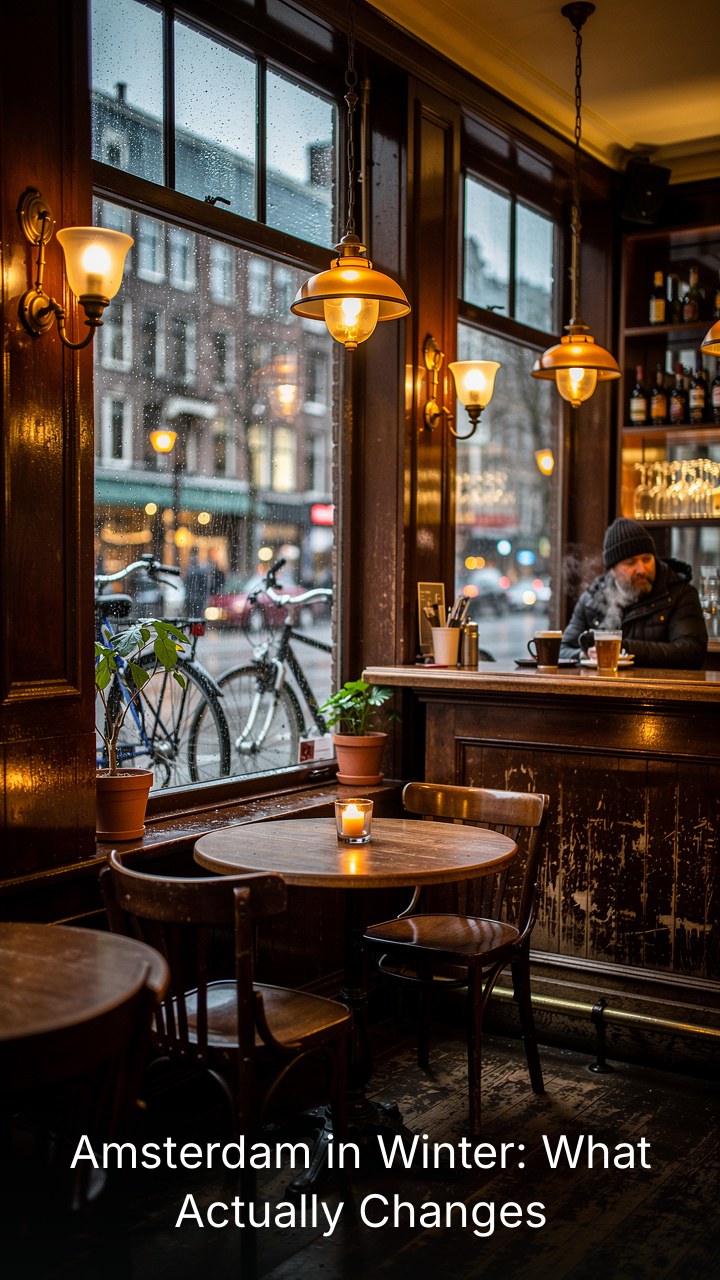
Many tourists ruin their Amsterdam experience by failing to dress for the specific reality of a Dutch winter. The most common error is assuming you can “tough it out” in a stylish but non-functional light jacket, which leads to shivering and an early retreat to your hotel room by 3:00 PM. Avoid the mistake of over-scheduling; daylight is a precious, limited resource in December and January. Plan one major, high-energy activity in the morning and a low-intensity, cozy dinner or museum visit for the evening. Avoid the trap of dining in high-traffic tourist areas immediately adjacent to Central Station, where food quality is often low and prices are inflated. Instead, seek out traditional ‘bruin cafes’—historic pubs characterized by their dark wood interiors and low lighting. These establishments offer the quintessential Dutch experience of ‘gezelligheid’ (coziness) and provide a perfect, heated environment to enjoy a hot chocolate or local beer while escaping the wind. By focusing on quality over quantity and prioritizing indoor comfort, you ensure that your trip remains enjoyable regardless of what the weather forecast predicts for the day.
Essential Winter Checklist for Amsterdam
Preparing your gear before departure is essential for a seamless Amsterdam winter vacation. Your primary focus should be a high-quality, wind-resistant raincoat that features a hood, as it will serve as your main defense against the elements. Pair this with waterproof walking boots that offer excellent grip, as the cobblestone streets become treacherous when wet or lightly frosted. A thermal base layer—such as Merino wool or synthetic long-sleeve shirts—worn underneath your standard clothing is vital for maintaining core temperature without adding excessive bulk. Additionally, carry a reliable portable power bank for your smartphone, as navigation and photography will rapidly deplete your battery in the cold. Ensure that all your digital entry tickets are saved offline or stored in a digital wallet so that connectivity issues do not prevent your access to museums. Carry a small amount of cash (Euros), as some smaller independent cafes or shops occasionally do not accept foreign credit cards. Having these items organized allows you to spend your time exploring the history and culture of the city rather than hunting for supplies in the cold.
Myths vs Facts: The Winter Experience
One common misconception is that Amsterdam shuts down during the winter months, but in reality, the city is vibrant, culturally active, and deeply engaging. Some travelers mistakenly avoid the canals entirely, but glass-topped boat tours are actually ideal in winter because they offer a heated, dry, and panoramic view of the city’s illuminated architecture. A frequent myth involves canal ice skating; while romantic in theory, the canals rarely freeze solid enough for skating due to recent climate shifts and saline influence from the sea. Do not bring ice skates, as you will not get the opportunity to use them; instead, focus your itinerary on the spectacular Amsterdam Light Festival. This annual event transforms the canals into an open-air art gallery, with massive light installations that are best viewed from the water. Another myth is that the city is dark; the Dutch embrace ‘gezelligheid’ with candles and festive lighting everywhere, ensuring the atmosphere remains warm and inviting despite the grey skies. The city truly transitions from an outdoor, biking-centric destination to an indoor, cultural sanctuary where the focus shifts toward art, local dining, and social connection.
FAQ
Is it worth visiting Amsterdam in January?
January is the best time for budget-conscious travelers because hotel rates are at their lowest and crowd density is minimal. While the weather is at its dampest, the trade-off is a nearly private experience at major world-class museums like the Rijksmuseum.
Do the Christmas markets stay open late into winter?
Most outdoor Christmas markets close by the end of December following the holiday season. If you are visiting in January, focus your attention on permanent indoor food halls like De Hallen, which provide a warm, festive atmosphere with gourmet food stalls throughout the entire year.
Should I rent a bike in winter?
Rent a bike only if you are an experienced cyclist comfortable maneuvering in wet, windy, and potentially slippery conditions. If you are a casual rider, it is much safer and significantly more comfortable to utilize the tram system to stay dry between destinations.
How can I get around without getting cold?
Use the tram and metro system to limit your time walking in the wind and rain. The ‘OVpay’ system allows you to pay for your transit seamlessly with a contactless credit card or phone, keeping your movements quick and efficient without the need for paper tickets.
What should I wear to stay warm?
Wear a high-quality, wind-resistant raincoat over thermal base layers to retain body heat. Ensure you have waterproof walking boots with good tread, as the city’s historic cobblestones become extremely slippery when wet or covered in light ice.
Leave a Reply