Introduction
To see flowers in Amsterdam without the crowds, visit hidden gems like the Begijnhof before 10 AM, explore the Hortus Botanicus, or rent a bicycle to tour the Bollenstreek bulb fields independently. Avoiding mass-tourism hotspots like the Bloemenmarkt and timing your trip to arrive between 8 AM and 9:30 AM ensures a peaceful, authentic floral experience.

Most visitors flock to Keukenhof during spring, leading to massive queues and shoulder-to-shoulder viewing. As a local, I recommend skipping the hype and exploring lesser-known spots that offer a more intimate floral experience. You don’t need a guided tour or a bus ticket to see the best of the Netherlands.
The Hidden Gardens of Amsterdam
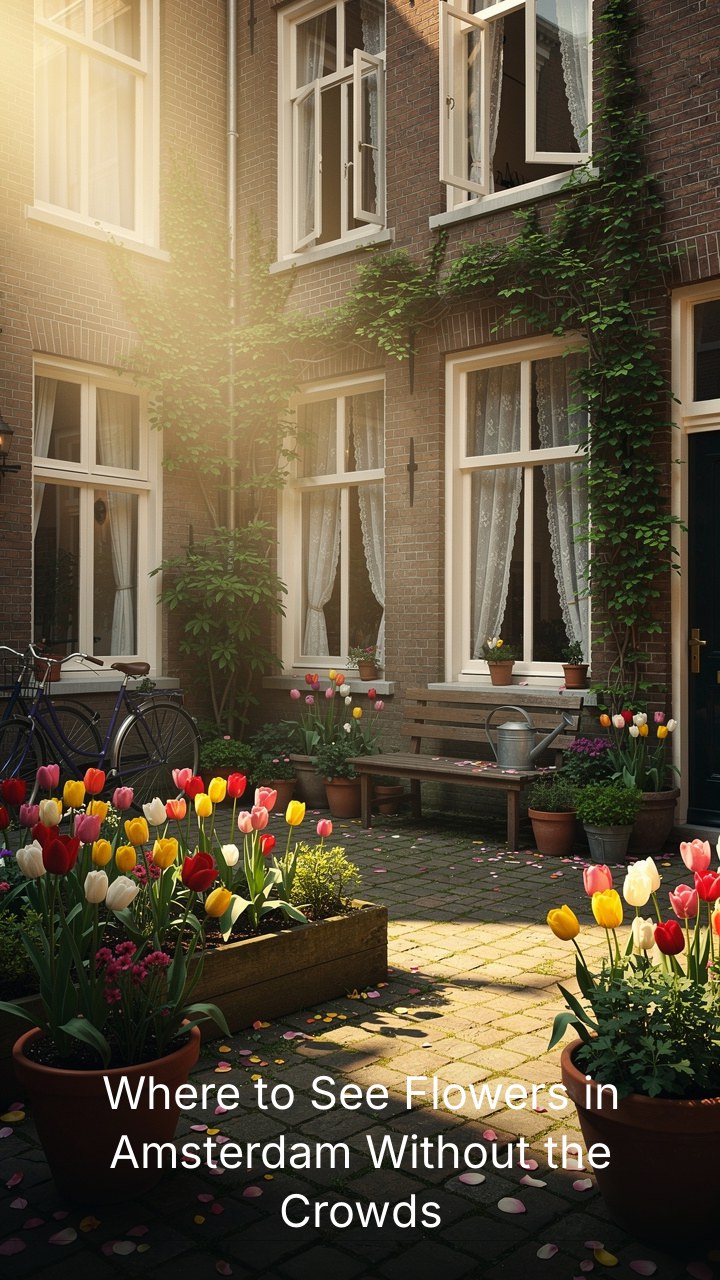
Beyond the well-trodden canal belt, several secret gardens offer spectacular, quiet blooms for those who know where to look. The Begijnhof is perhaps the most famous, yet it remains surprisingly tranquil if you arrive before 10 AM, allowing you to appreciate the historic architecture and seasonal flower beds in near silence. Remember that this is a private residential courtyard, so maintaining a low volume is essential to respecting those who live there.
Another premier destination is the Hortus Botanicus, which is one of the oldest botanical gardens in the world and functions as a natural filter for crowds. While the entrance fee is approximately 12 EUR, this cost effectively deters the casual tourist traffic found at free attractions. The outdoor sections serve as a true sanctuary, featuring rare plant species and local Dutch varieties. I recommend dedicating at least two hours to exploring the diverse greenhouses and manicured garden paths. For a more spontaneous floral hunt, look for the flower-filled window boxes in the Jordaan district or the quiet courtyards tucked away in the Plantage neighborhood. These spots provide a glimpse into the local lifestyle, far removed from the selfie-stick density of the city center.

Practical Tips for Flower Chasers
Strategic timing is the most effective tool for avoiding tourist crowds in Amsterdam, as the city typically starts its day later than the early-rising tour buses. By arriving at your floral destination between 8 AM and 9:30 AM, you can complete your photography and enjoy a morning coffee long before the arrival of the 11 AM tour groups. To navigate these smaller, tucked-away parks in districts like Noord or the Plantage, always carry a physical map or an offline digital GPS, as cell service can be spotty in dense historic corners.
Public transportation via the GVB tram system is highly efficient for reaching outer districts where local flower markets thrive. I strongly advise skipping the over-commercialized Bloemenmarkt in favor of the Noordermarkt, which hosts a Saturday market where local growers sell seasonal bunches at nearly 50% lower prices than city center stalls. This approach not only saves money but supports the local agricultural economy and provides a fresher, more durable bouquet for your rental apartment. Below is a quick comparison of popular options for sourcing flowers and viewing displays:

Common Mistakes to Avoid
Many tourists erroneously assume that the tulip peak season is static, often planning trips for late April only to find that early-season heat has accelerated the harvest. To avoid disappointment, check the official Dutch flower reports exactly one week before your travel date, as real-time updates are the only reliable way to predict bloom status rather than relying on recycled social media photos.
Another frequent logistical error is over-scheduling your day, which results in more time spent on public transit than in actual gardens. Instead, focus on one specific neighborhood, such as the Amsterdamse Bos, a massive urban park three times the size of New York’s Central Park that offers vast, quiet corners for a relaxed floral experience. Trying to visit multiple major sites in one day is a common pitfall that prevents travelers from enjoying the calm, authentic essence of the Dutch landscape. Finally, ensure you are prepared for the unpredictable nature of spring weather in the Netherlands. Even on sunny mornings, the wind can be intense, making long-exposure photography difficult without a sturdy tripod, and the temperature can drop quickly if cloud cover moves in. Always carry a windbreaker and dress in layers to maintain comfort throughout the day.

Comparison: Keukenhof vs. Local Parks
Understanding the fundamental difference between Keukenhof and local parks is key to setting your expectations for an authentic Dutch floral experience. Keukenhof acts as a professionally curated, temporary exhibition that is dismantled annually in May, offering a masterpiece of garden design but lacking the wild, natural environment of public spaces. In contrast, parks like Oosterpark offer a raw, community-focused experience where you can observe locals picnicking and cycling through seasonal displays, providing a far more genuine connection to the local culture.
For those who specifically desire the iconic, vast horizon of colorful bulb fields, the Bollenstreek region is the premier destination. I highly recommend bypassing expensive guided bus tours and renting a bicycle from a shop in Haarlem for approximately 15 EUR per day. Cycling provides the freedom to stop at any field that captures your interest, allowing you to bypass the specific roads where heavy tour buses are mandated to travel. This level of autonomy enables you to find pristine, empty stretches of color while staying ahead of the crowds. Use the following guide to decide your ideal floral journey:
What to Look for Before You Start
Before departing, define your specific floral interests to determine your target location, as the experience differs significantly between historical garden design and vast agricultural landscapes. If you prefer refined architecture and intimate garden layouts, prioritize the inner-city courtyards and botanical gardens within Amsterdam’s ring. Conversely, if you are searching for the classic, colorful horizon of the tulip fields, you must travel at least 30 to 45 minutes outside the city center.
Be prepared for the terrain by wearing sturdy, waterproof walking shoes; the dirt paths surrounding active flower fields are prone to becoming muddy during the spring rainy season. Additionally, monitor the wind speeds in the forecast, as Dutch springs are notoriously breezy, and attempting to capture fine floral details or long-exposure shots will require a stable camera setup. Pack essentials including a portable charger, water, and lightweight windbreakers, as rural areas often lack immediate access to convenience stores. Finally, always be aware of your location relative to the flowers; while the views are spectacular, you must keep your gear and feet on public paths. This ensures you do not inadvertently damage the delicate bulbs or violate the private property rights of the farmers whose hard work creates these landscapes.
Real-World Case Study: My Morning in the Bollenstreek
Last April, I conducted a comparison test between the ‘bicycle versus bus’ theory to determine the most effective way to experience the Dutch flower season. Departing Amsterdam Centraal on a train at 7:00 AM, I arrived in Leiden by 7:30 AM, where I rented a bicycle and immediately rode north toward Lisse, consciously avoiding the primary tourist thoroughfares.
By 9:00 AM, I was positioned in a vibrant field of purple hyacinths with no other people in sight, enjoying the silence while the main tourist routes were already experiencing significant traffic congestion. I spent an hour photographing the landscape and observing the local flora in peace. The total cost for the excursion, including the train ticket and bike rental, was approximately 25 EUR. This experiment proved that the true secret to seeing the flowers is choosing the path least traveled; by rejecting the rigid structure of premium tour packages, I secured a high-quality, quiet experience that allowed for genuine connection with the Dutch landscape. You do not need to pay for exclusivity when you can create your own through simple planning and independent transport choices.
Checklist for the Perfect Flower Trip
- Check the weather and daily bloom status on local Dutch reporting websites before leaving your accommodation.
- Pack a high-capacity portable charger, a refillable water bottle, and snacks, as rural farm areas have fewer commercial amenities.
- Dress in breathable layers to comfortably accommodate rapidly changing Dutch weather conditions throughout the day.
- Utilize a camera with a macro lens if your goal is to capture the intricate, fine details of individual flower petals.
- Perform a safety check on your rental bike, specifically verifying tire pressure and brake responsiveness, before departing the shop.
- Strictly respect ‘Private Property’ signs and remain on public paths to avoid damaging expensive commercial bulb crops.
FAQ
Is it legal to walk through the flower fields?
It is generally illegal to walk through commercial flower fields as they are private property. Walking into these beds damages the bulbs and can spread diseases between fields, so you must stick to public paths and roads for your photos.
When is the absolute best time to visit for tulips?
Mid-April is typically the safest timeframe for peak tulip bloom, though this can shift annually based on winter temperatures. Monitor the official ‘Flower Forecast’ websites starting in early March to time your visit with the actual peak of the season.
Do I need a guided tour to find the best fields?
No, you do not need a tour; you can easily navigate to the best fields using a map or apps like Komoot. Independent travel allows for more flexibility and a deeper sense of discovery than following a fixed, crowded bus schedule.
How much should I budget for a day of flower chasing?
An independent day trip usually costs between 25 and 40 EUR when utilizing public transport and bike rentals. This is significantly cheaper than the 80 to 120 EUR often charged for organized, large-group tours.
What should I do if the weather turns bad while I am in the fields?
Always carry a high-quality windbreaker or waterproof jacket, as spring weather in the Netherlands changes rapidly. If the rain becomes heavy, head to the nearest town center or cafe to wait out the storm while staying dry and warm.
Leave a Reply