
Aurora Borealis Over Arctic Peaks: A Complete Guide
To witness the Aurora Borealis over Arctic peaks, travel to high-latitude regions between late August and early April, specifically targeting locations within the auroral oval during dark, moonless nights. Optimal viewing requires clear skies, minimal light pollution, and a location with geographic features that minimize cloud cover.
The Science Behind the Arctic Light Show
The Aurora Borealis is a geophysical phenomenon caused by the collision of solar wind particles with oxygen and nitrogen atoms in Earth’s upper atmosphere. When the sun releases charged particles during a coronal mass ejection, these ions interact with the Earth’s magnetic field, channeling energy toward the poles. Oxygen atoms typically produce green or red light, while nitrogen emits blue or violet hues, creating the vibrant curtains observed from the ground.
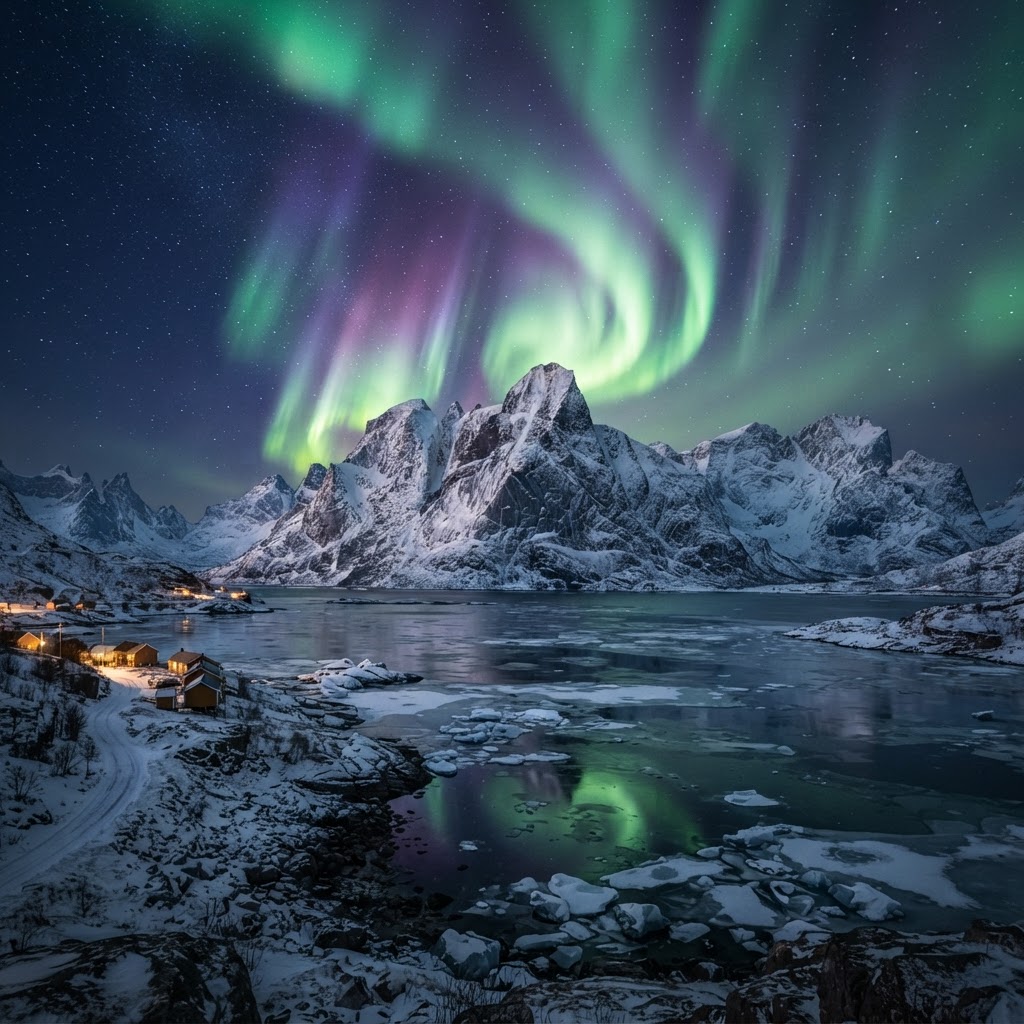
Arctic peaks significantly enhance the observation experience by providing verticality and scale, which frame the shimmering lights against the earth. Mountainous terrain also triggers orographic lift, a process where air is forced upward over peaks, frequently leading to localized cloud dissipation on the leeward side of mountain ranges. This creates pockets of exceptionally clear, stable air that are ideal for long-exposure photography. Furthermore, the high-altitude landscape acts as a natural foreground, preventing the vast emptiness of the sky from becoming overwhelming, thus grounding the celestial display in a recognizable environment.
Best Times to Chase the Aurora
Optimal aurora viewing occurs during the darkness of the Arctic winter, though geomagnetic activity peaks during the equinoxes. While the aurora is present throughout the year, the “aurora season” is defined by the absence of the midnight sun, spanning from late August to early April.
Seasonal planning necessitates a trade-off between comfort and darkness. Early season travelers enjoy milder temperatures but shorter total darkness windows, making evening planning crucial. Mid-winter provides up to 20 hours of darkness, maximizing the statistical opportunity to witness the aurora, yet necessitates specialized gear for sub-zero temperatures. Photographers often prefer the equinox periods, as the Earth’s orientation relative to the solar wind creates a higher probability of geomagnetic storms regardless of the specific calendar month.
Top Locations for Your Adventure
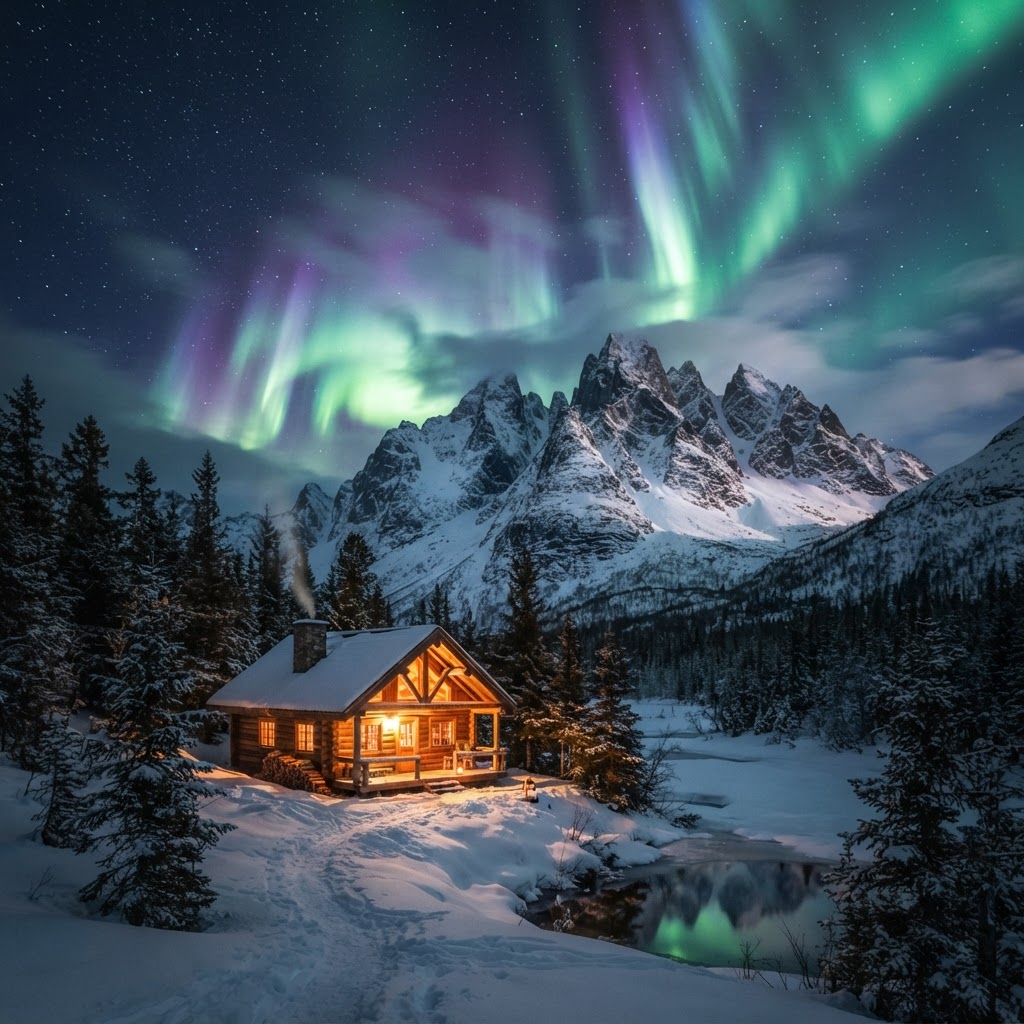
Successful aurora hunting requires positioning yourself within the auroral oval, typically between 65 and 72 degrees north latitude. The following locations offer distinct advantages for viewing, balancing access with microclimatic benefits.
The Microclimate Advantage
Geographic features like the rain shadow in Abisko, Sweden, create one of the most reliable viewing records in the world. Because the surrounding mountains block moisture-laden air masses from the Atlantic, the area remains cloud-free even when nearby regions suffer from overcast skies. Researching a destination’s specific meteorological data—specifically its average cloud-free days—is more predictive of success than simply traveling to the northernmost point on a map.
Essential Gear for Arctic Photography
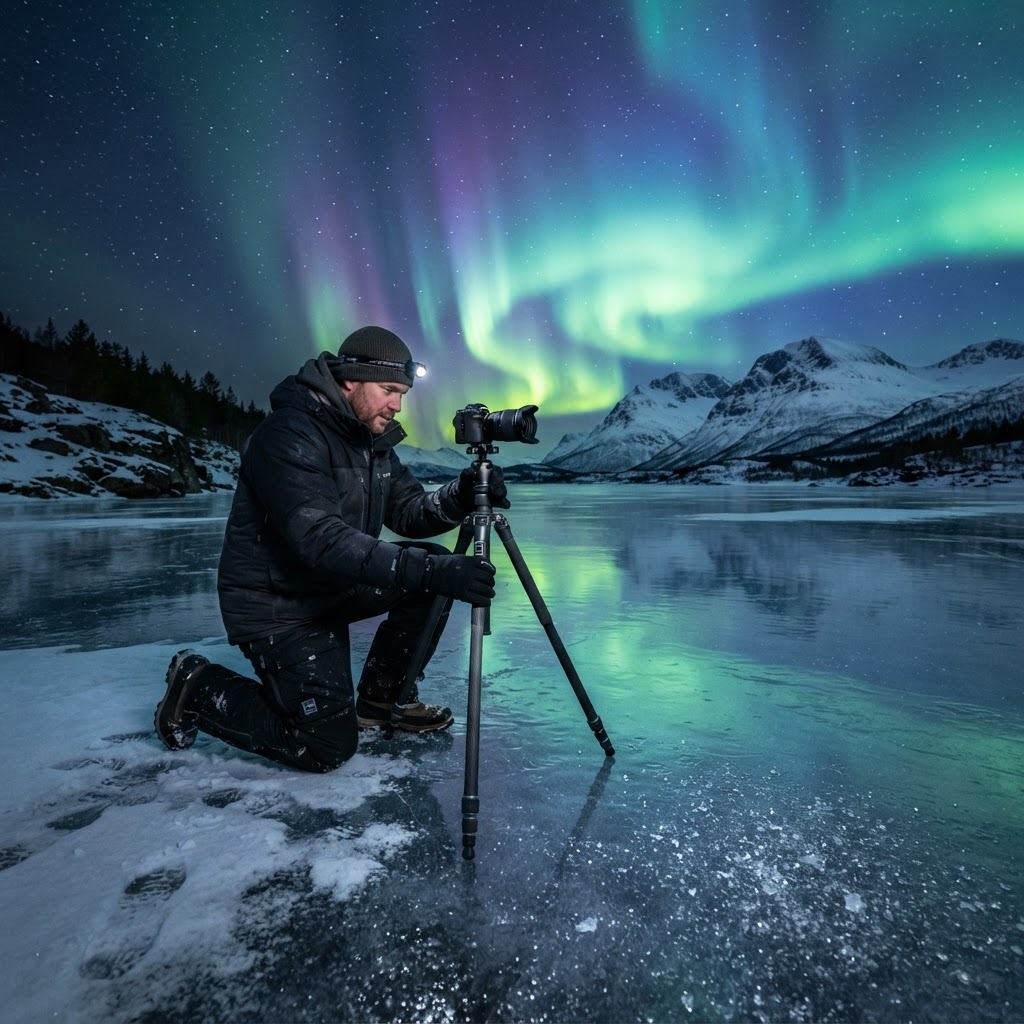
Photography in the Arctic requires equipment capable of withstanding rapid thermal contraction and sustained low-light exposure. Stability is the paramount technical requirement, as the aurora’s movement necessitates specific shutter speed balance to avoid blurring the curtains while preventing the onset of star trails.
Recommended Camera Settings
Begin with a wide-angle lens (14mm to 24mm) featuring an aperture of f/2.8 or lower to gather maximum light. Set your ISO between 1600 and 3200 depending on your camera sensor’s noise performance. Utilize a shutter speed between 5 and 15 seconds; exceeding 15 seconds will cause noticeable star trails due to the rotation of the Earth. Always use manual focus, fixed on a distant star or light source, as autofocus systems struggle in pitch-black conditions.
Keeping Your Gear Functional
Lithium-ion battery performance drops by up to 50% in temperatures below -20°C. Carry three or more spare batteries, keeping them in an internal pocket against your skin to maintain warmth. Avoid bringing cold camera equipment directly into a heated room, as condensation will form inside the lens elements; place gear in a sealed plastic bag before entering a building to allow for a slow temperature equilibrium.
Mastering the Art of Observation
Observation success is largely a result of minimizing ambient light interference and maintaining physical comfort for long durations. A faint auroral arc can often be mistaken for a thin cloud; use a camera to confirm activity, as sensors detect green hues long before the human eye registers them in low-light conditions.
The Importance of Dark Skies
Light pollution from small villages can be detected by the human eye from over 50 miles away in the clear Arctic atmosphere. Prioritize accommodations at least 15-20 miles from urban centers. Resorts that provide glass-roofed cabins allow for immediate visual confirmation of activity without the heat loss associated with stepping outside, which is vital for maintaining endurance during a five-hour viewing window.
Essential Safety Tips for the Frozen North
Arctic survival depends on a rigorous layering system and proactive communication. Moisture management is the most critical safety factor; if you sweat during a trek, that moisture will freeze against your skin during the sedentary period of watching the lights.
Navigating the Wilderness
Wear a three-layer system: a moisture-wicking synthetic or merino wool base, a high-loft down insulating mid-layer, and a waterproof, windproof shell. When driving, ensure your vehicle is equipped with studded winter tires and carry an emergency kit including a shovel, wool blankets, and high-calorie rations. Always share your precise GPS coordinates with a hotel concierge or local guide before venturing into remote, unmonitored wilderness areas at night.
FAQ
Q: What is the single best month to see the Northern Lights?
While activity is consistent all winter, late September and late March are often considered the best due to the equinox effect, which leads to increased solar activity and balanced weather conditions.
Q: Can I see the Northern Lights if the moon is full?
Yes, but the auroras will appear less vivid because the moonlight creates “light pollution.” A new moon period is generally preferred for the most dramatic and vibrant photography results.
Q: How cold does it actually get during an aurora trip?
Temperatures vary significantly by region and month, ranging from -5°C in coastal Norway to below -40°C in the deep interior of Alaska or Canada, requiring specialized extreme-cold weather gear.
Q: Is a special camera required to photograph the aurora?
No, but a camera capable of manual mode (M) is essential for controlling ISO, aperture, and shutter speed. A sturdy tripod is mandatory, as handheld shots will result in motion blur.
Q: Do I need a guided tour to see the lights?
Guided tours are highly recommended for those without experience in Arctic driving, as guides possess local knowledge of real-time weather patterns and the safest routes to reach clear sky corridors.
Essential Gear for Arctic Photography
Batteries drain rapidly in the extreme cold. You will lose 50 percent of your power in just 30 minutes if you do not insulate your camera gear. Keep spare batteries inside your inner jacket pockets, close to your body heat, and swap them often. Never breathe directly onto your lens when cleaning it, as moisture will instantly freeze and ruin your shot.
Use a sturdy tripod that is heavy enough to resist strong mountain winds. Plastic tripod legs can become brittle and snap in extreme sub-zero temperatures, so choose aluminum or carbon fiber. A remote shutter release is non-negotiable because even the slightest vibration from your finger will blur long-exposure images. Invest in fingerless gloves that allow you to operate camera dials while keeping your palms warm.
The Art of Long-Exposure Settings
Set your lens to manual focus before the show begins. Your camera will struggle to find focus in the dark, so pre-focus on a distant mountain ridge or a bright star during twilight. Use the widest aperture available on your lens, typically f/2.8 or lower. Experiment with exposure times between five and 20 seconds, depending on how fast the aurora is moving.
Common Pitfalls and How to Avoid Them
The biggest mistake travelers make is underestimating the mobility required to chase the lights. Clouds are the enemy of any aurora hunter. Do not stay anchored to one hotel room for your entire trip if the local forecast predicts heavy overcast. Rent a car with studded tires and be prepared to drive 100 kilometers or more to find a clear patch of sky.
Many people wait for the aurora to appear directly overhead, but it often starts as a faint grey smear on the horizon. Do not mistake this for a cloud. Use a real-time aurora tracking app that utilizes local magnetic activity data rather than generic weather models. These tools provide a better indication of when a geomagnetic storm is beginning to intensify.
Budgeting for Your Arctic Expedition
Expect to spend between $2,500 and $4,500 for a one-week trip to prime locations like Tromsø or Abisko. Airfare often accounts for a quarter of your budget, while guided tours take up another large chunk. You can save significant money by renting your own vehicle and tracking the weather independently. Avoid booking expensive ‘aurora hunts’ if you have your own transportation and the confidence to drive in snowy conditions.
Budget at least $200 for thermal base layers and specialized mountain boots. You will regret buying cheap, non-insulated gear as soon as you step onto the tundra at night. Food costs are also higher in these remote regions, so shop at local grocery stores rather than relying on hotel restaurant meals for every dinner.
Pre-Departure Checklist
- Ensure your health insurance covers remote-area travel and medical evacuation.
- Download offline maps for the entire region you plan to traverse.
- Pack a headlamp with a red-light mode to preserve your night vision.
- Carry a thermos for hot tea to keep yourself hydrated and warm.
- Bring extra SD cards, as freezing temperatures can cause memory card corruption.
Frequently Asked Questions
Do I really need a professional guide to see the lights?
Not necessarily. Guides are useful if you lack experience driving in deep snow or want professional photography instruction. However, if you are comfortable driving and using a weather app, you can see just as much on your own for a fraction of the cost.
Is the moon a problem for viewing the aurora?
Yes, a bright full moon washes out the weaker auroral displays. Try to plan your trip during the new moon phase to ensure the sky is as dark as possible. The contrast makes even faint green ribbons stand out clearly against the stars.
What should I do if the weather is bad for the whole week?
Accept the reality of Arctic travel and focus on the landscape photography during the day. Visit local cultural sites, try dog sledding, or explore the fjords. The aurora is a wild, unpredictable event, and even the most experienced hunters sometimes go home empty-handed.
Leave a Reply