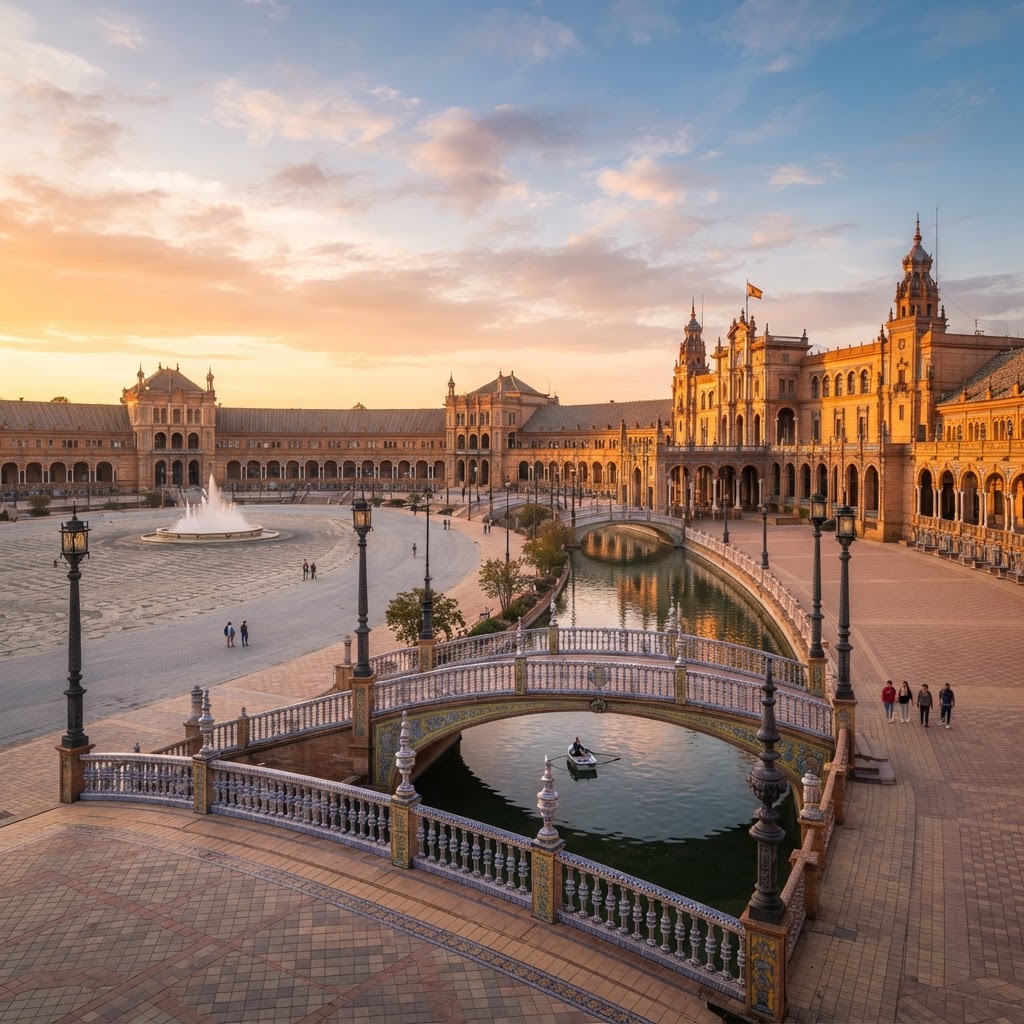
Seville is a visual masterpiece where the best photo spots are the Plaza de España, Royal Alcázar, Las Setas, the Giralda tower, and the winding alleys of the Barrio Santa Cruz. These locations offer the perfect mix of Mudejar architecture, vibrant Andalusian light, and modern contrasts for world-class photography.
Plaza de España: The Crown Jewel of Seville
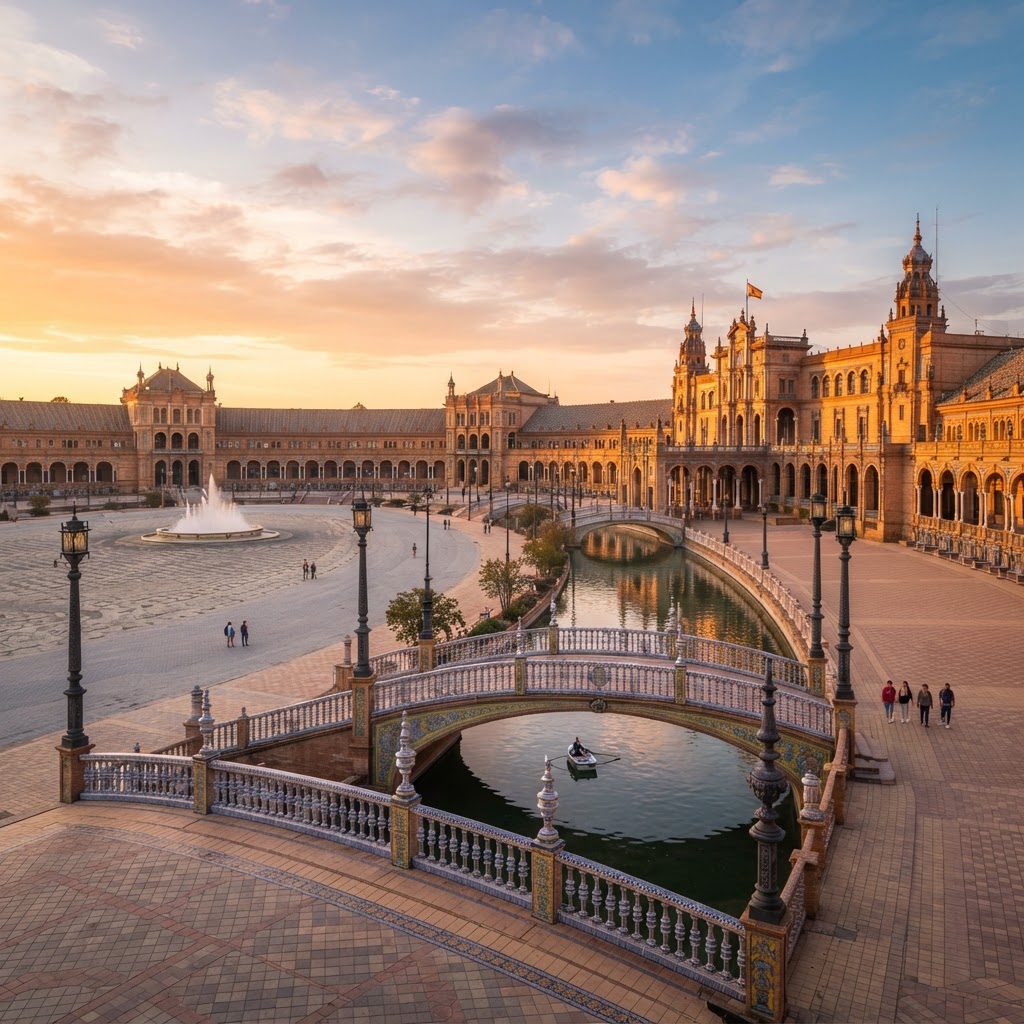
Plaza de España serves as the quintessential Seville photography destination, offering a massive 50,000-square-meter canvas of Renaissance Revival and Moorish architectural brilliance. Built for the 1929 Ibero-American Exposition, the plaza features intricate ceramic tiled alcoves that represent 48 Spanish provinces. To maximize image quality, arrive exactly at sunrise when the soft, golden light reflects off the central canal without the interference of thousands of daily tourists.
For professional results, frame your shot from the water’s edge to catch the mirror reflection of the building’s arc. Focus on the central fountains and the detailed ceramic handrails, which provide a high-color contrast against the terracotta brickwork. Avoid midday shooting when the overhead harsh sun creates unattractive shadows on the architectural arches.
Pro-Tips for Plaza de España
The Bridge Perspective
Stand on one of the four bridges to capture the grand archways and the tower in the background. This provides a sense of scale and symmetry that is highly sought after in travel photography.
The Tiled Alcoves
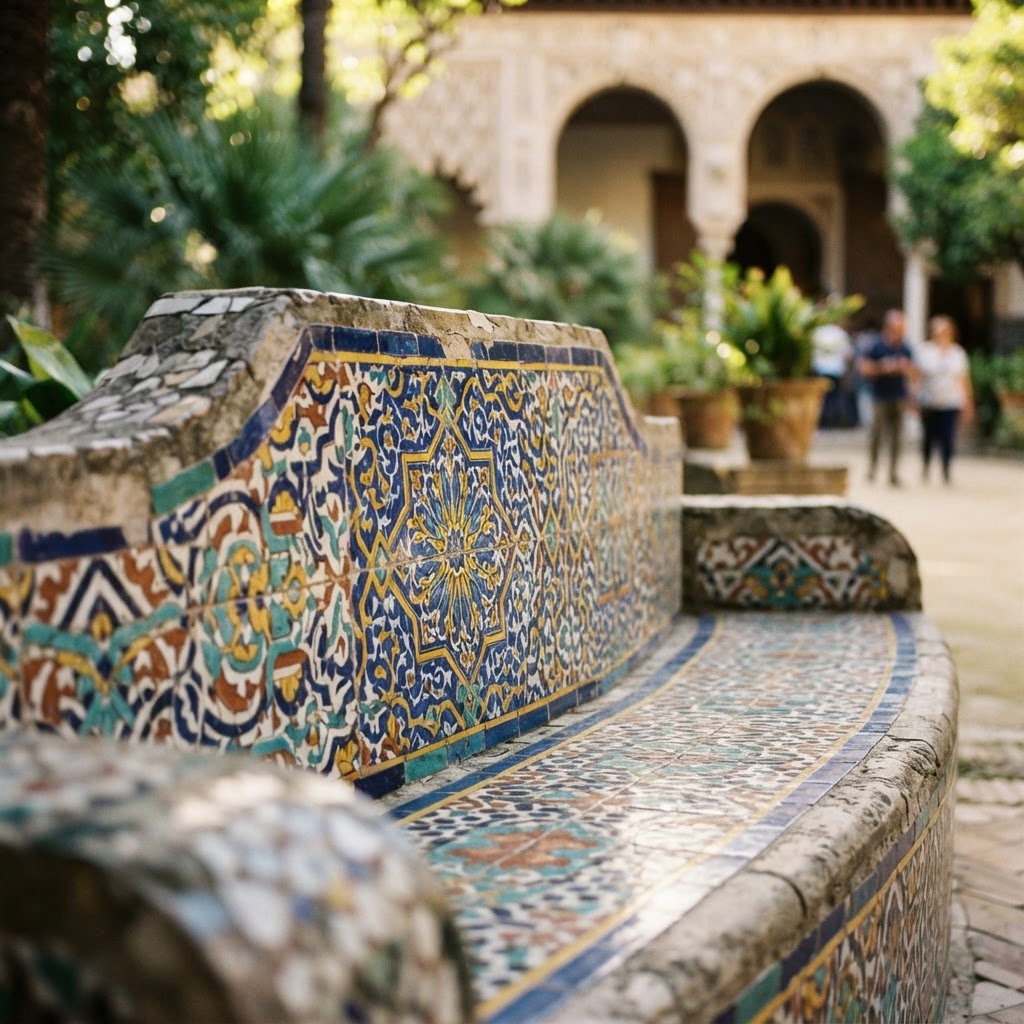
Don’t just photograph the grand exterior. Get close to the colorful tiled benches that line the wall of the plaza. These provide an excellent backdrop for portraits, as each section has unique patterns and historical crests.
The Royal Alcázar: A Photographer’s Dream
The Royal Alcázar is a UNESCO World Heritage site that offers a complex fusion of Gothic, Renaissance, and Mudéjar styles, making it the most historically significant photo location in Seville. Entrance fees start at approximately €14.50, and early booking is essential for photography as tickets often sell out weeks in advance. The Patio de las Doncellas, featuring a stunning 30-meter long reflecting pool, is the primary focal point for most visitors, yet the upper-level balconies provide overlooked architectural details.
When shooting here, prioritize the interplay of light and shadow within the courtyards. The intricate plasterwork, known as “yesería,” benefits from a macro lens or a high-resolution sensor capable of capturing fine textures. In the gardens, focus on the geometric symmetry of the hedges. Using a lower aperture setting (f/2.8 or lower) will effectively isolate your subject against the lush, dense background of the palace grounds, creating a professional portrait look.
Capturing the Gardens
The gardens of the Alcázar are vast and filled with lush greenery, fountains, and peacocks. Use a shallow depth of field to make your subject stand out against the blurred backdrop of the historic maze-like hedges and vibrant flowers. The contrast between the orange trees and the blue sky is truly unmatched.
Las Setas: Modernity Meets History
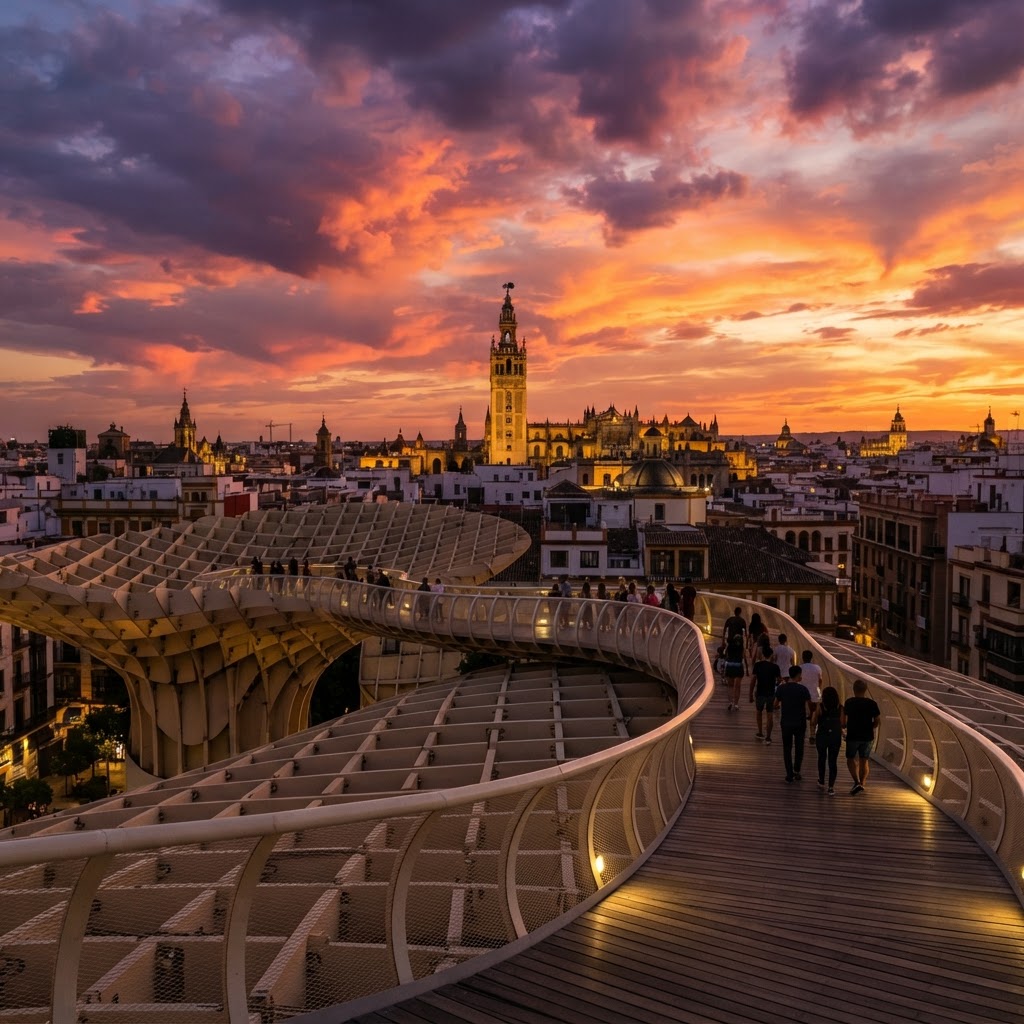
Las Setas, formally known as the Metropol Parasol, is the world’s largest wooden structure and provides the most dramatic modern contrast to Seville’s traditional historic skyline. Standing 26 meters tall, the structure offers a 360-degree viewing platform that is best visited during the ‘blue hour’—the 30 minutes following sunset—to capture the city lights coming alive.
The winding, elevated wooden walkway creates powerful leading lines that force the viewer’s eye across the frame. To capture the full magnitude, use a wide-angle lens (under 24mm). If you want to include the Giralda tower in the distance, look for the western side of the walkway, which offers the most unobstructed sightline toward the Cathedral during the late evening.
Sunset Views from the Top
The best time to photograph Las Setas is during the golden hour. The winding walkway at the top of the structure offers a panoramic view of the Seville skyline, including the Giralda tower in the distance. The curvature of the wooden beams creates dynamic leading lines that draw the eye directly through your composition.
The Giralda and the Cathedral
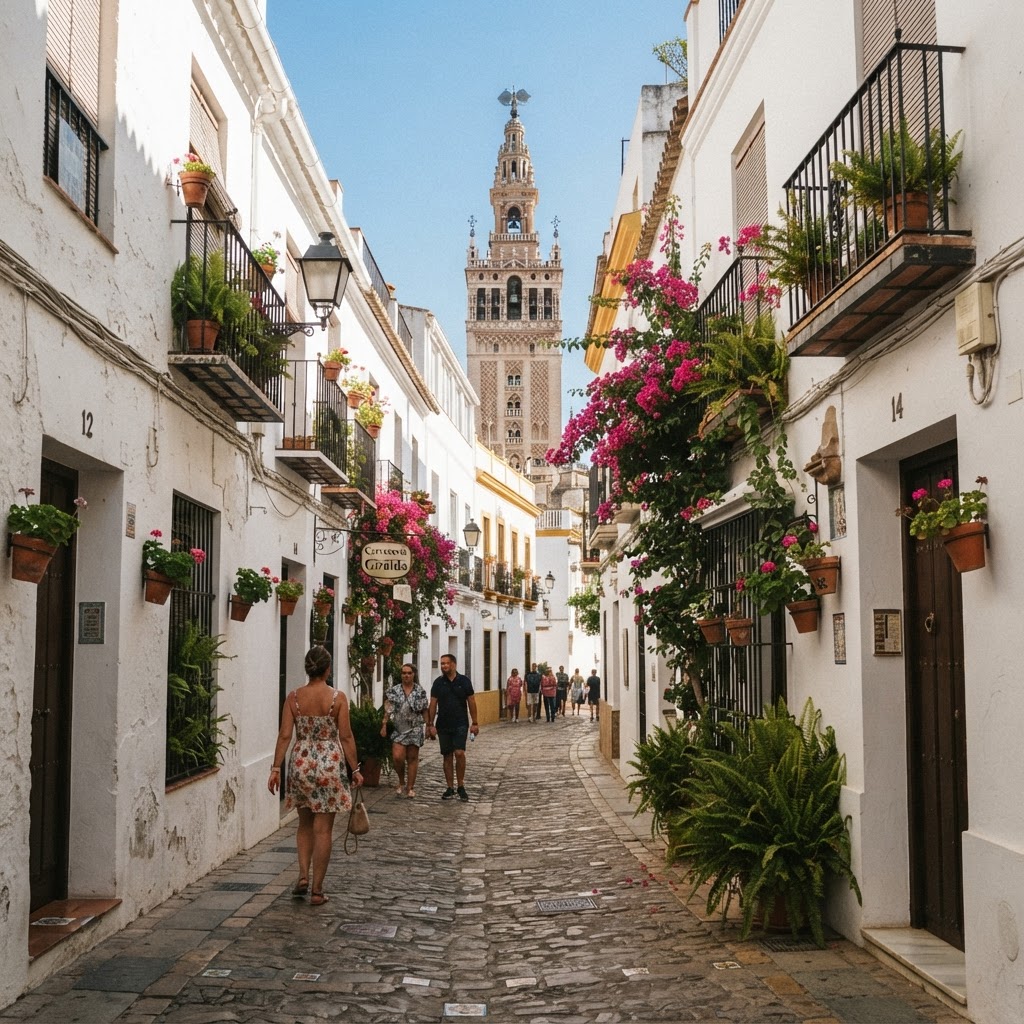
The Giralda, once the minaret of the Great Mosque of Seville, stands 104 meters tall and serves as the city’s primary navigational landmark. For a unique photograph, avoid the crowds at the main entrance and head into the small side alleys of Barrio Santa Cruz. Here, you can frame the top of the Giralda through narrow stone archways, creating a ‘frame-within-a-frame’ effect that highlights the scale of the structure against local white-washed homes.
If you climb the 35 ramps to the top of the tower, you gain a perspective looking down at the Cathedral’s Gothic rooftop and flying buttresses. This is a rare vantage point that showcases the intricate stone masonry not visible from ground level. Ensure your shutter speed is high, as the wind at the top can cause camera shake if you are not using a tripod.
Barrio Santa Cruz: The Narrow Streets
Barrio Santa Cruz is the former Jewish quarter of Seville and acts as a labyrinthine playground for street and portrait photographers. The neighborhood is defined by its narrow, winding streets, which rarely exceed three meters in width, creating a natural light box effect where sunlight filters down from above.
Finding the Light
Because the streets are so narrow, the light changes constantly. Look for “God rays” filtering through the alleys during the late afternoon. This creates a high-contrast environment that is perfect for capturing candid, authentic moments of life in Seville.
Parque de María Luisa
Parque de María Luisa spans over 34 hectares and acts as the city’s green lung, providing ample space for nature and lifestyle photography. It was originally the gardens of the Palace of San Telmo and now houses botanical species from across the globe. Key photographic points include the Fuente de los Leones (Lions Fountain) and the various ceramic-clad benches scattered throughout the park.
Hidden Gems in the Park
Look for the Monte Gurugú, a small man-made hill with a waterfall. It provides a great elevation point to shoot down into the surrounding greenery. The park is especially photogenic in spring when the orange blossoms are in full bloom, adding a layer of scent and color to your experience.
Torre del Oro and the Guadalquivir River
The Torre del Oro is a 13th-century military watchtower that provides the best riverside photography in Seville. During sunset, the golden sandstone of the tower glows intensely, reflecting perfectly off the Guadalquivir River. This area is highly recommended for long-exposure photography, where you can blur the passing river cruises to create a sense of movement against the static, historical architecture.
Planning Your Photo Tour of Seville
Essential Gear Tips
- Bring a wide-angle lens for the massive architecture of the Plaza de España.
- Carry a fast prime lens for those low-light narrow alleys in Santa Cruz.
- A polarizing filter will help remove glare from the windows and water surfaces.
- Always carry a portable power bank, as you will be taking hundreds of photos throughout the day.
FAQ
Q: What is the best time of year to photograph Seville?
A: The best time is during the spring months of April and May. The city’s famous orange trees are in bloom, the weather is mild, and the light is consistently bright, providing ideal conditions for outdoor architectural and street photography.
Q: Do I need a professional permit to take photos in the Royal Alcázar?
A: No, personal photography is permitted throughout the Royal Alcázar without a special permit. However, the use of professional equipment like tripods or large reflectors is generally restricted unless you obtain prior written authorization from the palace administration.
Q: Is it safe to carry expensive camera gear in Seville?
A: Seville is generally very safe, but standard precautions apply in high-traffic tourist areas. Always keep your camera strap around your neck or wrist and stay vigilant in crowded spots like the Cathedral or near Plaza de España to prevent petty theft.
Q: Are there any specific drone photography rules in Seville?
A: Yes, flying drones in the city center of Seville is strictly regulated due to airport proximity and historic site protection. You will almost certainly need a commercial license and air traffic control permission to fly anywhere near the major landmarks mentioned in this guide.
Q: Which lens is best for the narrow streets of Barrio Santa Cruz?
A: A fast 35mm prime lens is the best choice for these narrow alleys. It provides a wide enough field of view to capture the tall buildings and hanging bougainvillea while allowing enough light intake for the shadows within the street layout.
Mastering the Light and Logistics of Seville
Seville rewards photographers who wake up before the city does. The light here is exceptionally bright and unforgiving by noon, creating harsh shadows that ruin portraits. Arrive at your chosen spot by 7:30 AM to catch the soft, golden glow that hits the ochre buildings perfectly. If you sleep in, you lose your best shots until the late afternoon golden hour.
The Essential Gear Checklist
- Wide-angle lens: Essential for the scale of the Cathedral and Plaza de España.
- Prime lens (35mm or 50mm): Best for capturing intimate details of the Alcázar’s plasterwork.
- Circular polarizer: Highly recommended to cut the glare off the water in reflecting pools.
- Lightweight tripod: Keep it small, as heavy gear can draw unwanted attention from security in busy areas.
Common Mistakes to Avoid
Many visitors waste their time trying to photograph the Cathedral from the street level. You will only capture a fraction of its height and beauty this way. Instead, find a rooftop bar nearby to frame the Giralda tower against the horizon. Avoid shooting in the middle of the afternoon when crowds make steady framing impossible. Finally, do not forget to look up; the best Moorish ceiling details are often hidden above eye level.
Neighborhoods for Authentic Street Photography
While the main landmarks are essential, the real soul of Seville hides in its quiet corners. Spend your second day wandering through the Triana neighborhood. This area is across the river and offers a raw, unfiltered look at Sevillian life. Capture the colorful ceramic workshops and the elderly residents sitting on their doorsteps. It provides a necessary contrast to the manicured perfection of the city center. The Macarena district is another hidden gem. It is less polished but full of authentic, crumbling facades that look incredible in black-and-white photography. You will find fewer tourists here, allowing you to compose your shots without a stranger stepping into your frame.
Practical Planning and Costs
Plan to spend at least three full days in the city if you want to capture every major spot without rushing. If you travel in the summer, be aware that temperatures regularly exceed 40°C. You will need to take a mid-day break to avoid heat exhaustion and lens condensation issues. October and April offer the most reliable weather for outdoor photography. Expect to pay around €15 for major site entries, but many of the best alleyways and hidden plazas are completely free.
Photography FAQ
Do I need a permit to use a professional camera?
No, you do not need a permit for handheld photography in most public spaces. If you plan to bring a full tripod or external lighting gear, you may be stopped by security at sites like the Alcázar. Stick to handheld gear to avoid these complications entirely.
Is it rude to take photos of locals?
Yes, if you invade their personal space or focus too closely on individuals without permission. Always smile and ask with a simple gesture if you want a portrait. Most people in the Triana neighborhood are happy to pose if you are respectful and briefly show them the resulting image.
Should I prioritize the Alcázar or the Cathedral for my limited time?
Prioritize the Alcázar if you love textures and geometric patterns. Choose the Cathedral if you want to capture the sheer scale and Gothic drama of the city’s religious history.
Leave a Reply