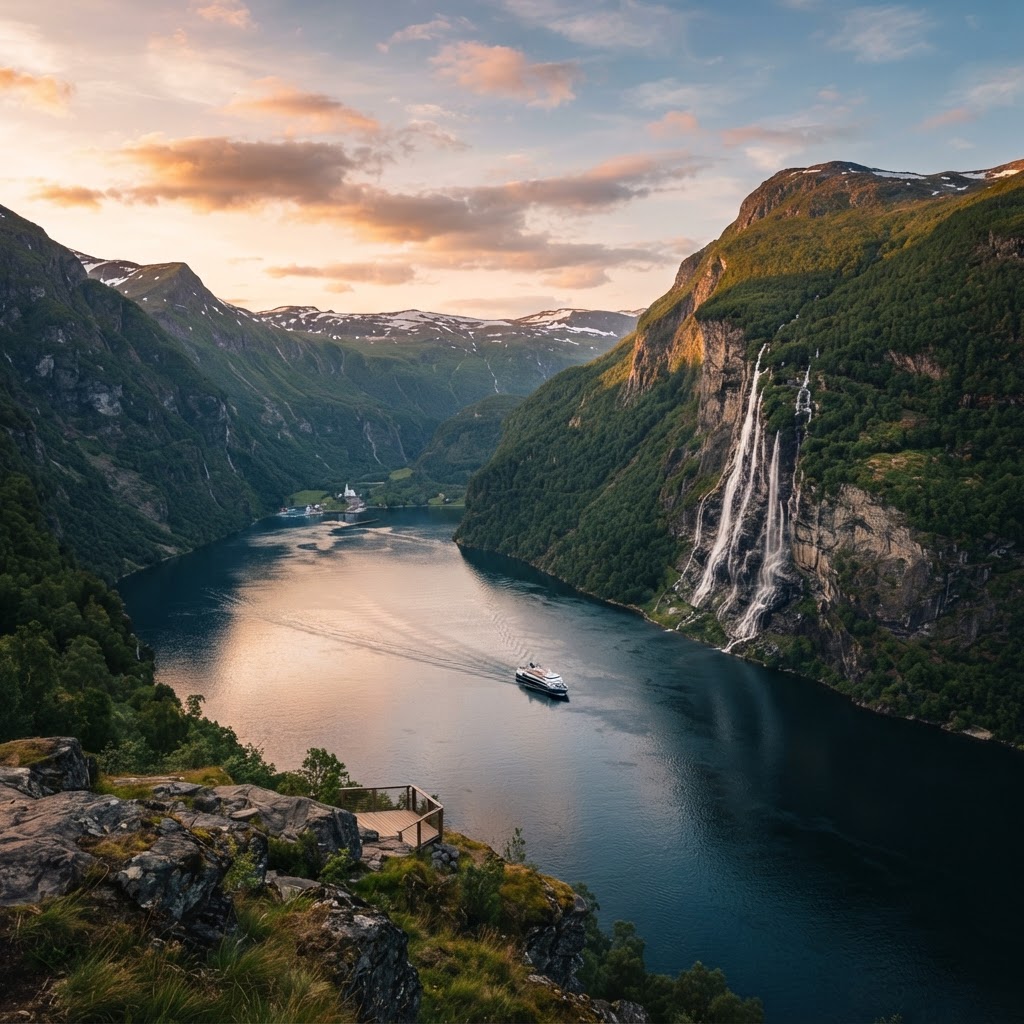
The world’s most surreal fjords are Geirangerfjord, Milford Sound, Nærøyfjord, Doubtful Sound, and Lysefjord, each offering unique geological wonders defined by vertical granite walls, glacial valleys, and thousands of cascading waterfalls. These dramatic landscapes are carved by ancient glaciers and are renowned for their mirror-like waters and profound, primordial beauty.
Geirangerfjord: The Crown Jewel of Norway
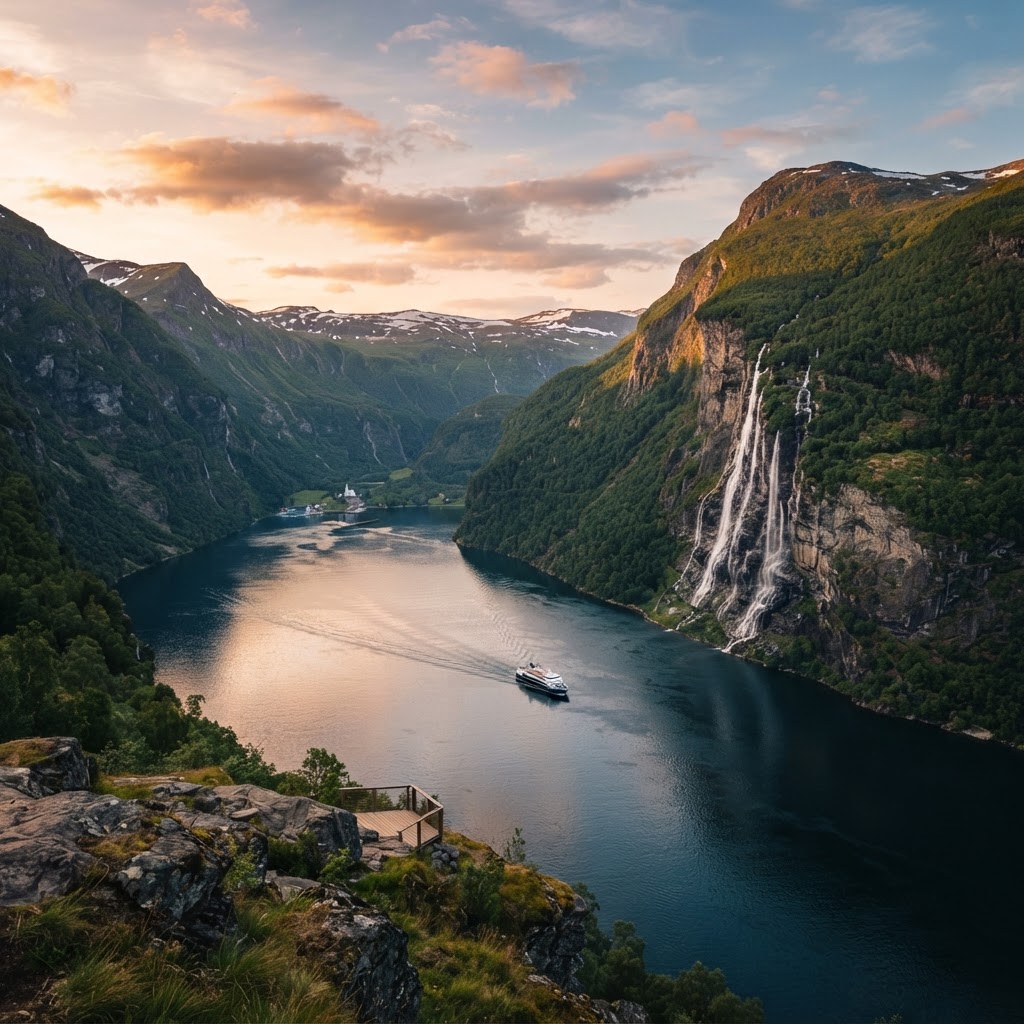
Geirangerfjord is globally recognized as a UNESCO World Heritage site, defined by its steep mountain slopes rising 800 meters from the water and its famous waterfall displays. Located in Norway’s Sunnmøre region, this fjord serves as a quintessential example of glacial carving, with emerald waters stretching 15 kilometers in length.
The magic of Geirangerfjord lies in its waterfalls. The “Seven Sisters” waterfall is perhaps the most iconic feature, consisting of seven separate streams that tumble down the mountainside into the deep fjord waters. The way the mist hangs over the cliffs during the early morning hours gives the entire area an ethereal, dreamlike quality. When the cruise ships pass through, they look like tiny toys against the immense backdrop, emphasizing the sheer scale of the landscape. For travelers, the peak season runs from June to August, with temperatures averaging 15°C to 20°C, providing the best visibility for the surrounding snow-capped peaks. Access is primarily managed via ferry from Hellesylt or by driving the hairpin turns of Eagle Road.
Milford Sound: The Eighth Wonder of the World
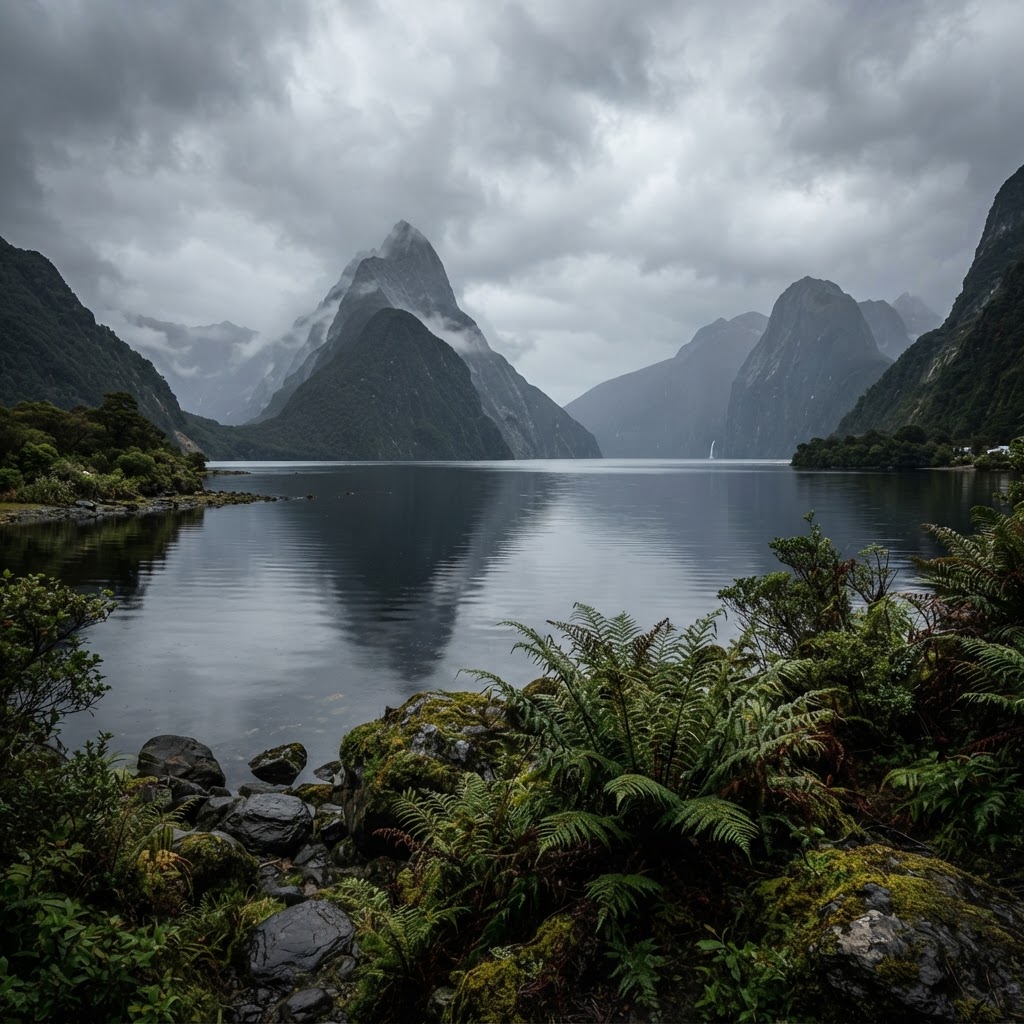
Milford Sound (Piopiotahi) on New Zealand’s South Island is characterized by its high rainfall—often exceeding 6,000mm annually—which creates thousands of temporary, dramatic waterfalls that only appear during storms. This fjord reaches depths of 265 meters and is dominated by the iconic Mitre Peak, which rises 1,692 meters directly from the Tasman Sea.
What makes Milford Sound feel so unreal is the sheer intensity of its solitude. The famous Mitre Peak rises nearly 1,700 meters directly out of the ocean, creating an imposing silhouette that seems to watch over the entire area. Exploring the sound by kayak or boat allows you to feel the cool mist on your face and hear the echoes of nature in the quiet canyons. It is a place that feels wild, untamed, and perfectly preserved in time. Travelers typically visit between November and April to avoid the peak of the rainy season, though visiting during a light rain provides the most surreal “thousands of waterfall” effect. Prices for boat cruises typically start around $90 NZD, offering a perspective of the fjord that is impossible to replicate from land.
Nærøyfjord: The Narrowest Marvel
Nærøyfjord is the world’s narrowest fjord, measuring only 500 meters across at its tightest point, yet it is flanked by mountains rising 1,200 meters, creating a claustrophobic yet awe-inspiring sense of verticality. As a branch of the Sognefjord, it is a UNESCO site that offers a more intimate look at rural Norwegian life through the small, historic farms like Dyrdal and Styvi that remain inaccessible by road.
The visual impact of Nærøyfjord comes from the lack of horizon. In most fjords, you have a sense of openness, but here, the focus is entirely vertical. Looking up at the mountains that rise 1,200 meters from the water’s surface creates a dizzying experience for any observer. It is a masterclass in natural design, proving that some of the most awe-inspiring sights are found in the tightest corridors of our geography. Tourists can navigate the fjord via the electric ferry from Gudvangen to Flåm, a sustainable transport option that ensures minimal impact on the delicate local ecosystem. The experience is best complemented by a rail journey on the Flåm Railway, one of the steepest standard-gauge lines in the world.
Doubtful Sound: The Sound of Silence
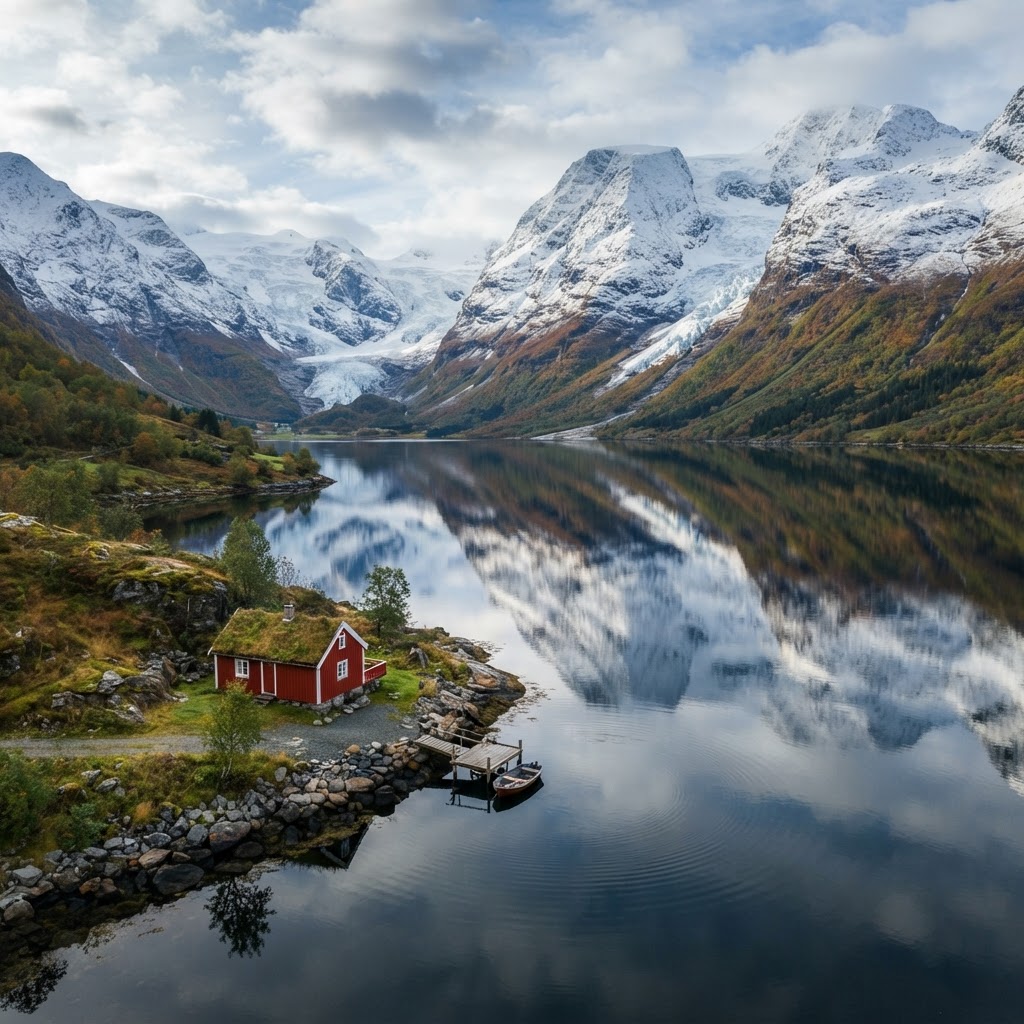
Doubtful Sound is significantly larger than Milford Sound, boasting a length of 40 kilometers and three distinct “arms” that create a secluded, labyrinthine environment. Access is intentionally restricted to maintain its ecological integrity, requiring a boat crossing of Lake Manapouri followed by a bus transfer over the Wilmot Pass.
Doubtful Sound is characterized by its deep, dark waters and the dense, temperate rainforest that clings to its slopes. The silence here is profound; the only sounds you will typically hear are the distant calls of native birds or the gentle lap of water against the hull of your boat. For those who find the world too loud, this fjord offers an unreal sense of peace that resonates deep in the soul. Because of the arduous access, tourist numbers are kept low, making it ideal for those willing to pay a premium for overnight expedition cruises. Expect to pay between $300 and $600 NZD for overnight excursions, which provide the best chance to see Fiordland crested penguins and bottlenose dolphins in their natural habitat.
Lysefjord: The Home of Preikestolen
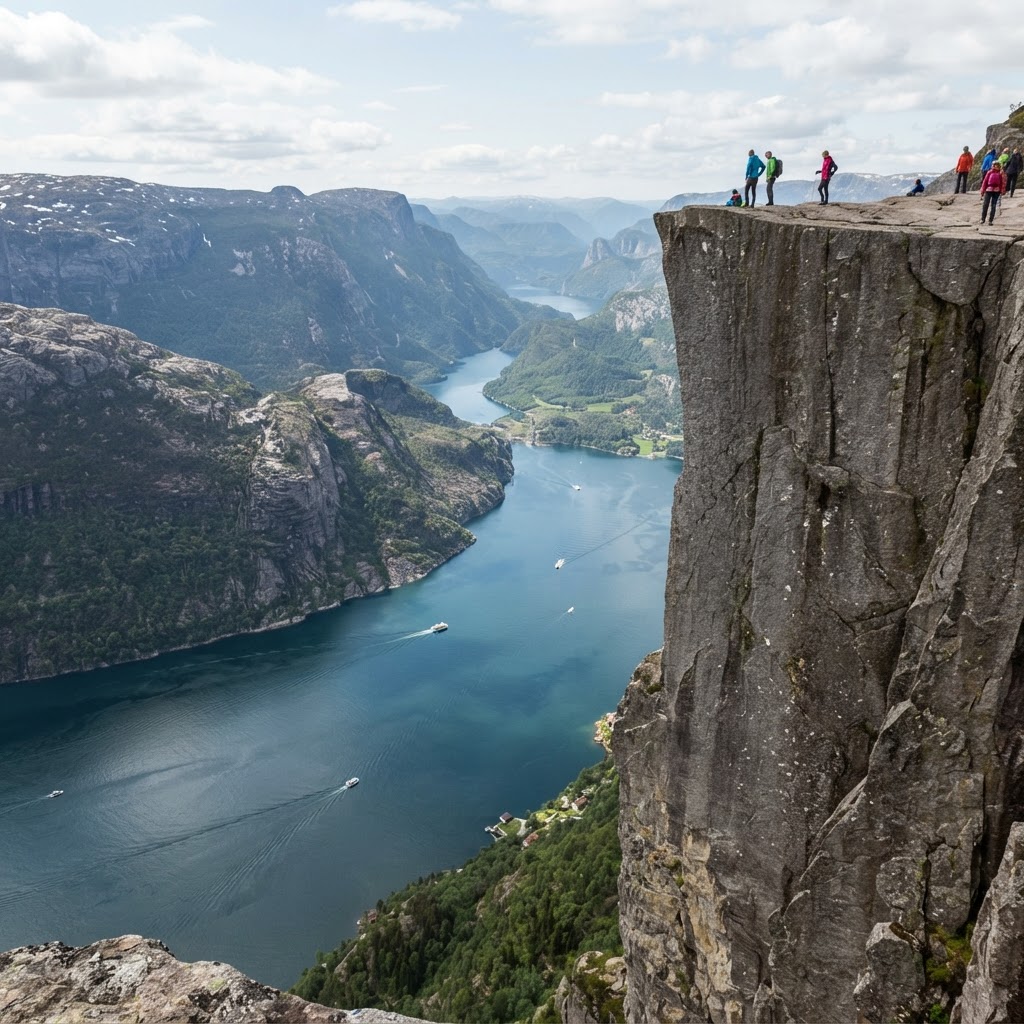
Lysefjord, located in Southwestern Norway, is best defined by the 604-meter high Preikestolen (Pulpit Rock), a massive granite cliff that juts out over the fjord waters. Stretching 42 kilometers long, the fjord is a haven for extreme hikers, as the surrounding terrain is stark, filled with smoothed, glaciated granite that challenges even experienced trekkers.
Standing on the edge of Pulpit Rock, looking down into the icy, green waters of the Lysefjord, is an experience that stays with you forever. It is a testament to the raw, rugged beauty of Norway. The contrast between the sheer, flat edge of the cliff and the sprawling, winding fjord below creates a composition that looks like a high-end cinematic set piece. Hiking to Preikestolen is a strenuous 4-kilometer trek each way, with a total elevation gain of 350 meters. The optimal window for this hike is from May to October, as snow can make the trail dangerous during winter months. Always monitor the “Yr.no” weather reports, as wind speeds at the plateau can reach 60 km/h, turning a standard hike into a significant challenge.
Comparisons of Iconic Fjords
Tips for Visiting Remote Fjords
Visiting these natural wonders requires preparation. Because many of these locations are remote, you should prioritize sustainable travel practices. Always stay on marked trails to protect the delicate flora that clings to the steep slopes. Pack for unpredictable weather; even in the middle of summer, a fjord can experience fog, rain, and sudden temperature drops within minutes.
Capturing the Beauty
When photographing these fjords, try to include a subject in your frame to provide scale. A small kayak or a distant boat can make the mountain peaks look even more gargantuan. Use a polarizing filter to cut the glare on the water and bring out the deep, saturated blues and greens of the landscape. Most importantly, spend time putting the camera down and simply soaking in the atmosphere. Remember that humidity is high; always carry silica gel packs in your camera bag to prevent lens fogging during rapid temperature changes.
FAQ
Q: Which is better: Geirangerfjord or Nærøyfjord?
Geirangerfjord is better for those wanting iconic, waterfall-heavy photography, while Nærøyfjord is superior for those seeking a narrow, dramatic, and more intimate “enclosed” landscape experience. Both are UNESCO World Heritage sites accessible within the same region of Norway.
Q: How much does it cost to visit Milford Sound?
Expect to pay between $90 and $250 NZD for a standard boat tour, though costs increase significantly if you include transport from Queenstown or overnight kayaking expeditions. Booking at least three weeks in advance is recommended during the high season of December through February.
Q: Is it safe to hike to Pulpit Rock (Preikestolen)?
It is considered a safe but strenuous hike for physically fit individuals, provided you wear appropriate footwear and check weather conditions. The hike takes about 4 hours round-trip, and you must avoid the area during high winds or heavy snow which can make the granite surfaces extremely slippery.
Q: Are there dangerous animals in these fjords?
There are no dangerous predators in Norwegian or New Zealand fjords, though you should be prepared for sandflies in New Zealand and ticks during the summer months in Norway. Always carry insect repellent containing DEET to protect yourself from these persistent insects while hiking.
Practical Planning: Mastering Your Fjord Expedition
Planning a trip to these remote regions requires more than just booking a flight. Fjords are often isolated, and weather can change your itinerary in minutes. Expect long travel days and be prepared to pack layers regardless of the season.
The Golden Rule of Packing
Never rely on a single heavy jacket. Pack a thin base layer, a warm fleece, and a high-quality waterproof shell. Even in the middle of a Norwegian summer, spray from boat trips or sudden mountain showers will soak you through if you are unprepared. Sturdy, waterproof hiking boots are mandatory if you plan to get off the boat and explore the trails.
Common Mistakes to Avoid
- Overpacking your schedule: Trying to see three fjords in five days will result in more time spent on buses than actually enjoying the view. Pick one region and go deep rather than wide.
- Ignoring local ferry timetables: In places like Norway, ferry schedules change between winter and summer. Check the official Ruter or regional transit apps one day before departure.
- Flying into major hubs too late: Flights into regional airports are often canceled or delayed due to high winds. Always aim to arrive at your gateway city at least 24 hours before your fjord tour departs.
Comparing the Experiences: Norway vs. New Zealand
While both regions offer stunning vertical landscapes, the experience is fundamentally different. Choose your destination based on your preferred travel style.
Norway offers a refined, accessible experience. The infrastructure is incredible, with electric ferries and well-marked hiking paths. It feels like a civilized way to engage with nature. You can enjoy a world-class hotel stay and then hike a glacier in the same afternoon.
New Zealand, specifically the fjords of the South Island, is raw and untamed. The scale is massive, but the facilities are fewer. You are visiting a wilderness that feels indifferent to your presence. Choose New Zealand if you want to disconnect from technology and truly feel the solitude of nature.
Your Pre-Departure Checklist
- Download offline maps for the entire region on Google Maps.
- Bring a portable power bank, as cold weather drains camera batteries significantly faster.
- Book your boat or kayak excursions at least four weeks in advance during peak season.
- Buy a local SIM card at the airport for consistent GPS tracking.
- Pack a small dry bag for your electronics if you plan to kayak in the spray of waterfalls.
Frequently Asked Questions
Should I choose a cruise ship or a land-based tour?
Choose a cruise if you have limited time and want to see multiple fjords without packing your suitcase every day. Choose land-based travel if you want to hike, spend nights in small mountain villages, and have the freedom to change plans when the light is perfect for photography.
Are there significant costs beyond the tour price?
Yes, especially in Norway. Expect to pay premium prices for meals and inland transport. Budget at least an extra $75 to $100 per day for food and local logistics if you are not traveling on an all-inclusive cruise. New Zealand costs are slightly more predictable but require a rental car for maximum flexibility.
What is the absolute best time of day for photography?
Early morning is superior to sunset in almost every fjord destination. The light hits the vertical walls first, creating high-contrast shots before the midday sun flattens the depth. If you are staying overnight, set your alarm for dawn to catch the mist settling on the water.
Leave a Reply