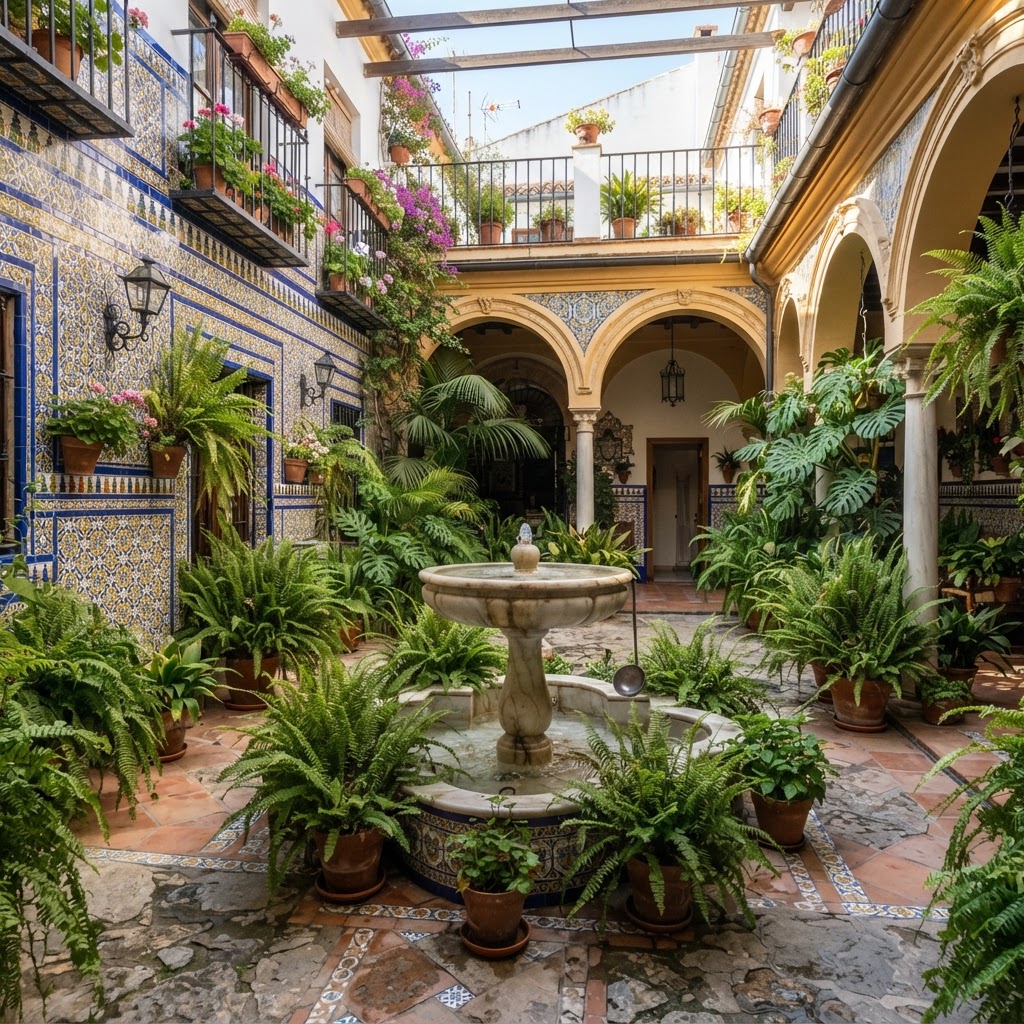
Stepping into the hidden courtyards of Seville offers a portal into the city’s Moorish, Roman, and Renaissance heritage, where private ‘patios’ serve as architectural sanctuaries. These inward-facing spaces, protected by centuries-old designs, utilize fountains, lush vegetation, and climate-cooling tiles to provide serene, fragrant refuges from the intense Andalusian heat.
The Architectural Significance of the Sevillian Patio
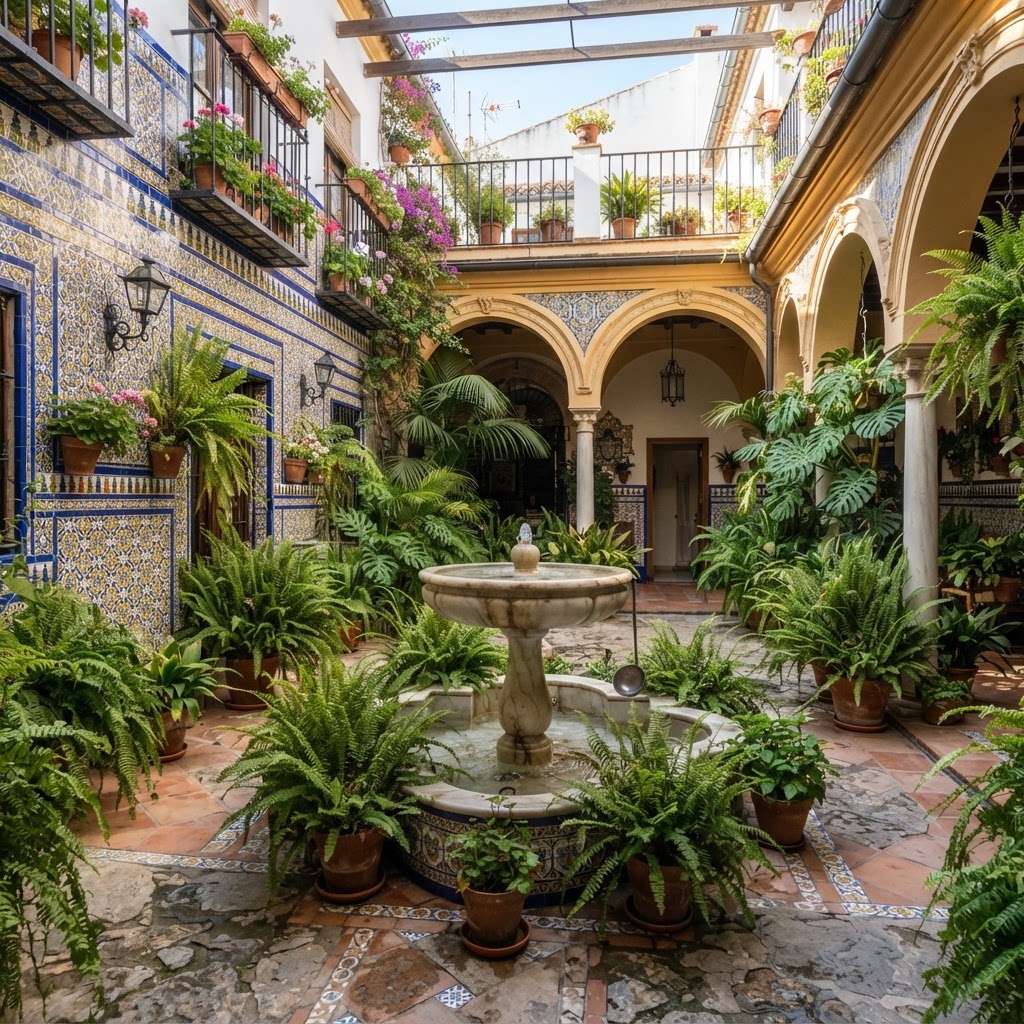
To truly understand the hidden courtyards of Seville, one must look at the historical blend of Roman, Moorish, and Renaissance influences. The patio serves as the heart of the traditional home, designed not just for aesthetics but as a vital climate-control mechanism. Thick walls, bubbling central fountains, and dense collections of potted plants work together to lower temperatures significantly compared to the dusty streets outside.
The Moorish Legacy in Courtyard Design
Many of these spaces trace their roots back to the Al-Andalus period, where privacy and inward-facing architecture were paramount. The Moors emphasized the concept of the ‘private paradise,’ an enclosed space that mirrors the Islamic vision of heaven on earth. You will notice geometric tile patterns (azulejos) and the sound of running water, which is central to the cooling effect and the meditative atmosphere of these serene spaces.
Why Water Matters
Water is the lifeblood of the Sevillian courtyard. The sound of a trickling fountain masks the noise of the city, while the evaporation of the water provides much-needed humidity during the dry, scorching summers. In many historical homes, these fountains were connected to complex systems that harvested rainwater, showcasing an ingenuity that has stood the test of time for centuries. By utilizing central fountain placement, residents can reduce ambient courtyard temperatures by as much as 5°C to 8°C compared to exterior street levels.
Exploring the Santa Cruz District
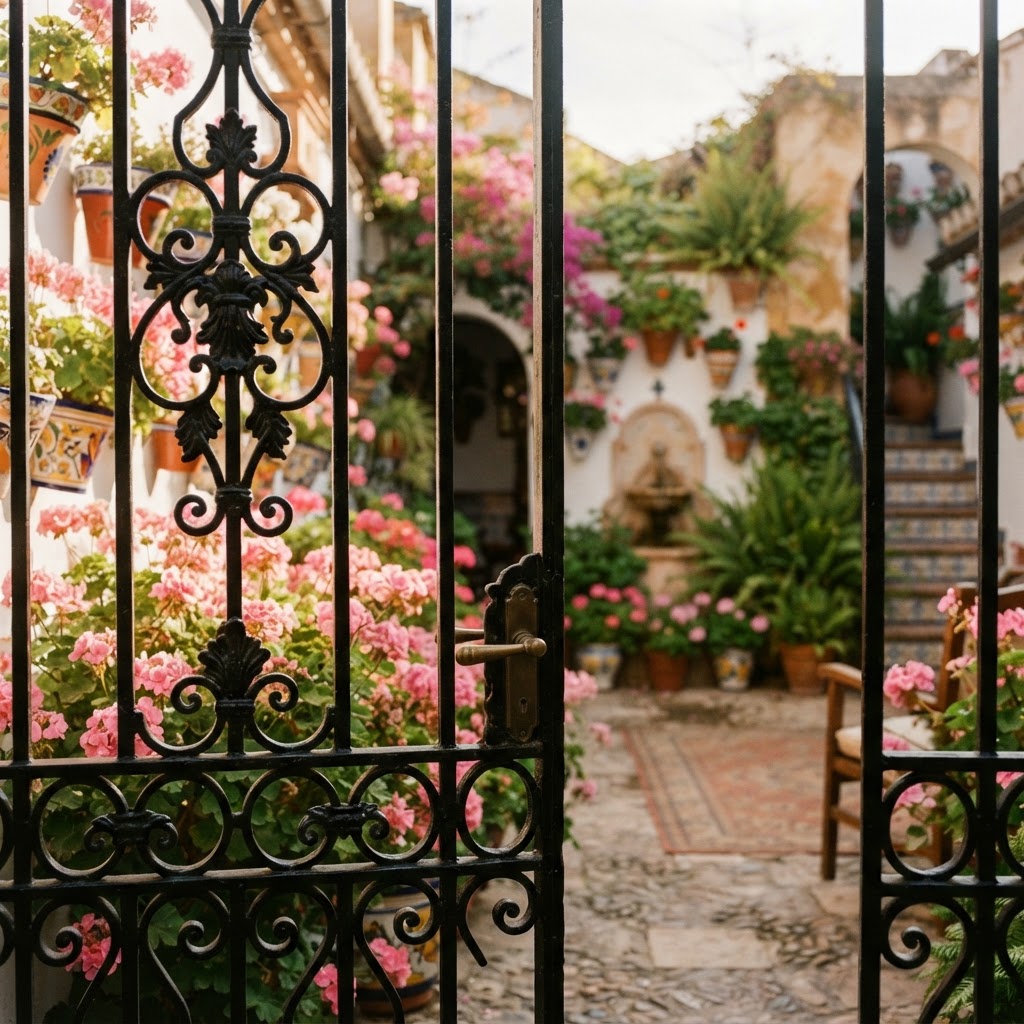
Santa Cruz is perhaps the most famous neighborhood for those seeking hidden courtyards of Seville, offering a dense cluster of traditional architecture that reflects its history as the former Jewish Quarter. This area is a labyrinth of narrow alleys where houses are huddled close together, hiding some of the most beautiful private patios in the city. While many of these are strictly private residences, walking tours and specific cultural centers allow visitors to witness their splendor.
Where to Find Publicly Accessible Patios
While you cannot walk into someone’s home, the city hosts the ‘Festival de los Patios’ during the spring. This is when private homeowners throw open their doors, allowing the public to view their stunning displays of geraniums, ferns, and intricate ceramics. It is a sensory overload in the best possible way, as the smell of orange blossoms permeates the air. Visitors should prioritize the Casa de Pilatos, which remains one of the finest examples of a public-facing, highly decorated courtyard in the entire city, charging an entry fee of approximately 12€ to access the full estate grounds.
| Feature | Santa Cruz Patios | Macarena Patios |
|---|---|---|
| Typical Style | Medieval/Mudejar | Neoclassical/Grand |
| Accessibility | High (Museums) | Moderate (Residential) |
| Best Time | Morning (Quiet) | Late Afternoon |
| Vibe | Romantic/Antique | Local/Authentic |
The Macarena and San Lorenzo Neighborhoods
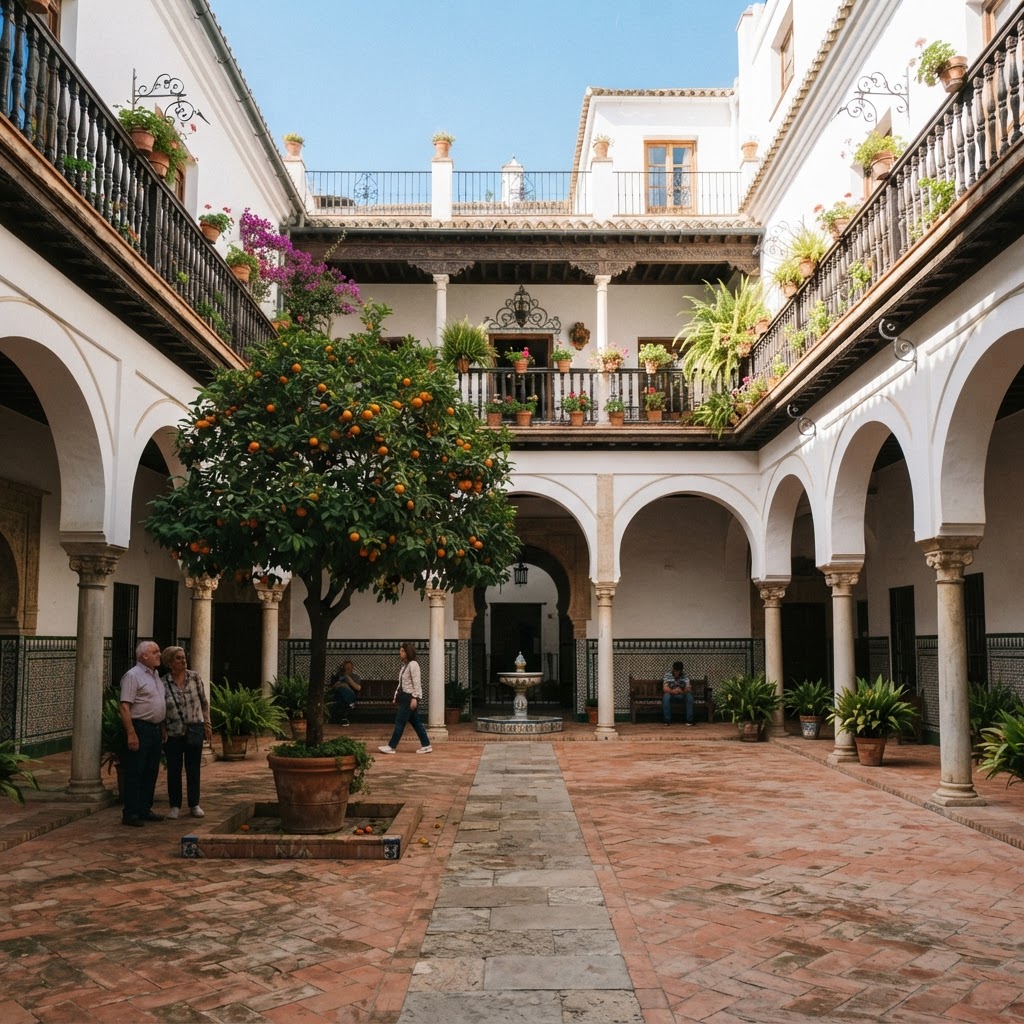
If you want to escape the massive throngs of tourists in the center, head north to the Macarena neighborhood, which remains one of Seville’s most authentic residential enclaves. This area is filled with grand 18th-century mansions that house some of the best hidden courtyards of Seville. The architecture here is often more restrained, leaning into the neoclassical aesthetic, but the level of care given to the plant life is unparalleled.
Finding the Hidden Gems
Spend your afternoon at the Hospital de las Cinco Llagas or wander near the San Lorenzo square. You will find that the rhythm of life here slows down. The residents take immense pride in their entryways, and you will often see them tending to their wall-mounted flower pots with a devotion that borders on religious. Many of these courtyards feature an average of 40 to 60 potted plants, meticulously arranged to maximize vertical space and floral coverage during the peak blooming season from April to June.
Tips for Respectful Patio Exploring
When you go in search of these secret spots, remember that many are actual homes, and respecting the privacy of the residents is of the utmost importance. Never push on a gate if it is locked, and always keep your voice low if you are peering through an open door or a reja (iron grill). Taking photos is usually fine, but avoid using flash, which can be disruptive to the calm environment.
Etiquette Checklist for Visitors
- Always ask for permission before entering a doorway.
- Do not touch or move the decorative plants or pots.
- Keep group sizes small to avoid overwhelming the space.
- Avoid visiting during siesta hours (2:00 PM to 5:00 PM).
- Leave a small donation if the space is part of a museum or cultural site.
Cultural Traditions and The Patio Lifestyle
In Seville, the courtyard is not just an architectural feature; it is a way of life that dictates social and domestic habits. It is where families gather for coffee in the morning and where friends share wine as the sun sets. The tradition of decorating the patio is passed down through generations, often involving mothers teaching daughters how to nurture specific varieties of bougainvillea or jasmine.
The Role of Ceramics in Patio Decoration
No discussion of Seville’s patios is complete without mentioning Triana ceramics, which have defined the local aesthetic for over 500 years. The vibrant blue, yellow, and green tiles that line the walls of these courtyards tell stories of trade, religion, and local artistic identity. These tiles don’t just add color; they add a sense of history and permanence to the structure, while also serving as durable surfaces that withstand humidity and heat better than modern paints.
Seasonal Changes in the Courtyards
Seville changes drastically throughout the year, and so do its courtyards, as maintenance routines shift with the local microclimate. Spring is undoubtedly the best time to visit, as the orange trees are in bloom and the patios are at their peak floral intensity. By mid-summer, the courtyards shift their focus toward shade and water maintenance.
| Season | Primary Focus | Floral Activity |
|---|---|---|
| Spring | Blooming / Hosting | High (Peak) |
| Summer | Cooling / Water | Moderate |
| Autumn | Repotting / Prep | Low |
| Winter | Protection / Indoor | Dormant |
What to Look for by Season
- Spring: Peak color, heavy scents of jasmine, and open house events.
- Summer: The focus is on shade, fountains, and cool tile surfaces.
- Autumn: A quiet time for repotting plants and preparing for the winter rains.
- Winter: A time for indoor coziness and the protection of delicate species.
Why These Spaces Are Worth Your Time
In a world of constant connectivity, the hidden courtyards of Seville offer a rare opportunity to disconnect. They are sanctuaries of silence, beauty, and history. Whether you are a photography enthusiast, an architecture buff, or simply a traveler looking for a quiet moment of reflection, these patios will stay with you long after you have left Spain. They represent a slower pace of life, a deep connection to nature, and the enduring beauty of traditional craftsmanship.
FAQ
Q: What is the best month to visit Seville’s patios?
The best time to visit is April or May. During these months, the city’s orange trees are in bloom and the private courtyards are at their most vibrant, often participating in city-wide festivals and open-door events.
Q: Can I enter private courtyards in Seville?
Most private courtyards are restricted to residents and are not open to the public. However, you can legally view many architectural gems through open ‘rejas’ (iron grilles) or by visiting sites like the Casa de Pilatos or designated cultural centers.
Q: Are there guided tours of hidden patios in Seville?
Yes, several local operators offer “Patios of Seville” walking tours. These tours are highly recommended as they provide access to private spaces that would otherwise be inaccessible to the general public.
Q: What is the significance of tiles in Sevillian courtyards?
The ceramic tiles, or ‘azulejos,’ are predominantly sourced from the Triana district and have been used for centuries to provide insulation, reflect light, and showcase intricate Mudejar-style geometric patterns that define the city’s artistic identity.
Practical Tips for Patio Peeking
Respecting local privacy is the golden rule of patio exploration. While many courtyards look inviting, they are often private homes with families living behind the iron gates. Do not walk into open hallways unless there is a clear sign indicating public access or a ticket office nearby. Always keep your volume down; the acoustics in these stone structures carry sound instantly to the upstairs balconies.
The best time to capture photos is between 10:00 AM and 12:00 PM. The morning light provides a soft glow that prevents the harsh, high-contrast shadows common during the afternoon. Bring a wide-angle lens if you have one, as these spaces are often narrow and vertically oriented.
How to Plan Your Courtyard Route
Skip the crowded tourist buses and build your own walking route through the city. Start your day in the Macarena neighborhood early to beat the heat, then work your way south toward the Santa Cruz district. Use Google Maps to pin potential historic houses, but do not be afraid to follow the scent of jasmine or the faint sound of splashing water down unmarked alleys. Allow at least four hours to wander, as the best finds are usually the ones you stumble upon by accident.
Common Mistakes to Avoid
- Visiting during Siesta: Do not expect to see open doors or public displays between 2:00 PM and 5:00 PM. Most businesses and cultural sites will be locked up tight.
- Assuming Every Door is Open: Just because a door is ajar does not mean you are welcome. Look for a visible gallery, a reception desk, or a group of other tourists before stepping inside.
- Ignoring the Smaller Squares: Everyone rushes to the main landmarks. Spend your time in the smaller, unnamed plazas where the local life actually happens.
Essential Courtyard Checklist
- Carry small coins for entrance fees to smaller house museums.
- Wear comfortable, flat shoes; the cobblestones in Santa Cruz are notorious for tripping travelers.
- Keep a bottle of water with you; the city’s dry heat is deceptive.
- Bring a portable charger, as your phone battery will drain quickly while snapping photos.
Frequently Asked Questions
Is there an entrance fee for most courtyards?
Yes, most significant historic houses, like the Palacio de las Dueñas, charge an entry fee ranging from 10 to 15 euros. Always check the official website of the house before you arrive to ensure it is not closed for a private event.
Can I visit during the summer months?
You can, but prepare for extreme heat. The patios offer shade, but the city centers hit 40°C in July and August. If you visit in summer, do your exploring before noon and retreat to your hotel during the hottest part of the afternoon.
What is the absolute must-see courtyard for a first-timer?
Make the Palacio de las Dueñas your top priority. The sheer volume of greenery, the historical artifacts, and the well-preserved architecture provide the most complete experience of a classic Sevillian home. It is less crowded than the Alcázar and feels much more intimate.
Leave a Reply