Introduction: What is Koningsdag?

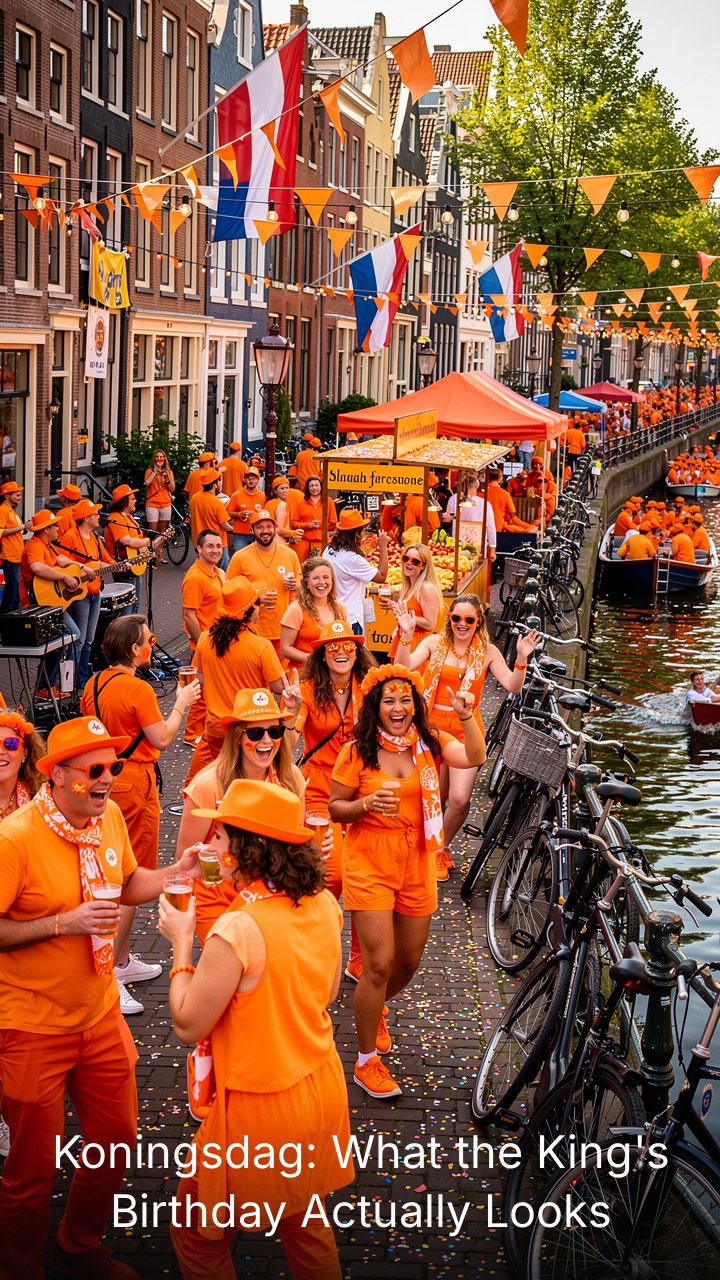
Koningsdag, or King’s Day, is the national holiday of the Netherlands celebrated annually on April 27th to mark the birthday of King Willem-Alexander. It transforms the entire country into a massive, vibrant street festival characterized by a nationwide flea market, live music, boat parades, and millions of people wearing orange clothing to honor the Dutch Royal Family.
It is the most anticipated day on the Dutch calendar.
The History and Spirit of the Day

This tradition began as Queen’s Day to honor the reigning monarch, historically celebrated on the birthday of Queen Juliana and later Queen Beatrix. When King Willem-Alexander took the throne in 2013, the official celebration shifted to his birthday, April 27th. The spirit remains focused on national pride, community unity, and unrestricted fun, serving as a rare day where national regulations on street vending are suspended.
Every town has a slightly different flavor, from intimate village markets to chaotic city raves. The cultural significance lies in the “Vrijmarkt” (free market), where the government allows individuals to sell second-hand goods without a permit or tax, a tradition that sees over 17 million people participate in some capacity. While Amsterdam draws the largest crowds, smaller towns often host more authentic “neighborhood-style” parties. The Dutch orange color serves as the unifying symbol, referencing the House of Orange-Nassau. Participants often prepare for weeks, planning outfits and organizing local activities to foster a sense of togetherness that defines the Dutch identity during this springtime celebration.
Practical Tips for Surviving the Orange Chaos

Preparation is non-negotiable if you want to enjoy yourself, as the country experiences a massive influx of visitors and significant transit bottlenecks. Start by booking your accommodation at least three months in advance, especially in cities like Amsterdam or Utrecht, where hotel prices often triple. Consider staying in smaller towns connected by rail—such as Haarlem or Leiden—to secure lower rates and easier travel.
Always wear something orange, or you will genuinely stick out as a tourist. Comfortable, closed-toe shoes are your best friend because you will be walking and standing on cobblestones for hours. Bring a small backpack with water, sunblock, and a portable charger. Pickpocketing spikes in crowded areas, so use a crossbody bag with a zipper. Keep your phone and wallet in front pockets at all times. By planning your route around major transit hubs and carrying physical cash, you mitigate the stress of massive crowds and potential network failures during peak celebration hours.
A Step-by-Step Guide to Navigating the Streets
Start your morning early, around 9:00 AM, to see the Vrijmarkt, or free market. This is when individuals sell their unwanted goods on the sidewalk, offering a unique glimpse into Dutch domestic life. You can find unique vintage treasures and toys for just a few euros, creating an atmosphere that is quiet, family-friendly, and perfect for souvenir hunting before the party intensity spikes.
By 1:00 PM, the character of the day shifts toward electronic music stages and boat parties on the canals. If you want to experience the canals, you must book a boat spot weeks ahead. Otherwise, stick to the bridges and public plazas for the best views. Grab a ‘tompouce’, an orange-topped pastry, from a local bakery to stay energized; these are produced in millions specifically for this day. Below is a recommended timeline for your visit:
Common Mistakes Tourists Make
Many travelers assume they can drive into the city center on King’s Day. Do not do this; major roads are blocked off, and parking is virtually impossible. Stick to the extensive Dutch train network, but buy your return ticket in advance, as lines for ticket machines can be an hour long late at night. The Dutch rail operator, NS, often runs extra trains, but capacity is always tested.
Another mistake is drinking too much early in the day. The Dutch police enforce public intoxication laws, and you don’t want to spend your afternoon in a holding cell. Pace yourself and alternate alcoholic beverages with plenty of water. Also, don’t rely solely on credit cards; many street vendors only accept cash or local debit cards (PIN). While contactless payments are common in stores, the street-side market culture remains cash-heavy. Furthermore, avoid bringing glass bottles into public spaces, as they are frequently confiscated at checkpoints; stick to cans or plastic cups to ensure you don’t run into trouble with local authorities patrolling the festivities.
Myths vs. Facts
People often think King’s Day is just an Amsterdam-only event, but in reality, smaller cities like Delft, Haarlem, and Eindhoven offer equally vibrant celebrations without the crush of the capital. You don’t have to be in the capital to feel the energy; smaller urban centers often provide a more community-focused experience where you can actually navigate the streets without intense congestion.
Some believe you can buy drinks anywhere at any time. Shops stop selling glass bottles in many city centers to prevent accidents, so look for plastic cups or cans. Public toilets are also a major concern. Most cafes charge one or two euros for non-customers, so carry coins specifically for this purpose. Another myth is that you need a ticket to enter the city; the event is free and public, but specific music festivals hosted in parks or squares may require pre-purchased tickets. By distinguishing between these public traditions and private events, you ensure a smoother experience throughout the day.
Essential Checklist for Visitors
- Book your train ticket to and from your destination ahead of time.
- Pack an orange accessory, like a scarf or a hat.
- Carry 20-30 euros in small coins for street markets and toilets.
- Download the local transit app, ‘9292’, for real-time travel updates.
- Bring a portable phone charger and keep your devices secure.
FAQ
Is it safe to bring young children to King’s Day?
Yes, it is safe, but you should stick to the morning hours. Before noon, the festivities are family-oriented with games and markets, but it is highly recommended to leave by 2:00 PM when the atmosphere shifts toward adult-focused music festivals and crowded nightlife.
Do I need to speak Dutch to have fun?
No, you do not need to speak Dutch to enjoy the holiday. The Dutch are famously fluent in English, and the festive nature of the day makes it easy to communicate and socialize with locals while enjoying the outdoor music and various street food offerings.
What happens if it rains?
King’s Day proceeds regardless of the weather, as the Dutch rarely let rain cancel outdoor plans. Pack a compact poncho or a high-quality windbreaker to stay comfortable, as you will see most locals continuing the celebration outdoors even during heavy showers.
Are the trains running on schedule?
Train services run on a special holiday schedule, which can be very busy. It is essential to check the 9292 app for real-time updates and purchase your tickets in advance to avoid the long queues that form at station kiosks during the evening.
Can I buy food and drinks on the street?
Yes, street vending is encouraged, and you will find many individuals selling snacks, pastries, and drinks from tables outside their homes. Remember to carry small change, as many small-scale vendors rely on cash rather than card payment systems.
Leave a Reply