Introduction

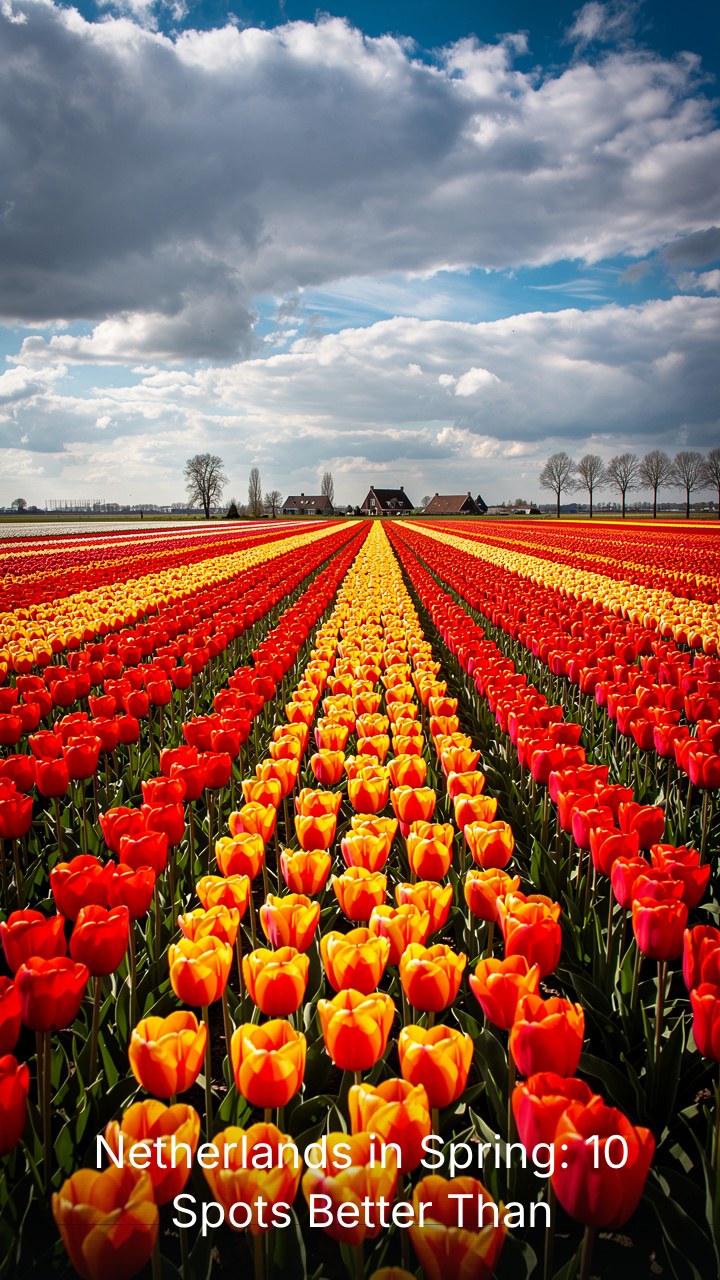
While Keukenhof is famous, the best way to experience Dutch tulips without the massive crowds is by visiting rural regions like the Noordoostpolder, the Bollenstreek backroads, or the northern coast of Callantsoog. These hidden gems offer authentic, serene tulip viewing experiences that are often free to explore and far less commercialized.
1. The Noordoostpolder Tulip Route

Located in the Flevoland province, the Noordoostpolder Tulip Route spans over 100 kilometers and serves as arguably the longest tulip route in the world. Visitors can drive, cycle, or walk through endless, vibrant fields of color that are virtually devoid of the tour buses found in Lisse. This region is a paradise for photography enthusiasts who crave unobstructed vistas and a quiet atmosphere. Because the fields here are spread over such a vast distance, the sense of isolation and tranquility is unparalleled. To maximize your visit, look for the official route signs that guide you through the heart of the polder, ensuring you see the most impressive blooming sections while maintaining a respectful distance from active agricultural work. The lack of tourist infrastructure here is a feature, not a bug, allowing for a pure connection with the landscape.
2. Hillegom and Lisse Countryside

While Lisse houses the famous Keukenhof, the surrounding farmlands offer a more intimate and authentic way to experience the legendary “Bollenstreek” floral density. Renting a bicycle allows you to bypass the garden gates and explore the local backroads, where you will find flower fields that are just as colorful and dense as the curated displays. These family-run operations often feature small, seasonal flower stalls where you can purchase fresh, locally grown bulbs or bouquets directly from the source. Cycling through these areas provides a unique perspective, as you are at eye level with the flowers and can easily pull over to capture photos without disrupting traffic. Remember that these farmers rely on their harvest for their livelihood, so stick strictly to the cycle paths and public roads while admiring the vibrant rows of tulips stretching toward the horizon.
3. The Flower Strip (Bollenstreek)
This region stretches between Haarlem and Leiden, serving as the historical heart of the Dutch flower industry. Take the train to Hillegom and walk or bike toward the coast to discover quiet paths winding through vibrant, commercial bulb fields. Unlike the manicured garden beds of major tourist parks, these fields are functional production zones where you can witness the sheer scale of the industry. The proximity to both the ocean and urban centers like Haarlem makes this an ideal location for travelers who want to combine nature with city exploration. If you visit during the late April peak, the sheer color saturation of this region is visually arresting. Please remain on marked public paths, as the commercial bulb industry is highly sensitive to soil pathogens and any trampling of the plants.
4. Anna Paulowna
This northern village hosts the famous ‘Bloemendagen’ (Flower Days) in late April, where the entire community transforms into a living gallery. Residents create intricate, elaborate flower mosaics in their front yards, often using thousands of individual blooms to depict scenes of local life or historical events. This event feels remarkably personal and welcoming, offering a glimpse into the tight-knit social fabric of the Dutch countryside. You won’t find better local hospitality anywhere else, as residents are often delighted to discuss their designs with visitors. It is a refreshing departure from the commercial nature of other floral festivals and is entirely free to enjoy as you wander through the residential streets of this charming town.
5. Flevoland Flower Fields
Flevoland is a polder, meaning the land was reclaimed from the sea, creating a uniquely flat, expansive landscape that offers a dramatic perspective for tulip viewing. Visit in late April for the peak bloom when the landscape is essentially a vast canvas of primary colors. Because the area was reclaimed in the 20th century, the layout is highly organized and modern, making it an excellent location for cycling excursions where visibility remains clear for miles. It feels vast, open, and refreshingly empty compared to the congested tourist centers near Amsterdam. The flat terrain makes for easy riding even for casual cyclists, and the wide polder roads are generally safer for bicycle travel than the winding historical lanes found elsewhere in the Netherlands.
6. The Westland Region
Often referred to as the ‘Glass City’, Westland is dominated by massive, high-tech greenhouses that power the Dutch agricultural economy. However, the outer edges of this region feature stunning outdoor fields that provide a fascinating contrast between industrial productivity and natural beauty. Cycle along the dense network of waterways to experience a quintessential Dutch vista characterized by canals, windmills, and endless color. This area is less visited by international tourists, meaning you can often enjoy the floral displays in relative solitude. It is an industrial yet incredibly productive and beautiful part of the country that highlights the true essence of Dutch commercial floriculture. Spend an afternoon navigating the narrow dyke paths, which offer the best vantage points for photographing the fields against the backdrop of traditional Dutch water management systems.
7. Goeree-Overflakkee
This island offers a unique coastal experience where tulip fields grow in close proximity to the dunes and the sea. The salt air and the backdrop of the North Sea create dramatic, moody photos that are rarely seen in standard promotional travel guides. Because it is rarely visited by international tourists, you are almost guaranteed peace and quiet during your visit. The island’s geography allows for diverse cycling routes that take you from blooming bulb fields to the edge of the coastal dunes in a single afternoon. If you are a landscape photographer, the light quality in this coastal region is superior due to the ocean reflection, particularly during the “golden hour” just before sunset.
8. Drenthe Province
Northern Drenthe is home to smaller but remarkably charming tulip patches that are perfect for a slow-paced, multi-day road trip. This province is less about the massive scale of the Bollenstreek and more about the integration of agriculture into beautiful, rural scenery. Pair your floral visit with a bike ride through the nearby national parks, such as Dwingelderveld, to get the best of nature and agriculture combined. Drenthe feels much more “old-world” than the western provinces, with lush forests and heather fields acting as a backdrop to the flower patches. It is an ideal destination for those who want to avoid the frantic pace of the Randstad area and prefer a more contemplative travel experience.
9. Callantsoog and the Northern Coast
Tulip fields here often back up against the expansive sand dunes, creating an unforgettable contrast between bright colors and the muted grey of the North Sea. The beach is only a short walk away, making this a perfect day trip for those who want to combine a seaside hike with floral sightseeing. It is significantly less crowded than the regions near Amsterdam, providing a relaxed coastal vibe. After viewing the flowers, you can head directly to the beach for a walk along the dunes. The northern coast is a hidden gem that many tourists overlook, ensuring that you can explore the rows of tulips at your own pace without being disturbed by tour groups.
10. The Flower Auction at Aalsmeer
While this location is not a field, Royal FloraHolland is the heartbeat of the global flower trade and an essential stop for context. Watching the frenetic trading activity provides a fascinating contrast to the quiet, static beauty of the fields. As the largest flower auction in the world, the sheer volume of products moved here daily is staggering. Arrive early, ideally by 7:00 AM, to witness the most active part of the bidding process. This site is climate-controlled and modern, making it a reliable destination regardless of the unpredictable Dutch spring weather. It effectively bridges the gap between the beautiful fields you have toured and the logistics that make the Dutch floral industry a global leader.
Mastering the Dutch Tulip Landscape: Practical Tips
Navigating Dutch tulip country requires an understanding of local etiquette, as most fields are private property and essential sources of income for local farmers. Walking into a field can destroy expensive bulbs, spread soil-borne diseases, and damage crops that the farmer relies on for the entire year. Always stick to the designated bike paths or public roads. If you are desperate for an “in-the-field” photo, seek out “self-pluk” (pick-your-own) farms, which are specifically designed to accommodate tourists for a small entry fee of approximately 5 to 10 euros. This is the only ethical way to capture those iconic influencer-style shots without harming local agriculture. Furthermore, bring waterproof, sturdy boots; even on sunny spring days, the soil in Dutch fields is often saturated and muddy, which can ruin standard sneakers quickly.
Choosing Your Transport: Bike vs. Car
For an authentic Dutch experience, renting a bicycle is the best way to navigate narrow farm tracks that are inaccessible to automobiles. A standard city bike typically costs about 15 euros per day, while an electric bike (e-bike) ranges from 25 to 30 euros and is highly recommended to combat the strong polder winds. Cars offer more range but force you to stay on main roads, often preventing you from seeing the most intimate, hidden fields tucked behind canals. If you choose to drive, you must park only in designated lots; parking on grass verges or private land is strictly enforced by local police during the peak blooming season. Remember that Dutch backroads are frequently narrow, so cycling ensures you aren’t stuck in traffic behind other frustrated drivers.
Avoiding the Tourist Traps: A Checklist
Before heading out, use this checklist to ensure a stress-free trip. First, monitor the ‘Bloeiradar’ (Bloom Radar) online, which provides weekly updates on field conditions to ensure you don’t travel to a region that has already been harvested. Second, pack a picnic lunch, as rural agricultural areas rarely feature cafes or restaurants. Third, respect all ‘No Entry’ signage; these are not suggestions but necessary protections for farm property. Finally, avoid weekends whenever possible. Tuesday and Wednesday mornings offer the best light for photography and the lowest traffic, allowing you to enjoy the fields in peace. If you must visit on a weekend, plan to be at your first destination by 8:00 AM to beat the primary wave of tourist traffic.
FAQ
Q: Is it necessary to book visits in advance for rural tulip fields?
No, you rarely need reservations for open fields, which are public and free to view. Unlike the Keukenhof, which requires a pre-booked ticket, the rural tulip routes are open-access, allowing for spontaneous travel and greater flexibility in your itinerary.
Q: What should I do if the weather forecast is poor?
Expect unpredictable weather and pack waterproof layers. Even in the rain, the fields look moody, vibrant, and perfect for unique photography. A high-quality raincoat will ensure you stay comfortable regardless of the shifting spring conditions.
Q: How can I access these remote locations using public transport?
Most spots are reachable by a combination of train and bike. Use the 9292.nl app to plan your journey and rent a bike at the train station upon arrival in any Dutch town, which is a standard and convenient practice.
Q: What are the most ethical ways to take photos inside a tulip field?
Only enter fields explicitly labeled as “self-pluk” (pick-your-own) or those where the farmer has specifically invited visitors. Avoid trampling crops in private fields, as this causes significant financial damage and spreads disease to the bulbs.
Q: When is the absolute best time to see the tulips in full bloom?
Mid-to-late April is generally considered the peak period for tulips across the Netherlands. However, bloom times vary by region and weather, so checking the ‘Bloeiradar’ one week before your trip is the most reliable way to time your visit accurately.
Leave a Reply