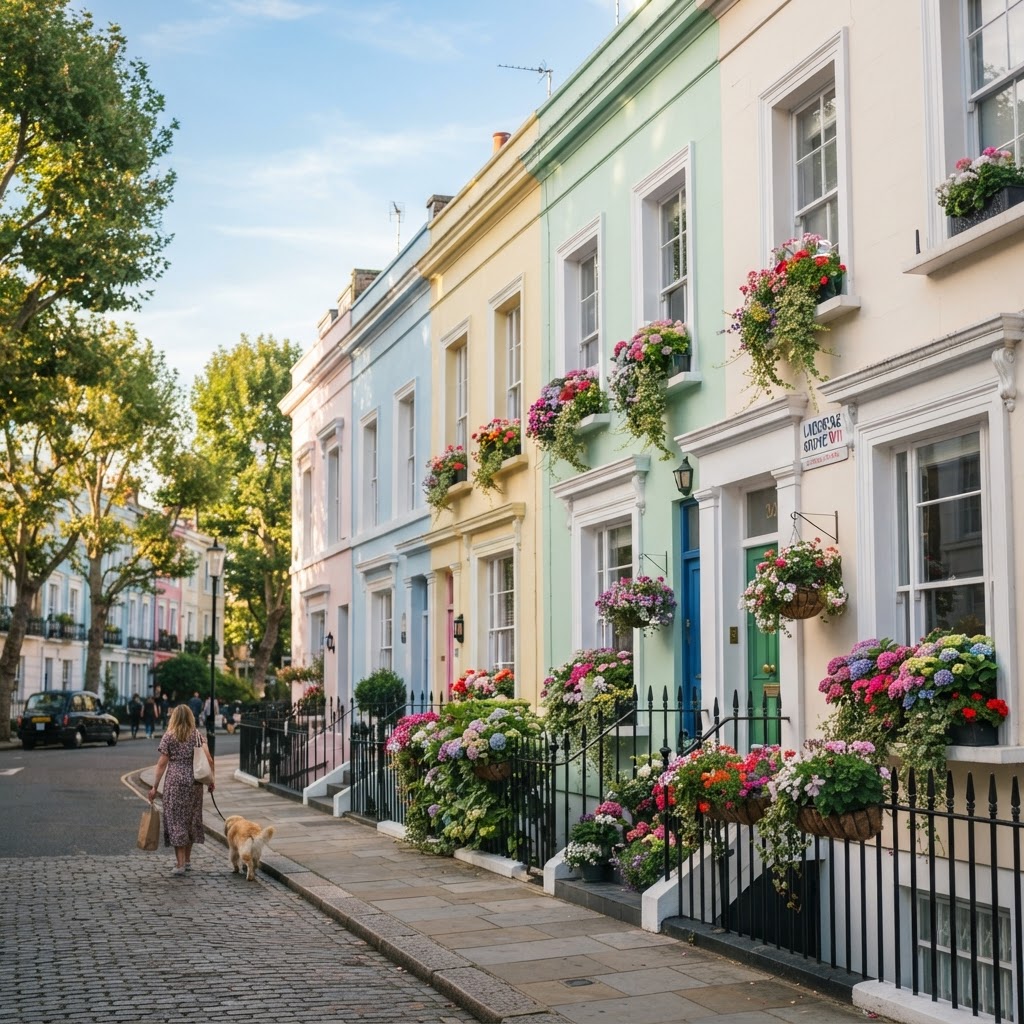
Notting Hill and London’s surrounding districts are famous for their candy-coloured Victorian streets, with the most iconic locations concentrated in Notting Hill, Chelsea, and Primrose Hill. These residential areas offer a vibrant, photogenic aesthetic defined by pastel-hued townhouses, lush greenery, and unique architectural details that capture the creative spirit of London.
The Charm of Notting Hill’s Iconic Pastel Houses
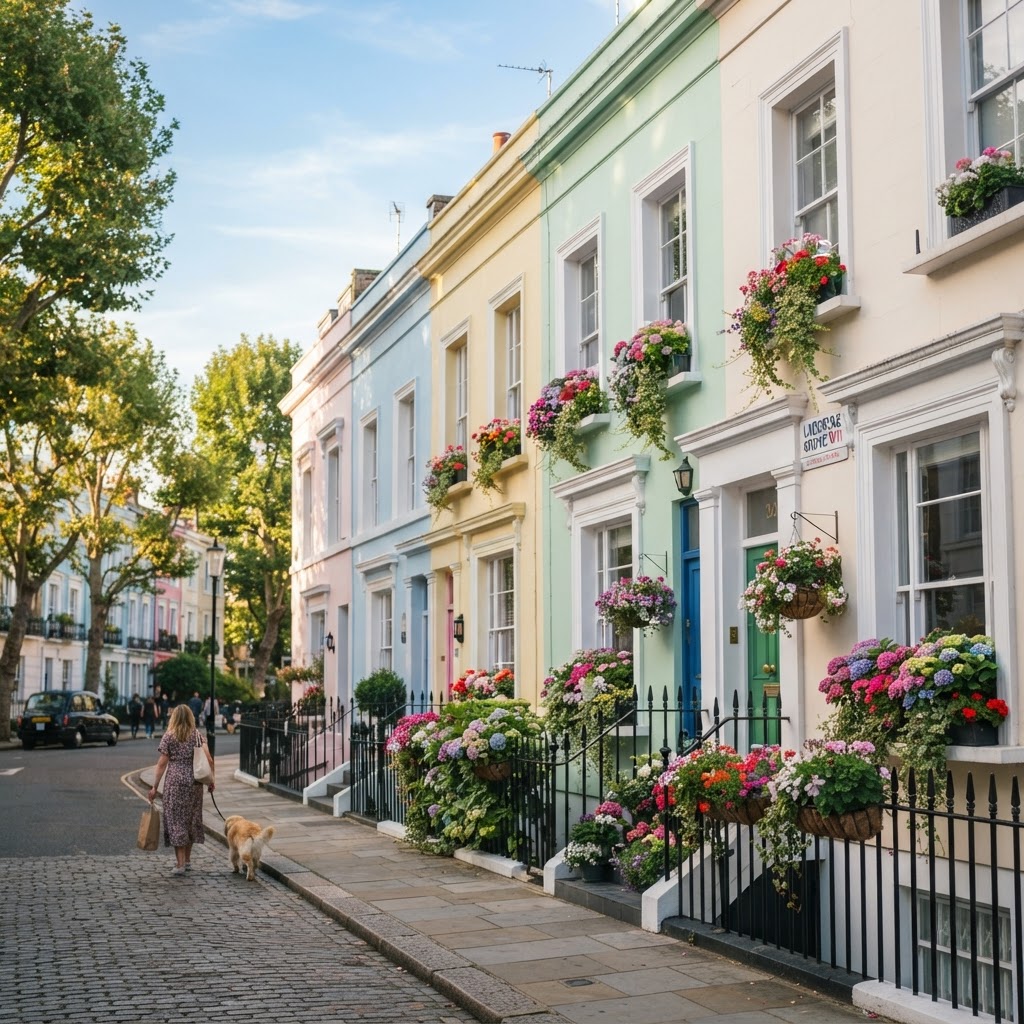
Notting Hill is the premier destination for colourful streetscapes, famously featuring long rows of Victorian townhouses painted in vibrant shades like mint, candy floss pink, canary yellow, and sky blue. The visual appeal stems from the juxtaposition of rigid 19th-century Victorian architecture with modern, playful paint choices that homeowners have cultivated over several decades. While Portobello Road attracts the highest volume of tourists due to its world-famous antique market, the true “postcard” views are hidden in the quiet, residential side streets where property owners maintain immaculate flower boxes and ornate wrought-iron railings. Visitors often find that the most authentic photographic opportunities exist on streets like Lancaster Road and St Luke’s Mews, which provide a more intimate look at the neighbourhood’s bohemian charm. The preservation of these aesthetic details is a point of local pride, ensuring the neighbourhood maintains its status as a top-tier London landmark for architectural photography.
Why Colourful Streets Are So Photogenic
The secret to the allure of these streets is the play of natural light on the diverse colour palette. During the golden hour—that brief window just after sunrise or just before sunset—the low angle of the sun makes the pastel facades glow with a warm, soft intensity. This is the best time to capture photos that avoid harsh shadows, allowing the colours of the buildings to pop against the often-grey London sky.
Uncovering Hidden Gems in Chelsea and Kensington
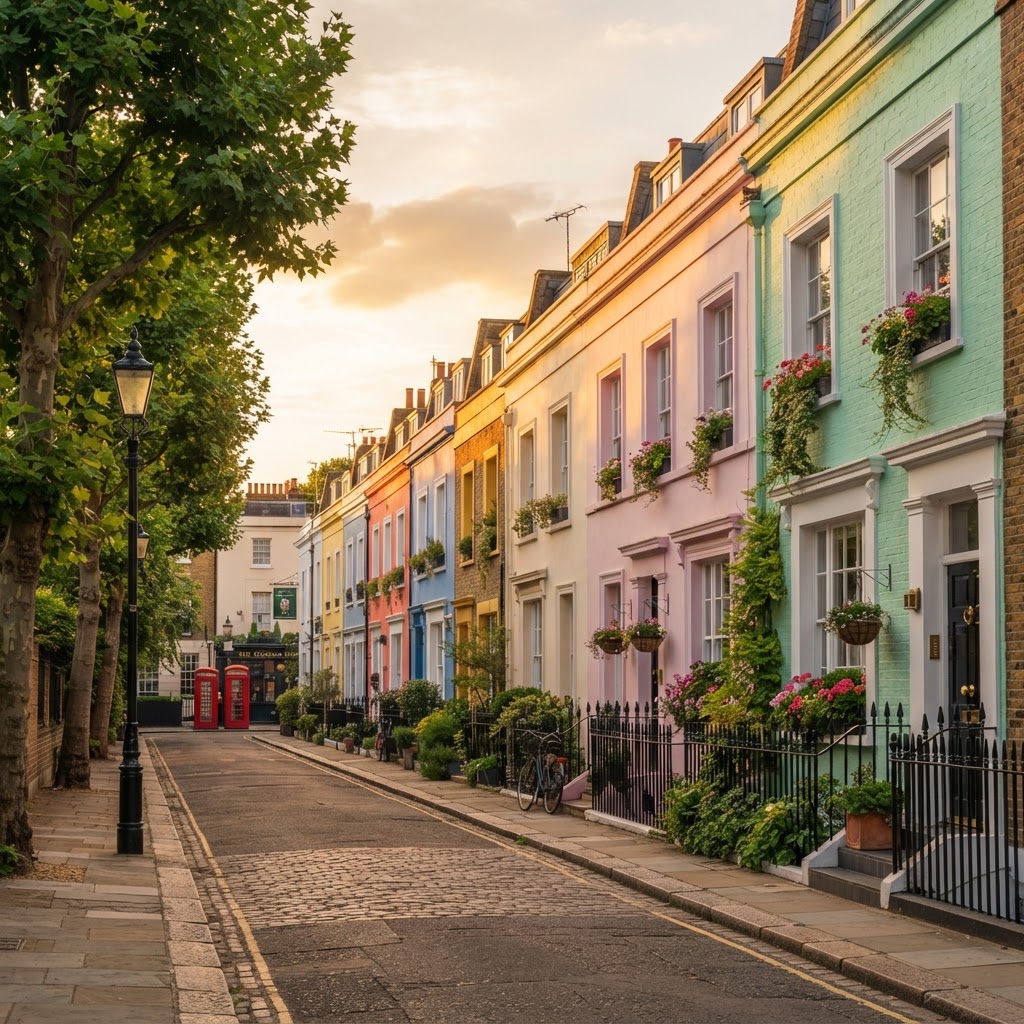
Neighbouring districts like Chelsea and South Kensington provide sophisticated, less-congested alternatives to the heavy tourist foot traffic found in Notting Hill. South Kensington is defined by its elegant stucco-fronted houses, which showcase a palette ranging from deep, regal cream tones to adventurous soft pastels. These streets are generally wider and benefit from less pedestrian clutter, making them ideal for tripod-based photography or slow-paced composition. In Chelsea, the area around Bywater Street features a row of intense, neon-hued houses that offer a striking contrast to the surrounding traditional red-brick Victorian and Georgian architecture. These vibrant splashes of colour demonstrate a creative evolution of London living, where historic facades are transformed into personal canvases. By planning a loop that begins in Notting Hill and moves toward these quieter pockets, photographers can maximize their productivity while avoiding the peak congestion of midday crowds. This route is efficient for those utilizing the London Underground, as these neighborhoods are well-served by the District, Circle, and Central lines.
Mapping Your Walking Route
To make the most of your day, it is best to plan a walking route that clusters these streets together. Start your morning in Notting Hill, work your way down towards Kensington, and end your afternoon in the quieter pockets of Chelsea. By grouping these locations, you minimize travel time and maximize your time in front of the lens.
Essential Tips for Street Photography in London
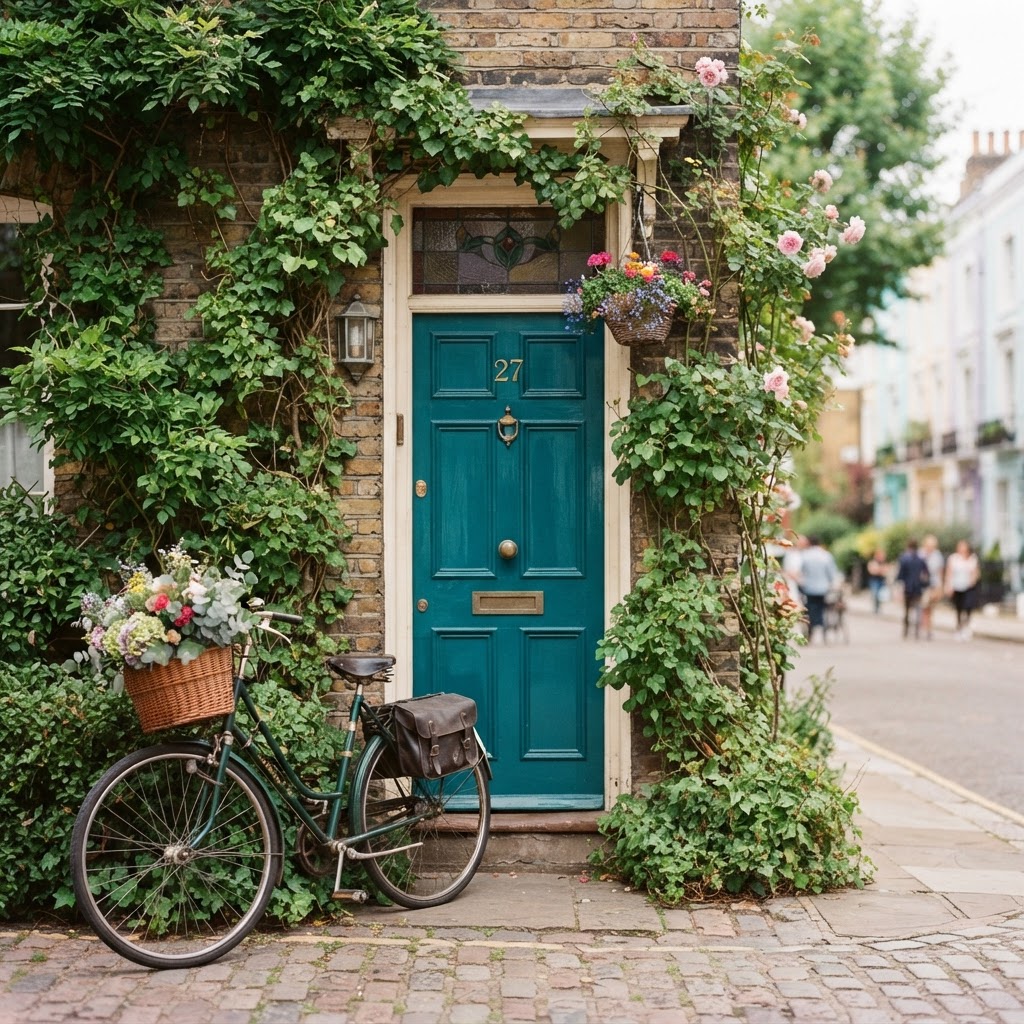
Capturing professional-grade street photography in London requires a strict adherence to etiquette and timing to respect the privacy of local residents. Since these colourful streets are primary homes, photographers should avoid obstructing narrow public pathways, lingering on private steps, or creating noise early in the morning. When shooting, a wider aperture (typically f/2.8 or lower) is recommended to create a shallow depth of field that isolates architectural details, such as a colourful door handle or a wisteria-covered facade. If shooting the entire street, a higher f-stop (f/8 or f/11) is essential to ensure that everything from the foreground garden to the end of the street remains in sharp focus. It is highly advised to shoot in RAW format, as this allows for post-processing adjustment of the specific pastel tones, which can otherwise appear washed out if the London weather turns overcast. Utilizing gear that is unobtrusive—such as a 35mm prime lens—helps you blend into the environment, yielding more natural and candid street photos without drawing unnecessary attention to your activity.
Technical Advice for Bright Facades
When photographing colourful streets, your camera settings are key. Use a wider aperture (a lower f-stop number) to create a soft background blur if you are focusing on a specific architectural detail or a person in front of a house. Alternatively, for a wide-angle shot of the whole street, use a higher f-stop to ensure everything from the front garden to the furthest building remains in crisp focus. Always shoot in RAW format if your camera allows it, as this gives you more flexibility when adjusting the saturation and warmth of those specific pastel tones during the editing process.
Beyond Notting Hill: Colourful Pockets Across London
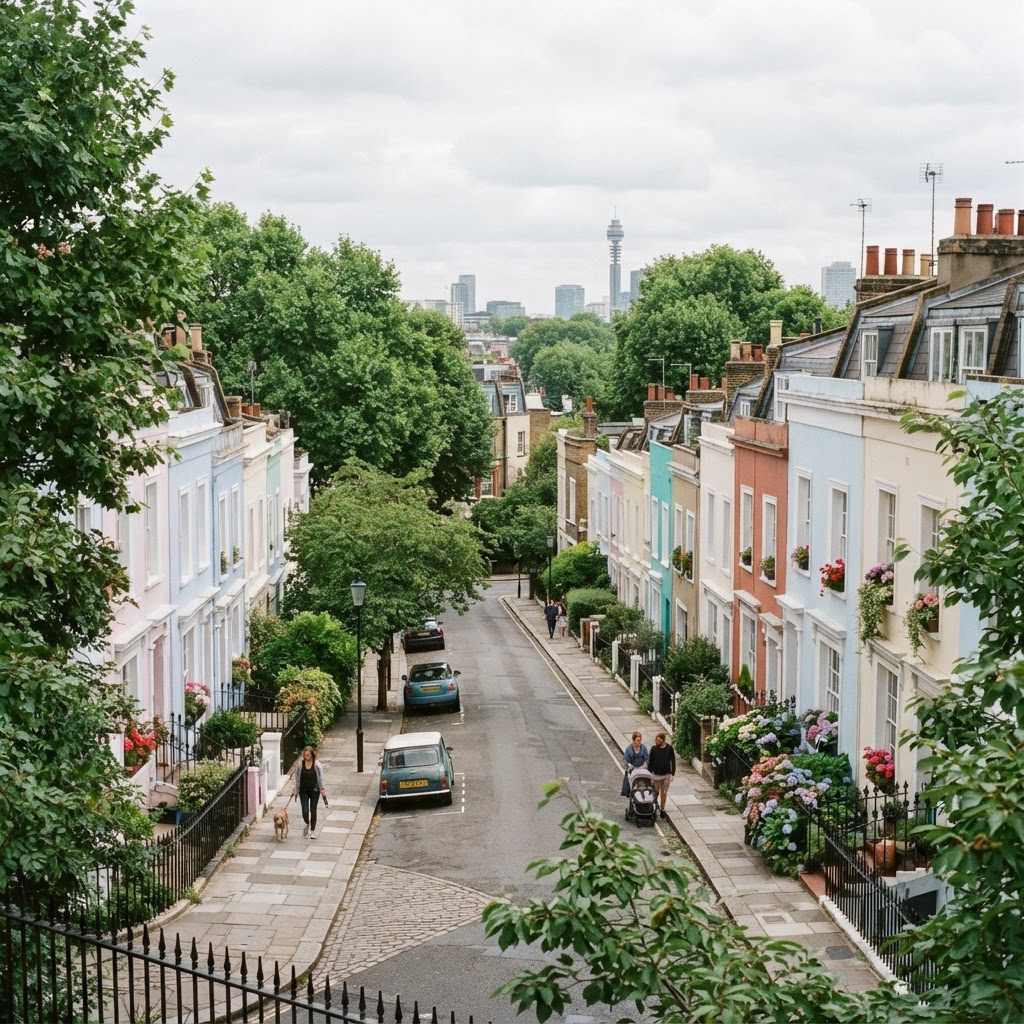
Beyond the well-trodden paths of the west side, London contains hidden architectural colour pockets that cater to a more niche aesthetic. Primrose Hill in North London is perhaps the most notable, offering townhouses with a muted, sophisticated colour palette that feels distinct from the neon vibrance of Chelsea. Beyond just the houses, Primrose Hill provides an elevated vantage point to capture the London skyline, allowing photographers to combine architectural shots with panoramic city views in a single session. In East London, specifically within areas like Hackney, modern residents have reclaimed industrial-era terraces, painting them in bold, contemporary hues that reject the traditional pastel theme for something sharper and more experimental. This geographical diversity means that a photographer can curate a portfolio that reflects the full spectrum of London’s residential character, ranging from 19th-century elegance to modern, urban grit. Seasonal planning is vital here; while spring brings cherry blossoms and wisteria, autumn foliage provides a warm, organic contrast to the painted stucco, adding layers of depth and colour theory that will elevate your street feed significantly.
The Role of Seasonal Changes
The colours of the houses aren’t the only elements that change throughout the year. During spring, these streets are often framed by blooming cherry blossoms and wisteria, which add an extra layer of texture and natural beauty to your images. In autumn, the changing leaves offer a contrasting palette that can make the pastel houses look even more vibrant. Plan your visits across different seasons to capture the shifting character of the city.
Equipment and Gear for the Perfect Street Feed

High-quality street photography does not require expensive cinema hardware, as modern high-end smartphones are often sufficient for social media photography when paired with advanced editing software. Applications such as Adobe Lightroom Mobile or VSCO are industry standards for adjusting white balance and saturation—crucial steps when dealing with the high contrast of colourful London facades under an overcast sky. If you are using a dedicated camera, a prime lens (fixed focal length) is significantly superior to a zoom lens. A 35mm lens is generally considered the “gold standard” for street photography, as it provides a wide enough field of view to capture the full streetscape while minimizing the barrel distortion often found on wider lenses. For those aiming for more detailed architectural shots, a 50mm “nifty fifty” prime lens offers excellent clarity and a wider aperture, which is essential for capturing images in lower light conditions without needing a tripod. Keeping a lightweight kit allows you to maintain the mobility required to explore multiple neighborhoods in a single day, ensuring you have the energy to hunt for the perfect angle.
Why Prime Lenses Are Your Best Friend
If you are using a dedicated camera, a prime lens (like a 35mm or 50mm) is ideal for street photography. These lenses offer superior clarity and a wider aperture, which is perfect for capturing the essence of a street without the distortion that sometimes occurs with zoom lenses. Carrying a lighter kit also means you can walk further and explore more, which is essential when you have a long list of streets to visit in a single day.
Planning Your Itinerary and Logistics
Logistical success depends on minimizing transit time and avoiding the peak density of London’s urban traffic. Starting your session at 8:00 AM is critical; this early window provides the “cleanest” frames, free from delivery vans and heavy pedestrian traffic that typically characterize these residential zones by midday. Most of these prime photography locations are clustered near London Underground stations, making the Tube the most efficient method of travel. For example, Notting Hill Gate and South Kensington stations provide immediate access to the most iconic streets. We recommend planning a loop that links 3-4 streets within a 2-mile radius, ending your walk near a local cafe or public park. This structure turns your photography expedition into a manageable half-day activity. Always check the TFL (Transport for London) website or a reliable navigation app for potential weekend line closures before setting out, as this can derail a perfectly timed itinerary.
FAQ
Which is the best time of year to photograph London’s colourful streets?
Mid-to-late spring, specifically late April and May, is the ideal time to photograph these streets due to the abundance of wisteria and cherry blossoms. These natural elements add layers of texture, framing, and complimentary colour that significantly enhance the visual impact of your architectural shots.
Are there any legal restrictions for street photography in these neighborhoods?
Generally, you are free to photograph from public sidewalks in London as long as you do not impede traffic or public access. However, these are private residences; ensure you do not trespass on private steps or property, and always avoid using high-intensity flash equipment that may disturb residents.
Can I use a tripod for street photography in Notting Hill?
Using a tripod is technically allowed on public footpaths, but it is highly discouraged in narrow streets due to pedestrian congestion. If you must use one, ensure it is compact and that you are not obstructing the path of residents or local traffic at any time.
Do I need a professional camera to get high-quality images?
No, a modern smartphone is sufficient for high-quality street photography in London. The key to professional results is utilizing photo editing apps like Lightroom Mobile to correct white balance, brightness, and color saturation, rather than relying solely on the hardware you carry.
What are the most iconic streets in Notting Hill for photos?
St Luke’s Mews, Lancaster Road, and Hillgate Place are widely considered the most iconic spots in Notting Hill. These streets offer the most concentrated rows of vibrant, pastel-coloured Victorian townhouses and are frequently used as backdrops for professional photography shoots.
Leave a Reply