
Positano cliffs are famous for their dramatic verticality, where vibrant Mediterranean architecture is built directly into sheer limestone rock faces, creating a landscape that resembles a living painting. This unique coastal topography results from millions of years of geological erosion, forming a steep, multi-layered environment that demands careful navigation and strategic viewing.
The Geology Behind the Beauty
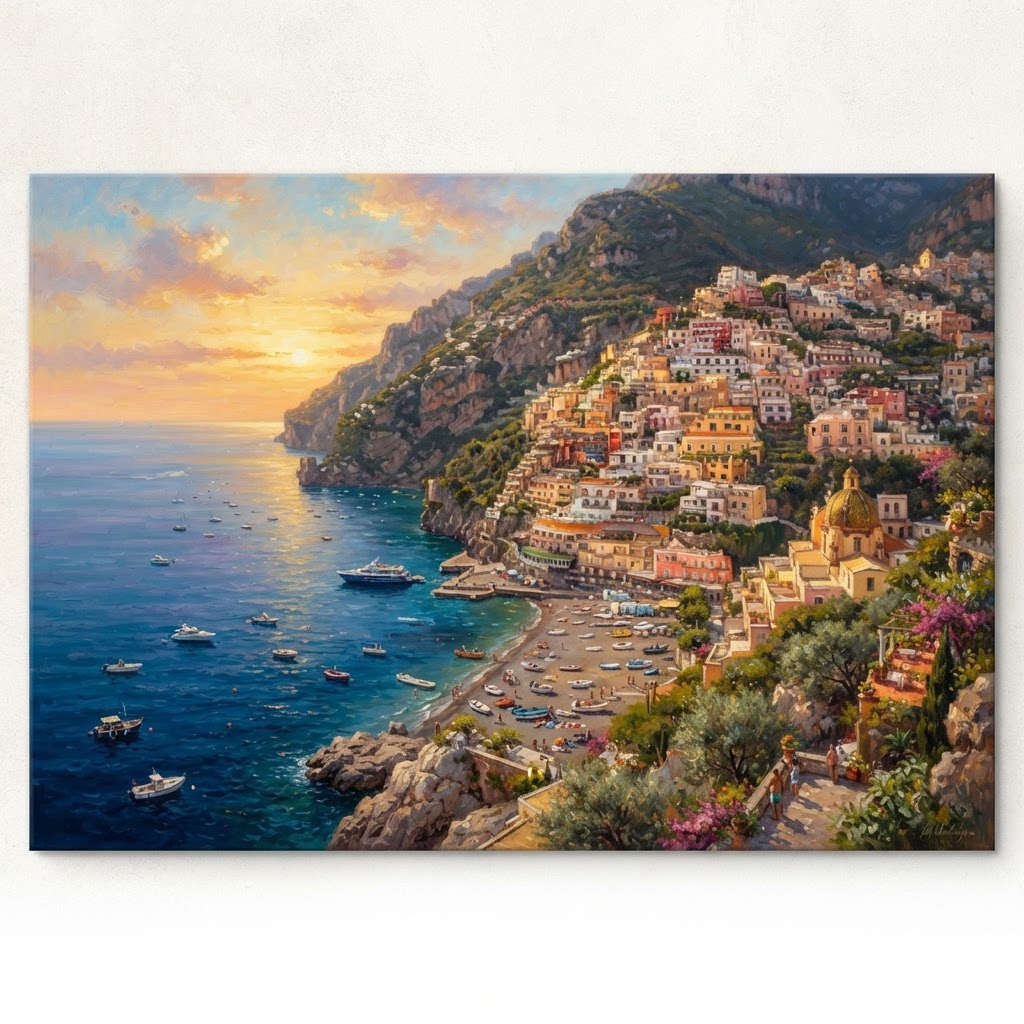
The dramatic backdrop of Positano is the result of millions of years of geological activity involving the Lattari Mountains, which form the spine of the Sorrento Peninsula. These mountains consist primarily of Triassic-age limestone, a pale, sedimentary rock composed largely of calcite and calcium carbonate that is highly susceptible to karstic erosion. Over millions of years, the relentless chemical weathering from rainfall and mechanical erosion by the Tyrrhenian Sea carved the jagged, precipitous cliffs that frame the town. This specific geological composition is vital to the town’s aesthetic; the high calcite content allows the rock to reflect sunlight, giving the cliffs their signature pale, creamy, and sometimes pinkish hue during the Mediterranean ‘golden hour.’ This natural foundation provides the perfect neutral palette for the brightly colored villas that cling to the cliffside, creating a visual contrast essential to the ‘painted’ look of the village. Scientists note that the ongoing erosion process remains active, though it is a slow process measured over geological epochs, contributing to the town’s ever-changing silhouette.
The Architectural Dance with Gravity
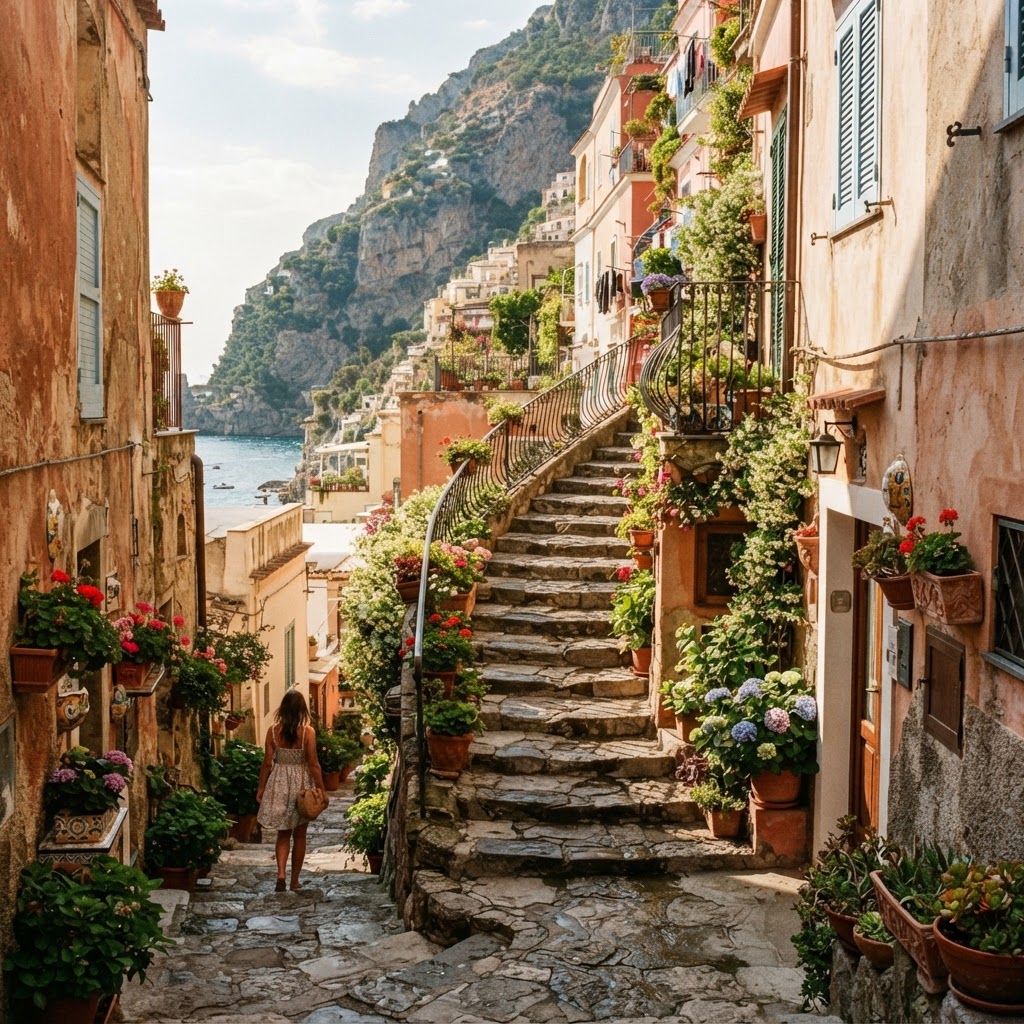
What truly makes the Positano cliffs resemble a painting is the ingenious engineering of historical Italian builders who mastered vertical expansion by integrating structures directly into the rock face. Rather than fighting the steep incline, architecture in Positano utilizes a ‘stacking’ method where dwellings share foundation walls and utilize the natural topography as rear boundaries. Narrow alleys, winding staircases known locally as ‘scalinate,’ and hidden courtyards allow houses to rise in a dense, multi-layered tapestry. The color palette—a curated mix of terracotta, peach, pale yellow, and soft pink—was historically determined by the availability of local lime-based pigments and the need for heat-reflective properties. These colors harmonize with the deep blue of the water and the grey-white of the cliffs to mirror techniques found in Renaissance chiaroscuro. Today, architectural preservation laws strictly regulate facade renovations to ensure this specific color harmony is maintained. Visitors will notice that structures are often cantilevered over sheer drops, a testament to centuries of trial-and-error engineering that has allowed the town to survive intense coastal weather cycles while maintaining its precarious, gravity-defying charm.
Capturing the Cliffside Perspective
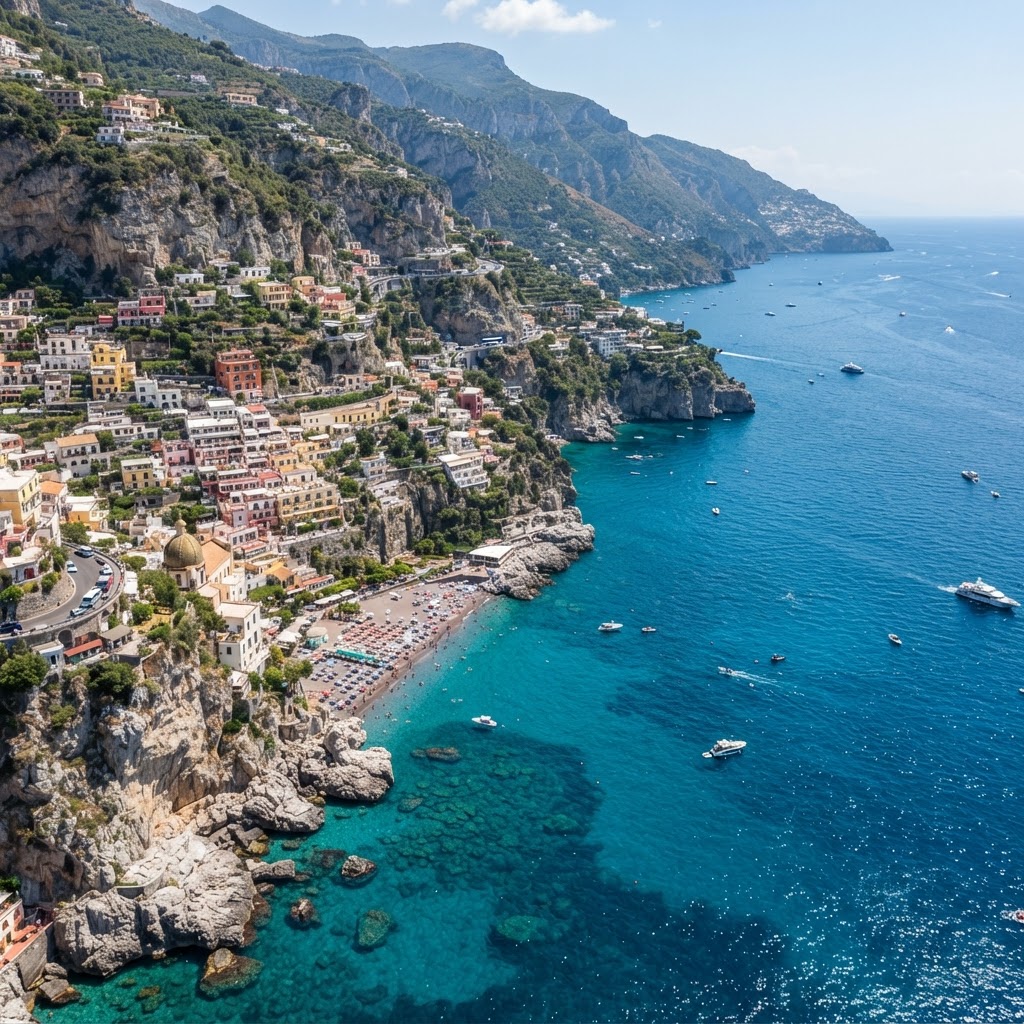
To appreciate the artistic depth of Positano, you must view it from specific vantage points that isolate the entire cliffside silhouette against the Mediterranean horizon. Perspective is everything; while the town center offers intimate street-level views, panoramic perspectives provide the necessary distance to appreciate the vertical stacking of the villas. Whether traveling by private boat or hiking the Sentiero degli Dei (Path of the Gods), the changing angles reveal different ‘brushstrokes’ of the coastline. The following table compares the best viewing experiences for travelers:
The Artistic Legacy of the Amalfi Coast
Artists and intellectuals have flocked to the Positano cliffs for generations to capture the unique light that shimmers against the high-calcite limestone walls. During the mid-20th century, cultural icons like John Steinbeck and M.C. Escher drew immense inspiration from this environment. Steinbeck famously wrote in a 1953 Harper’s Bazaar piece that Positano ‘bites deep,’ noting it is a dream place that feels surreal while present. Painters are particularly drawn to the ‘quality of light’ in Positano, which is significantly diffused due to the reflection off the surrounding cliff faces. This natural light-bouncing effect acts as a diffuser, softening the harsh shadows that would typically appear in such high-relief terrain, allowing for the vibrant colors of the homes to appear saturated. This light behavior is a major reason why the area became a haven for landscape artists in the post-war era. The interaction between the shadow cast by the jagged mountain peaks and the bright, sun-lit facade of the buildings creates a depth of field that is difficult to replicate elsewhere, cementing the town’s status as a muse for both classical and modern artistic movements.
Essential Tips for Exploring the Cliffs
Exploring the Positano cliffs requires physical preparation due to the extreme verticality, which includes thousands of steps connecting the higher districts to the beach level. Visitors should prioritize comfortable footwear, as the stone-paved streets and steep inclines can be slippery and exhausting. Navigating the town is best done by combining walking with the local Sita Bus or private shuttles that serve the upper village of Montepertuso and Nocelle. When traversing the town, allow for ‘slow travel’ to accommodate the incline and avoid peak sun hours. The descent from the higher districts to the beach offers the most rewarding views, revealing the layered architectural composition from a top-down perspective. Remember to carry water, as the climb back up, even with bus assistance, often involves significant walking. If visiting during peak summer months, consider that the heat reflecting off the limestone can create temperatures 3-5 degrees Celsius higher than at sea level, making early morning or late afternoon exploration vital for comfort and health.
Best Times to Experience the Scenery
To see the artistic beauty of the cliffs without the interference of massive crowds, the ideal times to visit are during the shoulder seasons of May and September. During these months, average temperatures hover around 22-25°C (72-77°F), and the light is often clearer, lacking the hazy humidity found in July and August. The ‘golden hour’ remains the most critical time for photographers and observers, occurring typically one hour before sunset. During this time, the limestone cliffs absorb the orange and gold hues of the setting sun, effectively ‘glowing’ and blurring the visual line between the natural rock and the man-made structures. This creates the quintessential ‘living painting’ effect that defines the Positano experience. In contrast, midday lighting during the summer can be too harsh, washing out the delicate color palettes of the villas and creating high-contrast shadows that obscure architectural details. Planning your schedule around the sun’s position relative to the mountain facade is the most effective way to guarantee the best possible visual experience of the cliffs.
FAQ
Why are the Positano cliffs a famous travel destination?
The Positano cliffs are world-famous for their unique vertical architectural style, where colorful villas are built into sheer limestone rock faces. This integration of nature and human-made structures creates a dramatic, painting-like aesthetic that has attracted artists and travelers for centuries.
What is the best month to visit the Positano cliffs?
The best months to visit are May or September, when the weather is mild and the crowds are significantly smaller than in mid-summer. During these months, the lighting is ideal for photography, and the coastal atmosphere remains clear and vibrant.
Is it difficult to walk around the cliffs in Positano?
Walking in Positano is physically demanding due to the steep, vertical layout and the abundance of narrow staircases connecting different levels of the town. Visitors should wear sturdy, comfortable footwear and allow extra time to navigate the terrain slowly.
What causes the cliffs in Positano to glow at sunset?
The glowing effect is caused by the high calcite and calcium content in the limestone rock, which reflects the warm light of the setting sun. During the golden hour, these minerals absorb and re-emit the amber light, making the entire cliffside appear to radiate warmth.
Mastering the Vertical Ascent: Practical Tips
Navigating Positano requires comfortable shoes and plenty of stamina. You will climb thousands of steps regardless of where you book your accommodation. Leave the wheeled suitcases at home, as they are useless on narrow, steep stairs. Pack a lightweight backpack for your daily explorations to keep your hands free for railings.
When to Time Your Visit
Avoid July and August unless you enjoy extreme heat and dense crowds. The ideal months are May, June, and September when temperatures are mild. If you visit in October, the sea remains warm enough for swimming, but the evenings require a light jacket. Early morning is the secret to photography because the sun hits the cliff faces perfectly before noon.
Budgeting for the Heights
Positano is expensive, but you can manage costs by staying in the higher districts. The views from the top are superior, though the walk to the beach takes twenty minutes. Budget at least 150 euros per day for a mid-range experience, including meals and transport. Avoid dining directly on Spiaggia Grande, as prices there include a significant premium for the location.
Common Pitfalls to Avoid
Do not rent a car in Positano. Parking is nearly non-existent, and the coastal roads are terrifying for newcomers. Rely on the local internal bus service, which runs in a loop from the top of the town to the sea. Buy your bus tickets in advance at a local tobacco shop because drivers rarely sell them on board.
- Don’t underestimate the sheer number of steps; check your hotel location on a map before booking.
- Don’t rely on GPS for walking paths, as many shortcuts are hidden between private buildings.
- Don’t skip the local lemon sorbet, even if it seems like a cliché tourist treat.
Essential Checklist for Your Trip
- Book your airport transfer from Naples at least one month in advance.
- Confirm with your hotel that they offer luggage assistance if you stay in a pedestrian-only zone.
- Pack high-traction walking shoes with rubber soles for the slippery stone staircases.
- Bring a refillable water bottle to use at the public fountains scattered throughout the village.
Frequently Asked Questions
How long should I stay to truly experience the town?
Plan for at least three full days. A single day trip leaves you rushing through the staircases without time to visit the hidden galleries or enjoy a sunset cocktail in peace. Spending four days allows you to take one boat trip to see the cliffs from the water, which is essential.
Are the cliffside beaches accessible to everyone?
No, the beaches are challenging for those with mobility issues. Most paths to the water involve steep, uneven stairs that can be punishing on the knees. If you have mobility concerns, look for hotels located near the Piazza dei Mulini or the lower main road.
Is it worth hiking the Path of the Gods?
Absolutely, but start early in the morning to beat the heat. The trailhead starts in Agerola and finishes near Nocelle, providing a bird’s-eye view of the cliffs you cannot get from town. Wear sturdy footwear, as the path is rocky and exposed to the elements.
Leave a Reply