
Spanish doorways are iconic architectural elements characterized by a fusion of Moorish, Gothic, and Renaissance influences, often featuring heavy hand-forged ironwork, deep-grained timber, and distinct regional designs. These portals function as cultural markers of status and heritage, acting as vital thresholds between the vibrant public streets and the private sanctuary of the home.
The Cultural Significance of the Spanish Portal
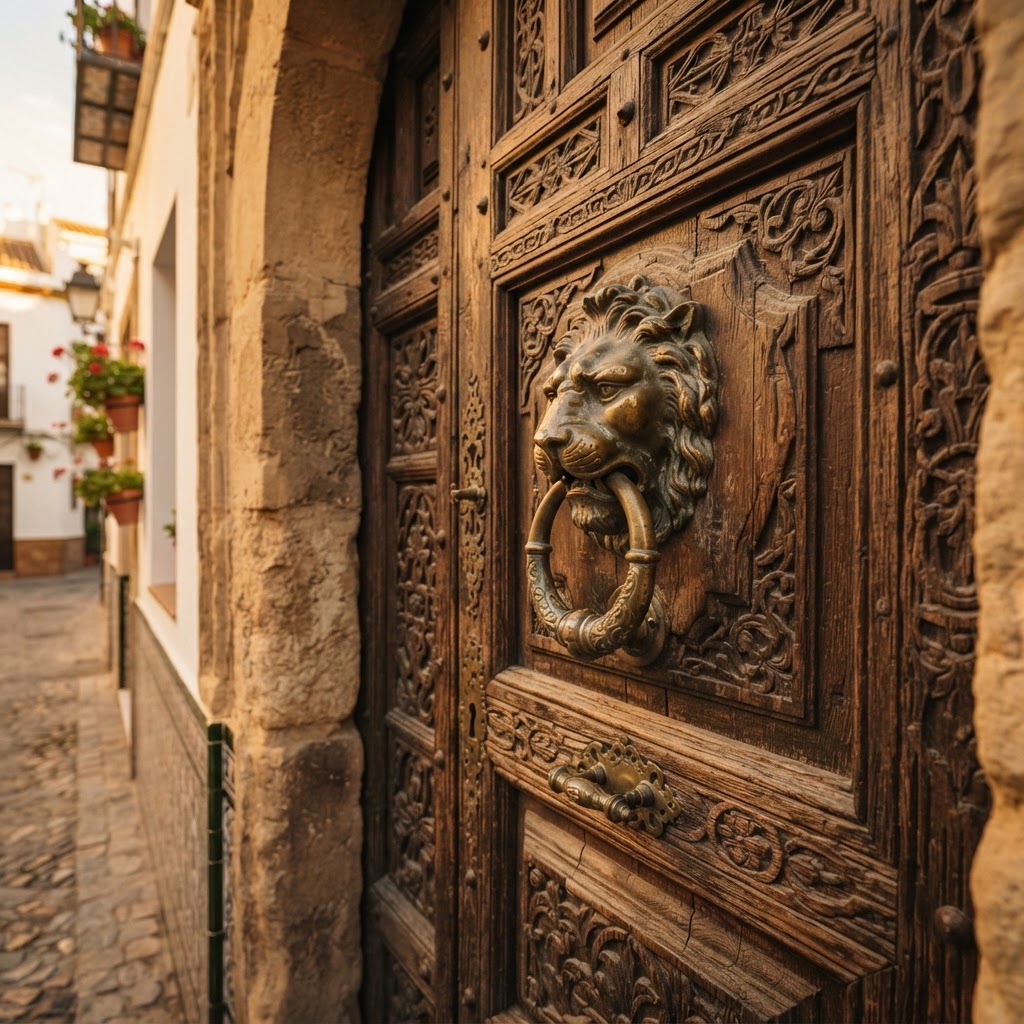
In many parts of Spain, the front door is considered the most sacred element of the home, serving as a boundary between the bustling public sphere and the private family sanctuary. Historically, a home’s social status was explicitly communicated through the quality and decorative complexity of its entrance. Elaborate carvings, custom knockers, and bold, hand-painted colors were not merely aesthetic choices; they functioned as definitive declarations of family heritage and community standing. For instance, in cities like Seville, the prestige of a residence could often be gauged immediately by the weight of the wood or the complexity of the ironwork surrounding the threshold.
Architectural Layers and Historical Influence
Spanish architecture is a complex tapestry woven from Moorish, Gothic, Renaissance, and Baroque threads that define its unique character. You can see this clearly in the doorways of Andalusia, where the influence of the Al-Andalus period (711–1492) remains profound. Archways often feature intricate geometric patterns and horseshoe curves that hark back to North African design traditions. These features remind visitors that Spain is a crossroads of civilizations where East meets West in every stone. Integrating these multi-layered historical styles, the architecture ensures that every entrance remains a physical record of the diverse cultures that have occupied the Iberian Peninsula over the last millennium.
Unlocking the Beauty of Andalusian Courtyards
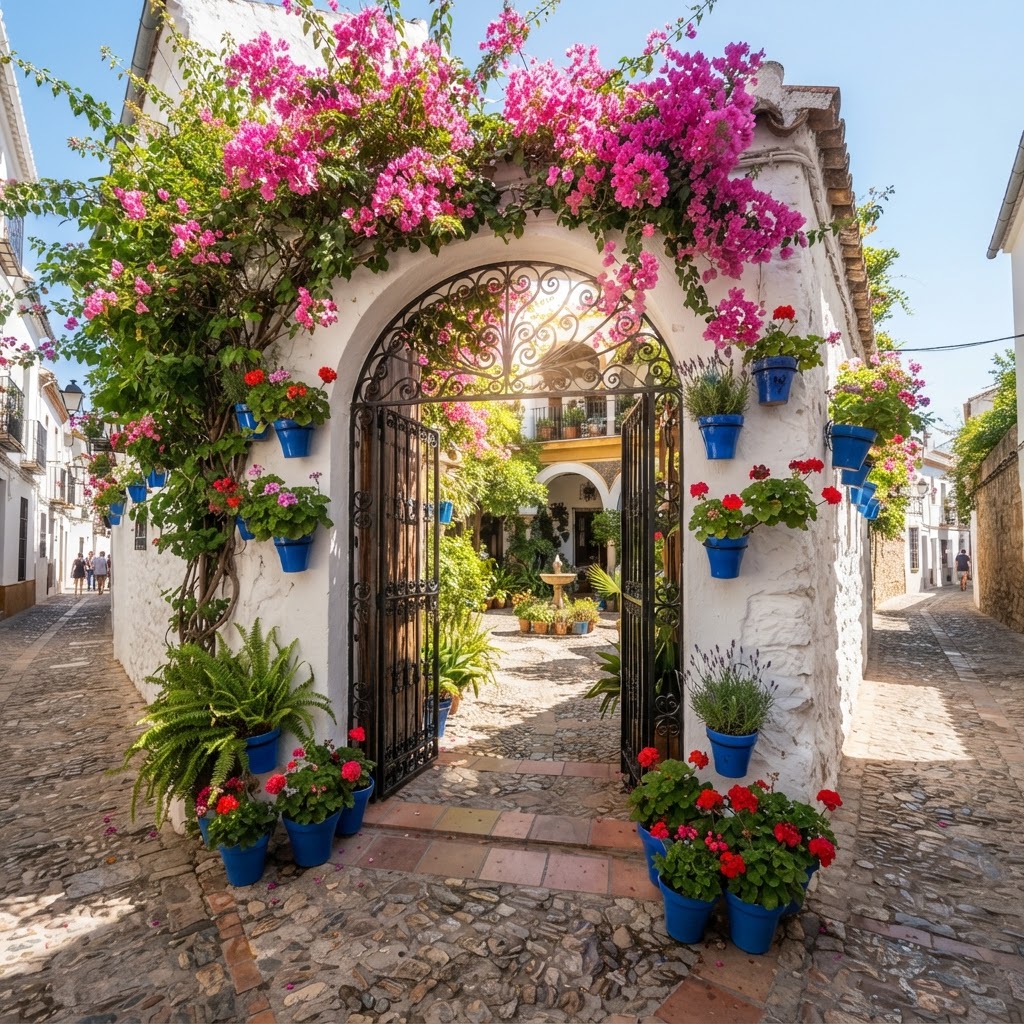
Perhaps nowhere is the artistry of the entryway more celebrated than in the hidden patios of Cordoba. During the famous Patios de Córdoba festival, held annually in early May, homeowners open their elaborate, wrought-iron gates to the public to showcase architectural harmony. These doorways are typically framed by towering geraniums and climbing ivy, acting as a threshold into a hidden, lush garden paradise. The contrast between the austere, thick exterior walls—often built 40 to 60 centimeters thick to combat Mediterranean heat—and the vibrant, floral interior creates a sensory experience that feels magical. This design specifically optimizes natural ventilation while maintaining absolute privacy.
The Role of Wrought Iron in Design
Ironwork is a hallmark of the Spanish aesthetic, particularly regarding doors and window grilles. Blacksmiths, known as ‘rejería’ masters, have historically been treated as elite artists, forging iron into intricate scrolls, floral motifs, and protective patterns. This craft serves a dual purpose: it offers essential security while maintaining a delicate, open feel that allows light and air to circulate—a critical necessity in the intense Mediterranean heat.
Symbolism in Metalwork
Often, the motifs within the ironwork tell specific stories of the family’s profession or their religious devotion. You might spot agricultural symbols in rural villages, suggesting a deep connection to the land, or geometric patterns that represent infinite cycles, common in historic urban centers. Each twist of metal is a frozen moment of creative labor that has stood for decades.
Regional Differences in Doorway Design
Travel north to Galicia or the Basque Country, and the aesthetic shifts dramatically to favor durability over ornamental display. In the rainy, green north, doors are often crafted from heavy, dark oak and feature much sturdier, simpler designs meant to withstand harsh coastal winters. These structures are built to last for centuries, with thick hinges and iron studs that reflect a more rugged and maritime history compared to the airy, ornate styles of the south. The use of dense hardwoods prevents moisture absorption, ensuring these heavy entryways remain functional despite high annual rainfall averages in regions like Galicia.
Mediterranean Minimalism
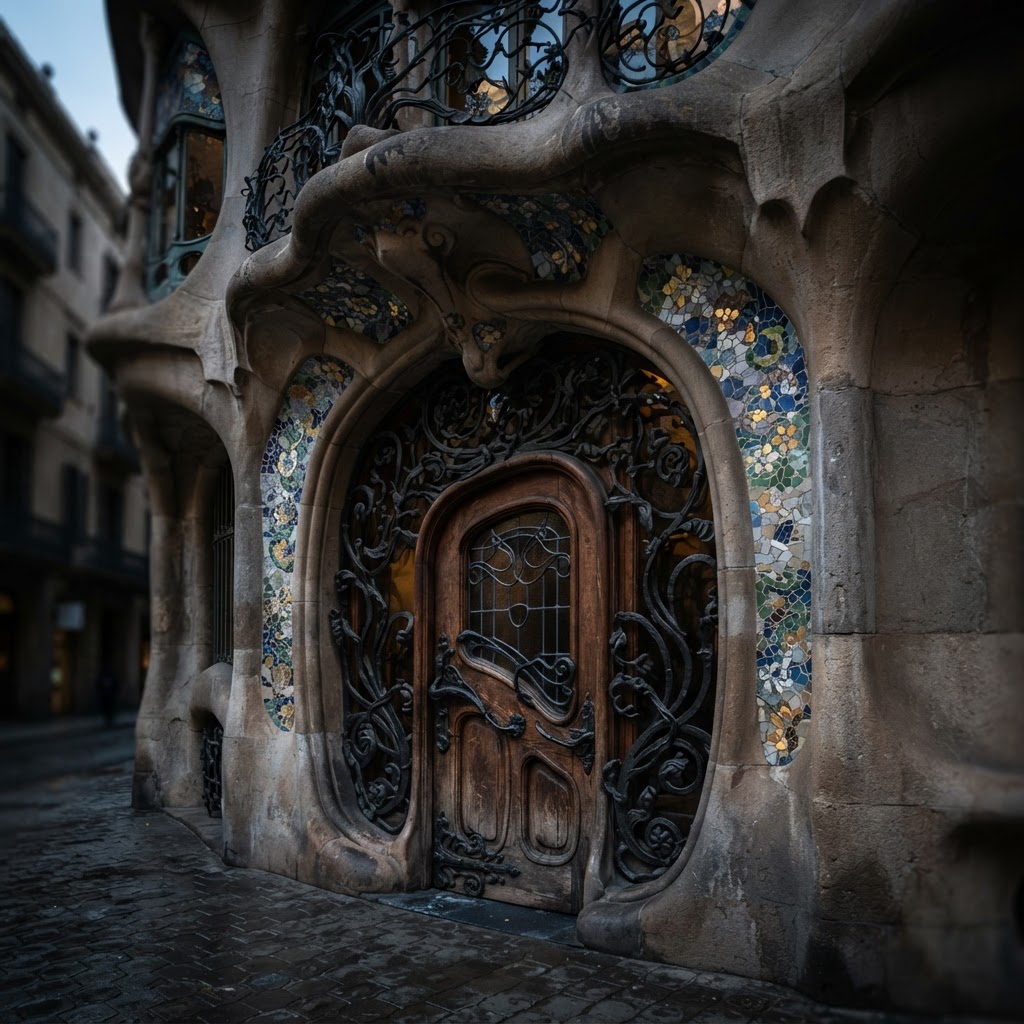
Along the Mediterranean coast, from Valencia to Barcelona, you encounter a different spirit influenced by the late 19th and early 20th-century movements. Here, the influence of Catalan Modernism often manifests in doorways. Architects like Antoni Gaudí transformed the concept of the door into a surrealist work of art, utilizing organic, fluid shapes that seem to grow out of the building itself. These doorways are masterpieces of curves and unconventional materials, proving that a threshold can be a sculpture in its own right, distinct from the traditional rigid forms found elsewhere.
Preserving the Legacy of Historic Entrances
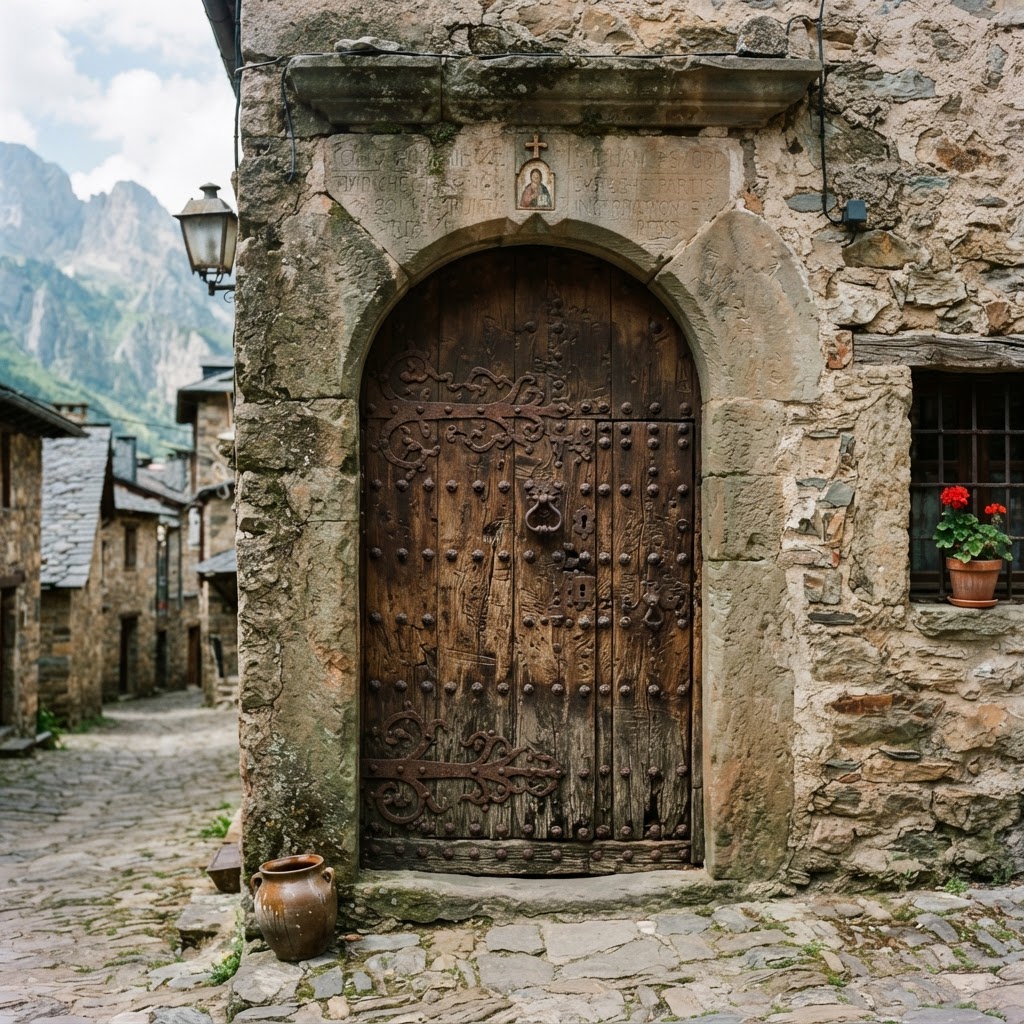
As modern construction methods take over, the preservation of traditional doorways becomes increasingly vital for maintaining cultural heritage. Many local councils and architectural heritage societies are now working to ensure that historic doors are not simply replaced with mass-produced, industrial alternatives. Protecting these portals is about more than aesthetics; it is about maintaining the character of the town and ensuring the story of the architecture remains readable for future generations. Restoration efforts often prioritize keeping the original iron hardware, as the craftsmanship required to replicate 18th-century hand-forged latches is becoming increasingly rare among modern contractors.
How to Appreciate Details as a Traveler
When exploring Spanish villages, slow your pace to identify the unique markers of regional identity. Look for the brass knockers, often shaped like hands or lions, which have been polished by the touch of thousands of visitors over the years. Notice the texture of the wood—the deep grains that indicate the tree’s age and the specific region it came from. Paying attention to these details connects you to the artisan’s vision and the homeowner’s pride, turning a simple walk into an educational exploration of local history.
Elements That Define a Classic Spanish Doorway
If you are looking to identify the hallmark features of these historic pieces, keep this guide in mind:
- Materiality: Look for solid timber or heavy, hand-forged iron.
- Archways: Note whether the frame is a traditional semi-circle, a pointed Gothic arch, or a Moorish horseshoe.
- Color Palettes: Mediterranean blues, terracotta oranges, and stark whites dominate the color schemes.
- Hardware: Keep an eye out for intricate, oversized brass or iron knockers (llamadores) and heavy drop-hinges.
The Psychology of the Threshold
There is a psychological comfort in the solidity of a traditional Spanish doorway, acting as a physical barrier that defines the home as a refuge. Entering through such a door feels like an initiation, a ritualistic transition that shifts your focus from the external world to the inner sanctum. This feeling is intentionally cultivated by the design choices, which prioritize privacy and quietude, allowing the home to function as a true sanctuary away from the intense public life of Spanish plazas. Research suggests that thick entry doors significantly reduce street noise, further reinforcing the home’s role as a silent harbor.
FAQ
Q: Why are Spanish doors often so thick?
Spanish doors are traditionally built thick to provide superior thermal insulation against the Mediterranean heat and to ensure maximum privacy and security for the household. In many regions, this thickness also serves to reduce noise pollution from bustling outdoor plazas.
Q: What is the significance of ironwork on Spanish doors?
Ironwork, known as ‘rejería’, is both decorative and functional, providing essential structural security while allowing for airflow. These designs often indicate the history of a family’s trade, religious devotion, or their social status within the community.
Q: When is the best time to see beautiful Spanish doorways?
Springtime, particularly during the month of May, is the best time to visit, especially in Andalusia. The Patios de Córdoba festival allows public access to the most ornate, flower-adorned doorways and private courtyards that are typically closed to visitors.
Q: What defines the difference between Northern and Southern Spanish doors?
Southern doors favor ornamentation and airflow using lighter woods and intricate archways to mitigate heat, while Northern doors prioritize durability and insulation using heavy oak and robust iron studs to combat cold, wet coastal weather.
Practical Tips for the Aspiring Doorway Photographer
Capturing the perfect shot of a Spanish threshold requires more than just a camera. Lighting is your biggest challenge. Narrow streets often fall into deep shadow by midday. Aim for the early morning golden hour when the sun hits the facades at an angle. This reveals the texture of the weathered timber and the deep relief of stone carvings.
Always carry a polarizing filter to cut the glare on glazed tiles or shiny ironwork. If you are shooting in a historic district like Toledo or Seville, watch out for narrow apertures. Wide-angle lenses can distort the symmetry of a doorway. A 35mm or 50mm prime lens will give you the most honest representation of these architectural gems.
Respecting Privacy in Residential Districts
Remember that you are often photographing someone’s actual front door. While it is tempting to linger, maintain a respectful distance. Do not touch the knockers or lean against the wood to stabilize your gear. If a resident appears, offer a polite smile or a simple greeting of ‘buenos días.’ Most locals take pride in their homes, but they value their quiet time.
A Seasonal Guide for Architectural Tours
Timing your visit changes everything. Spring is undeniably the best season for color. During May, the Patios de Córdoba festival transforms the city into a living gallery. However, the streets become incredibly crowded. If you want silence and space for photos, visit in late October or November. The weather stays mild, and the tourist groups vanish completely.
- Avoid August: The heat is oppressive, and many historic shops shutter their doors for the holidays.
- Choose February for Quiet: You will find fewer crowds in the north, though it can be chilly.
- Go for the Golden Hour: Plan your route to follow the path of the morning sun against the historic walls.
Common Mistakes to Avoid
Many travelers rush through cities like Salamanca or Granada and miss the details at eye level. They focus on the big cathedrals but ignore the residential side streets. You will find the most authentic examples of 18th-century craftsmanship in the smaller, quieter neighborhoods. Do not stick to the main tourist arteries.
Another common error is failing to look up. Some of the most intricate stone moldings and wooden lintels are located above head height. Carry a comfortable pair of walking shoes because the cobblestones are brutal. If your feet are tired, you will not explore the hidden alleys where the best doors remain untouched by modernization.
Frequently Asked Questions
Should I try to enter an open door if I see a beautiful patio?
No, unless it is clearly marked as a public space or a museum. Some private owners open their gates during specific festivals, but treating a private home as a tourist attraction is disrespectful. Always look for signage indicating that the interior is open for visitors.
Is there a specific region with the most diverse range of doorways?
Andalusia remains the crown jewel due to its deep Moorish history. However, do not overlook the northern region of Galicia. You will find sturdy, granite-framed doorways there that reflect a colder climate and a very different social history compared to the south.
How much should I budget for an architectural walking tour?
Guided tours focused on history and architecture typically cost between 20 and 40 euros per person. These are worth the price because guides explain the symbols on the iron knockers. These details are almost impossible to interpret without local knowledge.
Leave a Reply